Beetroot and Walnut Hummus
Ten minutes, no cooking, and a colour that makes vegetable sticks look like the treat. The ice-cold water is what makes it smooth rather than grainy.
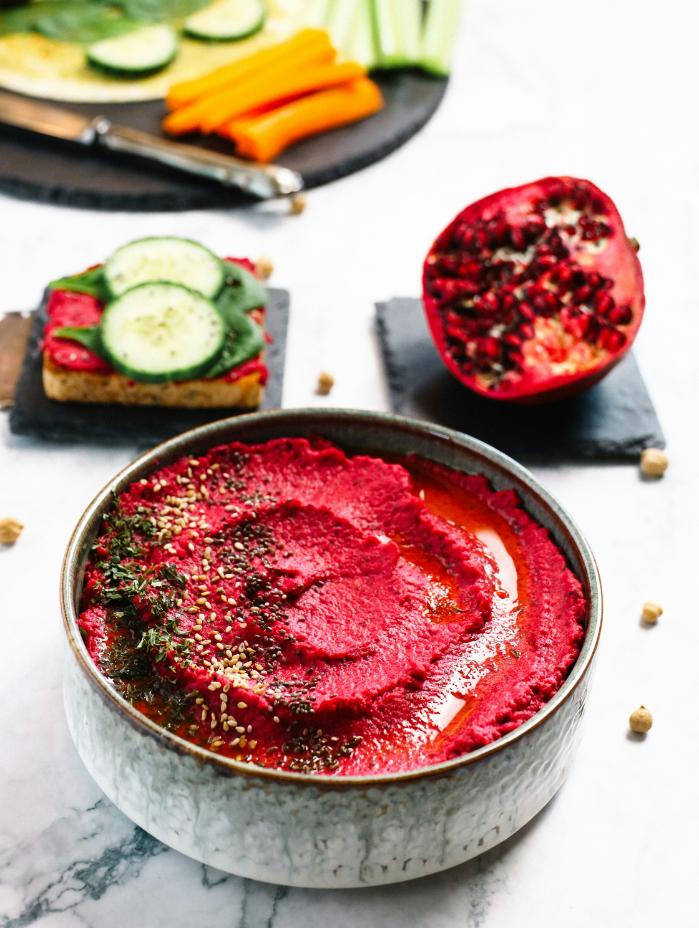
Ingredients
- 250g cooked beetroot, about 3 small — vacuum-packed is fine, but not the kind in vinegar
- 1 tin of chickpeas (400g), drained
- 40g walnuts
- 2 tbsp tahini
- The juice of 1 lemon
- 1 small clove of garlic
- 1 tsp ground cumin
- 2 tbsp extra-virgin olive oil, plus a little to finish
- 2 to 4 tbsp ice-cold water, and salt
- To serve: carrots, cucumber and red pepper, cut into sticks
Method
- Toast the walnuts in a dry pan for three minutes, shaking it, until they smell toasted. Set a few aside, roughly chopped, for the top.
- Put the tahini, lemon juice, garlic, cumin and a good pinch of salt in a food processor and blitz for thirty seconds. Tahini first, on its own with the lemon, whips it pale and creamy; it is the base the rest blends into.
- Add the chickpeas and the rest of the walnuts and blend for a minute.
- With the motor running, add ice-cold water a spoonful at a time until the hummus turns light and smooth. Cold water makes tahini fluffy; warm water makes it oily. Stop when it just holds its shape.
- Add the beetroot, roughly chopped, and the olive oil, and blend until evenly pink. Taste and adjust the salt and lemon — beetroot is sweet, so it usually needs a little more of both than plain hummus.
- Spoon it into a bowl, swirl the top, and finish with the chopped walnuts and a thread of oil. Serve with the vegetable sticks. It keeps four days in the fridge. Wear an apron: beetroot stains.
Why it works
Hummus is already one of the better snacks in a supermarket. This version adds colour, more fibre and a handful of walnuts, and serving it with vegetables rather than crisps or pitta is where most of its value lies.
Chickpeas are the reason it is gentle on blood sugar. Pulses are digested slowly, and their mix of protein and fibre produces a low, steady glucose response. A portion with vegetable sticks carries about 7g of fibre, a meaningful step towards the 30g a day UK guidance recommends and most adults fall well short of.
That fibre matters for more than blood sugar. It feeds the gut bacteria that help regulate how oestrogen is recycled in the body, one of the quieter links between diet and hormones: gut health and hormones. Chickpeas and the sesame in tahini also carry small amounts of phytoestrogens; what those can and cannot do is covered in how to increase oestrogen naturally.
Beetroot is one of the richest dietary sources of nitrate, which the body converts to nitric oxide, a molecule that helps blood vessels relax. Trials show a modest drop in blood pressure, but mostly with concentrated beetroot juice in larger amounts than a portion of dip provides. Eat it for the flavour and the fibre; count anything more as a bonus.
Walnuts are the richest nut source of ALA, the plant form of omega-3. The body converts only a small share of ALA into the EPA and DHA found in oily fish, so walnuts complement fish rather than replace it. With the tahini and olive oil, most of the fat here is unsaturated.
That fat profile matters after menopause, when the fall in oestrogen tends to push LDL cholesterol up and heart disease risk starts to catch up with men's. Swapping snacks built on refined flour and saturated fat for ones like this is a small, repeatable change in the right direction: menopause and diabetes risk.
At about 10g of protein a portion, this is not a protein snack. If that is what you need, pair it with an egg, or choose the cottage cheese with pomegranate and walnuts instead.