Turkish Eggs with Garlic Yogurt and Chilli Butter
Fifteen minutes and 28g of protein from things most kitchens already have. Take the yogurt out of the fridge first — cold yogurt turns hot eggs lukewarm in seconds.
Ingredients
- 4 very fresh eggs
- 250g full-fat Greek yogurt
- 1 small clove of garlic, finely grated
- 20g butter and 1 tsp extra-virgin olive oil
- 1 tsp chilli flakes — Aleppo pepper (pul biber) if you can find it, as it is milder and fruitier
- A small handful of dill or parsley, chopped
- 2 slices of sourdough, toasted, to serve
- Salt, and a splash of vinegar for the poaching water
Method
- Take the yogurt out of the fridge first, or warm it gently: stir it in a heatproof bowl set over the pan of water for a couple of minutes while the water heats. It should be just above room temperature, never hot, or it will split.
- Stir the grated garlic and a pinch of salt into the yogurt and spread it over two shallow bowls.
- Bring a wide pan of water to a bare simmer, with small bubbles only, and add a splash of vinegar.
- Crack each egg into a fine sieve first and let the thin, watery white drain away for a few seconds. That runny part is what makes ragged wisps; what stays in the sieve poaches into a neat oval.
- Slip the eggs into the water and poach for three minutes, until the whites are set and the yolks still soft. Lift them out with a slotted spoon and rest them on kitchen paper.
- Meanwhile melt the butter with the oil in a small pan until it foams and smells nutty. Take it off the heat, then add the chilli flakes — added over the flame they burn in seconds and turn bitter.
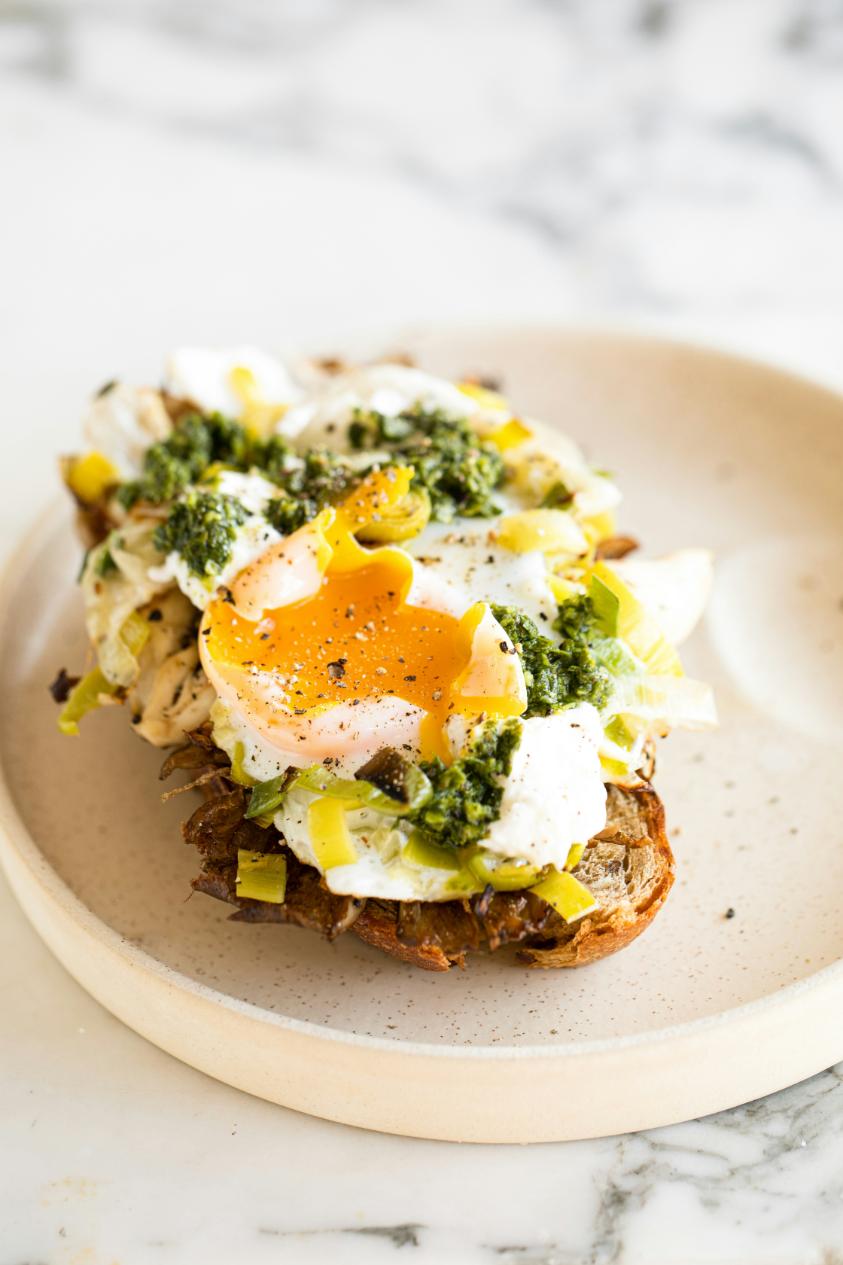
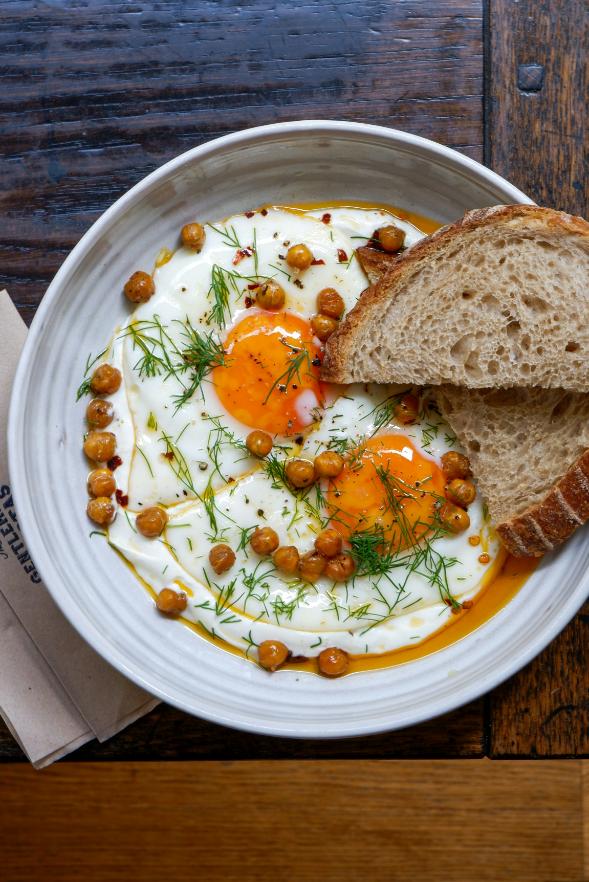
- Set two eggs on each bowl of yogurt, spoon over the red butter, scatter with herbs and serve with the toast for dipping.
Why it works
Turkish eggs look like a weekend brunch and take less time than most weekday breakfasts. They are also one of the easiest ways to put close to 30g of protein on a plate before nine o'clock without meat or protein powder.
The protein comes from two places. Two eggs provide about 12g, and 125g of full-fat Greek yogurt adds roughly as much again. A breakfast built on protein keeps appetite quieter through the morning than one built on cereal or toast alone, and it produces a much smaller rise in blood sugar.
Egg yolks are one of the few foods that contain vitamin D at all, and one of the richest sources of choline. The amount of vitamin D in two eggs is small, though: in the UK, sunlight provides almost none between October and March, which is why a supplement is advised through the winter whatever you eat.
The cholesterol in eggs is sometimes described as raw material for testosterone. That is true of the body's own chemistry but not of the breakfast plate: eating more cholesterol does not raise testosterone. The NHS sets no limit on eggs for most people, because dietary cholesterol has a modest effect on blood cholesterol compared with saturated fat.
That is also the honest note on the butter. Ten grams a portion is a reasonable amount; if you are watching saturated fat, make the chilli oil with olive oil alone and lose very little.
For women after menopause, the yogurt matters beyond its protein. Bone loss speeds up once oestrogen falls, and a portion of Greek yogurt supplies a useful share of the day's calcium. Yogurt with live cultures also feeds the gut bacteria involved in how the body handles oestrogen: gut health and hormones.
Raw garlic gives the yogurt its bite; grate it rather than chop it, so it melts in.
If you want eggs in a sauce rather than on one: shakshuka with spinach. More on the first meal of the day: breakfast mistakes that work against testosterone.