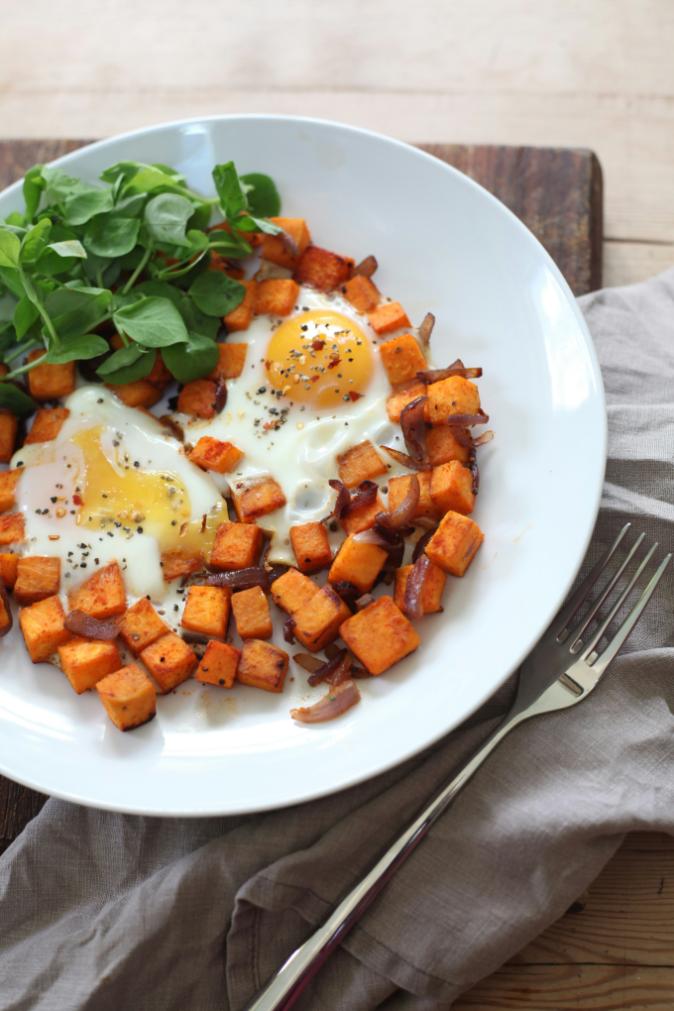
Sweet Potato Hash with Eggs and Kale
Sweet potato burns on the outside before it cooks through if it goes straight into the pan. A few minutes in the microwave first softens the middle, so the pan only has to do the crisping. Spread the cubes out in one layer and leave them alone.
Ingredients
- 400g sweet potato (about 2 medium), scrubbed and cut into 1.5cm cubes, skin on
- 1 red onion, chopped
- 1 red pepper, chopped
- 80g kale, tough stalks removed, leaves torn
- 4 eggs
- 1 clove garlic, crushed
- 1 tsp smoked paprika and half a tsp ground cumin
- 1 and a half tbsp olive oil
- Salt, black pepper and chilli flakes, to taste
Method
- Put the sweet potato cubes in a bowl with 1 tbsp of water, cover and microwave on high for 4 minutes, until just soft at the edges. (Or boil them for 5 minutes and drain well.)
- Heat the oil in a large frying pan, ideally cast iron, over a medium-high heat. Add the sweet potato in a single layer and leave it undisturbed for 4 to 5 minutes until the underside is browned. Crowding the pan steams it instead.
- Turn the cubes, add the onion and pepper, and cook for another 6 to 8 minutes, stirring occasionally, until everything is tender and caught at the edges.
- Stir in the garlic, paprika, cumin and some salt for 1 minute, then add the kale and a splash of water and stir until it wilts.
- Make 4 wells in the hash and crack an egg into each. Season the eggs.
- Cover the pan with a lid or a baking tray and cook over a medium-low heat for 4 to 6 minutes, until the whites are set and the yolks still runny.
- Serve straight from the pan, with chilli flakes on top.
Why it works
This is the kind of breakfast that keeps you full until lunch: about 21g of protein, most of it from the eggs, 8g of fibre from the vegetables, and slow carbohydrate from the sweet potato.
Leave the skin on. The skin adds fibre and crisps well in the pan. The deep orange colour comes from beta-carotene, which the body turns into vitamin A. Kale adds vitamin K, folate and more fibre.
Eggs are one of the few foods that contain vitamin D, and the NHS sets no limit on how many eggs you can eat as part of a balanced diet. For most people, the saturated fat in the wider diet matters more for blood cholesterol than the cholesterol in eggs.
If you want more protein, add a third egg each or serve with a spoonful of Greek yogurt. For women around menopause, a breakfast with plenty of protein helps protect muscle and keeps hunger steady through the morning: see menopause weight loss.
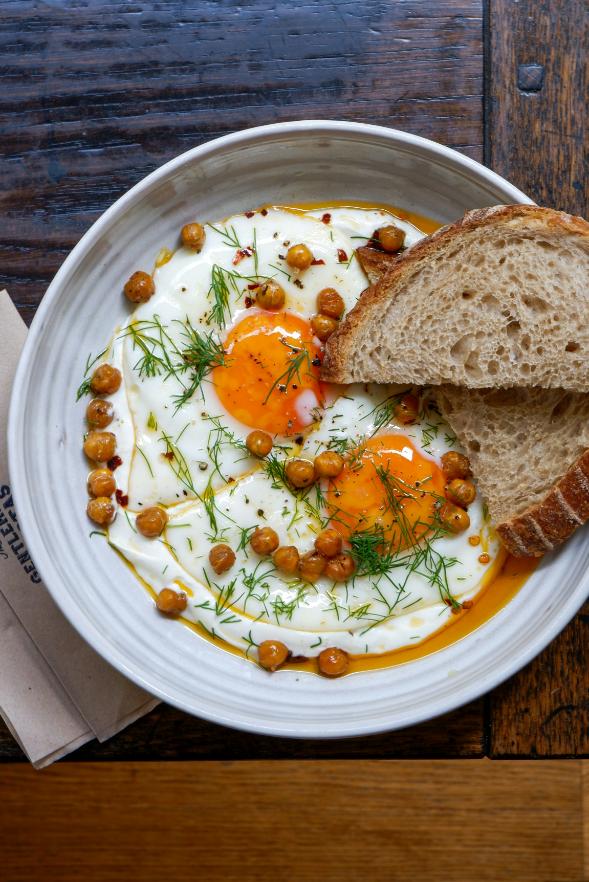
For another one-pan egg breakfast, try the shakshuka with spinach or the Turkish eggs with garlic yogurt.

.jpeg)


.jpeg)