Steak, Rocket and Parmesan Salad
Fifteen minutes and 39g of protein, and the steak is better for resting than for cooking longer. Slice it against the grain or it will chew like rope.
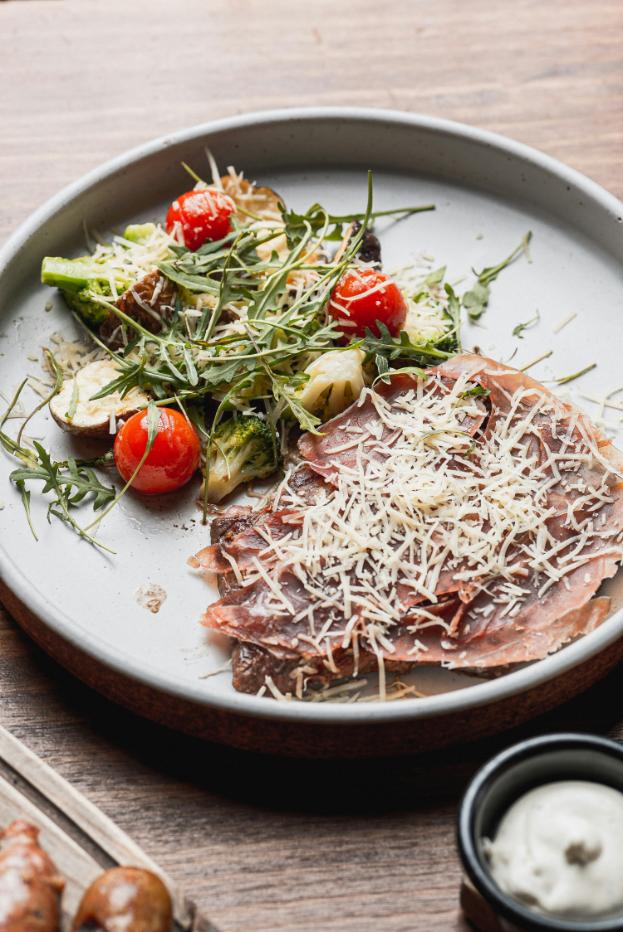
Ingredients
- 2 sirloin or rump steaks, about 150g each, ideally grass-fed
- 2 large handfuls of rocket
- 40g parmesan, shaved with a peeler
- A handful of cherry tomatoes, halved
- 2 tbsp extra-virgin olive oil, plus a little for the steak
- Half a lemon
- 1 tsp balsamic vinegar
- Flaky salt and plenty of black pepper
Method
- Take the steaks out of the fridge 20 minutes before cooking if you can. A cold centre is why steaks end up grey outside and raw inside.
- Pat them dry, rub with a little oil and season well with salt and pepper.
- Heat a heavy pan until it is very hot. Cook the steaks for 2 to 3 minutes a side for medium-rare, depending on thickness, without moving them — the crust forms only if they stay put.
- Rest them on a board for five minutes. This is not optional: resting lets the juices settle back into the meat instead of running out when you slice.
- Toss the rocket and tomatoes with the olive oil, lemon juice and balsamic.
- Slice the steak thinly against the grain — look for the direction of the muscle fibres and cut across them. Lay the slices over the salad, pour over any resting juices, and finish with the parmesan and flaky salt.
Why it works
Red meat is the densest everyday source of the minerals this site keeps returning to, and a lean steak on a plate of leaves is a way to eat it without much else attached.
A 150g portion of beef delivers a substantial share of the day's zinc, more than a day's vitamin B12, and haem iron, the form the body absorbs most readily. Zinc holds an authorised claim for the maintenance of normal testosterone levels in the blood. That does not mean steak raises testosterone; it means zinc shortfall is one of the few dietary problems with a documented link to it, and meat is the most reliable way to avoid one.
The iron matters for a different audience. Women with heavy periods lose more iron than diet usually replaces, and haem iron from meat is absorbed several times better than the plant form. The lemon on the leaves adds vitamin C, which helps further: iron deficiency and fatigue.
Grass-fed beef has a somewhat better fat profile than grain-fed — a little more omega-3 and CLA — but the difference in a single portion is modest. Buy it if you can; do not skip the dish if you cannot.
Parmesan adds protein and calcium, and it is naturally very low in lactose because of its long ageing.
The honest caution with red meat is quantity rather than the meat itself: UK guidance is to keep red and processed meat to around 70g a day on average. A salad like this, a couple of times a week, sits comfortably inside that.
More: the testosterone foods list.