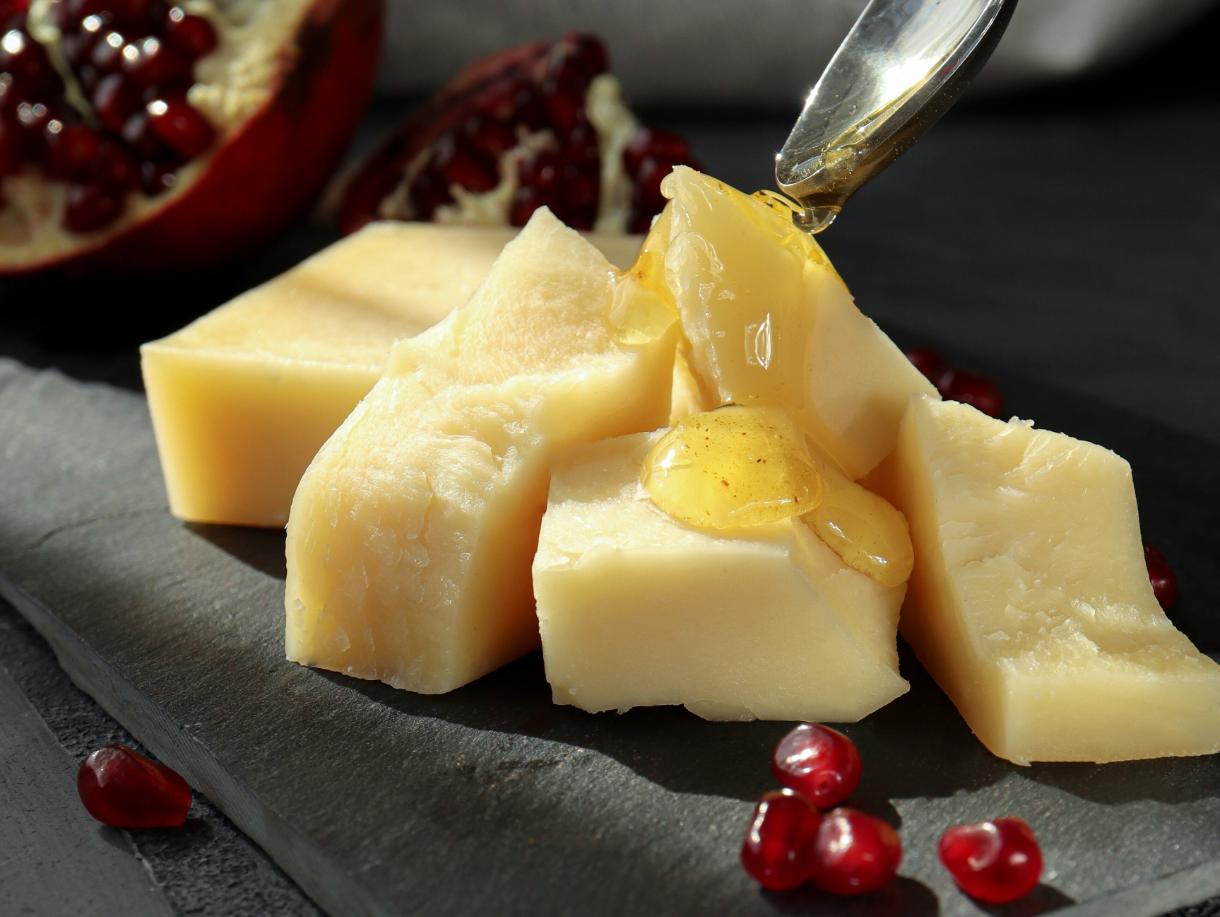
Parmesan & hard cheese
A concentrated hit of protein, calcium and vitamin K2 in a naturally low-lactose form — genuinely useful for bone and muscle, but salty and saturated-fat-rich enough to keep to sensible amounts.
At a glance
Why it matters
The library already had fermented dairy (yoghurt, kefir) and fresh dairy (cottage cheese), but not the concentrated, aged kind — and aged hard cheese brings something the others can't match in the same bite: density. Because it's had most of its water removed, a small piece of Parmesan or mature cheddar delivers a remarkable concentration of protein, calcium and, thanks to fermentation and ageing, vitamin K2 — the nutrient that helps steer calcium into your bones rather than your arteries. Bone density and muscle mass are two of the things most directly affected by falling hormones, in both sexes, which is exactly why a food this rich in the raw materials of both earns a place — with the honest caveat that comes next.
What's inside
Hard cheese is unusually nutrient-dense: protein runs to around 35 g per 100 g and calcium to roughly 1,100 mg — among the highest of any food. The ageing and fermentation process yields vitamin K2, which works alongside vitamin D and calcium to build bone, plus useful phosphorus, vitamin B12 and vitamin A. A quiet bonus: because most of the lactose is removed during production, aged hard cheeses are naturally very low in lactose and often well tolerated by people who struggle with milk. The counterweight, and the reason this sits at 'in moderation', is that hard cheese is also high in saturated fat and sodium.
For men
For men, hard cheese is a convenient, high-quality protein and a genuine source of the calcium and vitamin K2 that keep the skeleton strong — the frame your muscle and testosterone are meant to build on. Grated over vegetables or eggs, it makes nutrient-dense food more appetising, which has value of its own. The honest framing is that this is a supporting food, not a testosterone lever: enjoy it for the protein, minerals and flavour, keep the portions sensible given the saturated fat, and let it earn its place a little at a time.
For women
For women, the calcium-and-K2 combination is the headline. As oestrogen falls through perimenopause and menopause, bone loss accelerates, and vitamin K2 — abundant in aged, fermented cheese — helps direct calcium into bone, working with vitamin D. The high protein also supports the muscle that protects metabolism and strength through midlife. Because it's naturally low in lactose, hard cheese is often a practical way for women who find milk bloating to still get dairy's bone-building nutrients. As with men, the aim is a sensible daily amount rather than large quantities, given the salt and saturated fat.
How to eat it
Use hard cheese the way Italians do — as a concentrated flavour, not a main event. A generous grating of Parmesan over vegetables, soups, eggs or wholegrain pasta turns simple, healthy food into something you actually want to eat, which quietly improves the whole meal. A matchbox-sized piece of mature cheddar with fruit and nuts makes a bone-friendly snack. Because it's so salty and calorie-dense, a little goes a long way — lean on it for flavour and nutrients rather than eating it by the slab.
Worth knowing
The two things to respect are salt and saturated fat: Parmesan and pecorino in particular are very salty, so if you're watching blood pressure, use them as a seasoning rather than a portion. Anyone with high cholesterol or heart disease should keep hard cheese modest and prioritise unsaturated fats elsewhere. Pregnant women should choose cheeses made from pasteurised milk. Treated as a flavourful, nutrient-dense finishing touch in sensible amounts, hard cheese is a genuine bone-and-muscle ally; treated as a daily slab, it's a lot of salt and saturated fat.
Bottom line
Aged hard cheese concentrates protein, calcium and bone-directing vitamin K2 into a naturally low-lactose bite — a real support for bone and muscle in sensible amounts, kept in check by its salt and saturated fat.
Related reading: Foods that increase testosterone and fellow calcium-rich dairy cottage cheese.
Educational information, not medical advice. Foods affect people differently — if you have a medical condition, are pregnant or breastfeeding, or take medication, talk to your doctor before making big dietary changes. Some links are affiliate links — if you buy through them we may earn a small commission, at no extra cost to you.