Smoky Roasted Chickpeas
Thirty-five minutes, mostly in the oven, and a crunchy savoury snack with 9g of protein and 8g of fibre per portion. Dry the chickpeas properly or they will never go crisp.
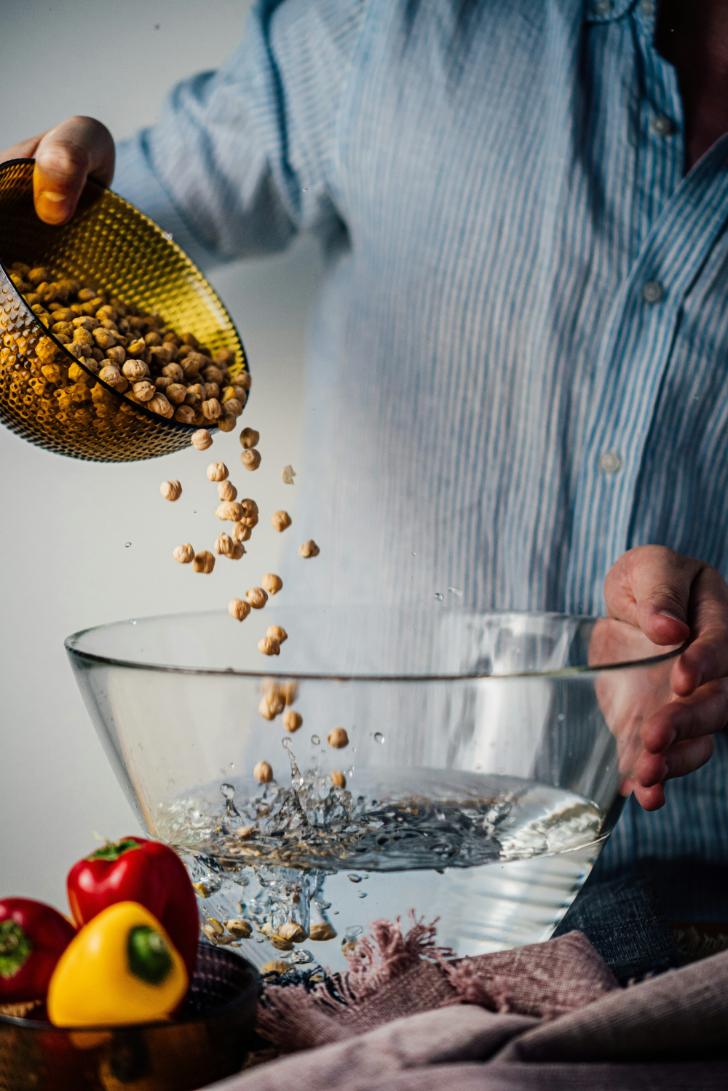
Ingredients
- 2 tins of chickpeas, about 480g drained
- 1 tbsp extra-virgin olive oil
- 1 tsp smoked paprika
- Half a tsp ground cumin
- Half a tsp garlic powder, optional
- Half a tsp fine salt
Method
- Heat the oven to 200C fan.
- Drain and rinse the chickpeas, then dry them thoroughly — roll them in a clean tea towel and let them sit for a few minutes. Any loose skins that come away can be discarded. Water is the enemy here: wet chickpeas steam instead of roasting and stay soft in the middle.
- Spread them on a large tray in a single layer, with space between them. Roast plain for 20 minutes. Adding the oil and spices later stops the paprika from burning.
- Take out the tray, toss the chickpeas with the oil, spices and salt, and roast for another 10 minutes, until deep golden and crisp.
- Let them cool on the tray. They crisp up further as they cool. Test one after five minutes; if the centre is still soft, give them five more minutes in the oven.
- They are best on the day. Stored airtight they soften slightly by the next day; five minutes back in a hot oven restores them.
Why it works
Most savoury snacks are refined starch and oil. This one is a whole pulse, which changes what happens after you eat it.
A portion of chickpeas carries about 9g of protein and 8g of fibre, a combination that is rare in a snack. Both slow the absorption of the starch in the chickpeas themselves, and pulses consistently produce one of the lowest glucose responses of any carbohydrate food. That is why this is tagged for blood sugar and the crisp packet is not.
The fibre does a second job. Chickpeas are rich in fermentable fibre that feeds gut bacteria, and the bacteria in turn influence how much oestrogen is reabsorbed from the gut rather than excreted — a mechanism covered here: the gut and oestrogen.
Chickpeas also bring folate, magnesium and non-haem iron. For women after menopause, when the risk of insulin resistance rises, swapping refined snacks for pulses is one of the simplest changes with good evidence behind it: menopause and diabetes risk.
The honest caveat is quantity. A quarter of the tray is the portion here; a whole tray eaten from the oven is roughly 900 calories.
Use extra-virgin olive oil rather than a seed oil: it holds up to the roasting temperature, and it adds its own polyphenols.