Quinoa Breakfast Porridge with Pear and Cinnamon
A warm, creamy porridge made with quinoa instead of oats, cooked in soy milk with pear and cinnamon. Rinse the quinoa first, or it tastes slightly soapy. Twenty-five minutes, naturally gluten-free.

Ingredients
- 100g/3½oz/generous ½ cup quinoa (white or mixed)
- 500ml/2 cups unsweetened soy milk, plus a splash to loosen
- 150ml/⅔ cup water
- 2 ripe pears (about 300g/10½oz without the cores)
- 1 tsp ground cinnamon
- A pinch of salt
- 30g/1oz/¼ cup walnuts, roughly chopped
- 1 tbsp (about 20g) maple syrup
Method
- Rinse the quinoa in a fine sieve under cold running water for about 30 seconds, rubbing it with your fingers. This washes off the natural bitter coating (saponins).
- Put the quinoa in a medium saucepan with the soy milk, water, cinnamon and salt. Bring to a gentle simmer, then cook uncovered over a low heat for 15 minutes, stirring often so it does not catch on the bottom.
- Meanwhile, core and dice one pear. Cut the other pear into thin slices for the top.
- Toast the walnuts in a dry frying pan over a medium heat for 3 to 4 minutes, shaking the pan, until they smell toasty. Tip onto a plate.
- Stir the diced pear into the quinoa and cook for another 5 minutes, until the grains are tender, each one shows a little white ring, and the porridge is thick and creamy. Add a splash more soy milk if it gets too thick.
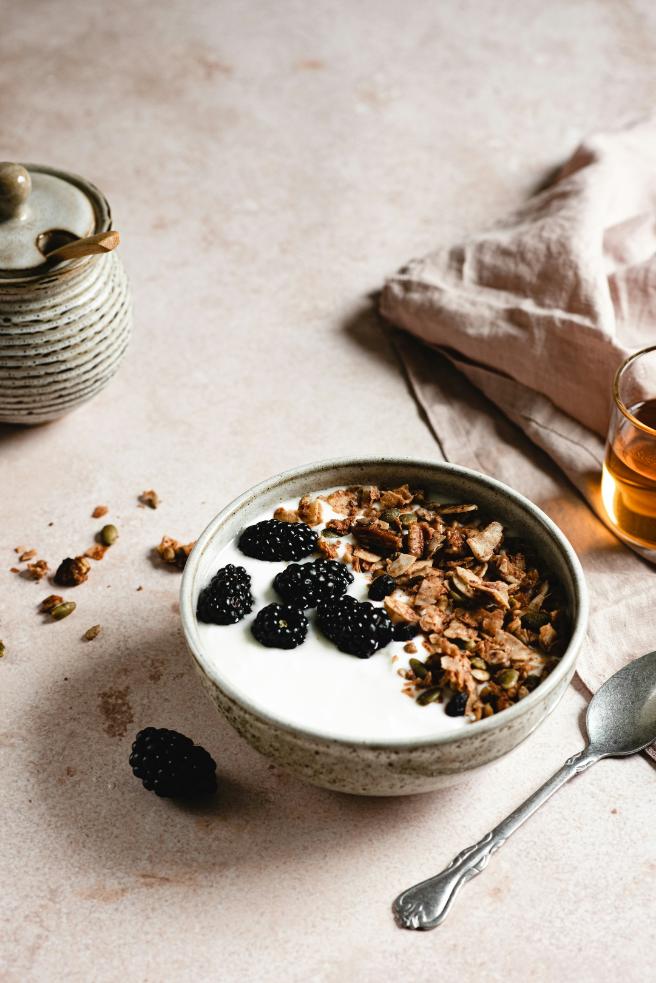
- Divide between two bowls, top with the sliced pear and toasted walnuts, and drizzle with the maple syrup.
- Leftovers keep in a covered container in the fridge for up to 2 days. Reheat with a splash of soy milk until piping hot.
Why it works
A bowl has about 17g of protein and 11g of fibre, for 472 calories. The protein comes from the quinoa, the soy milk and the walnuts. Quinoa and soy both provide all the essential amino acids in useful amounts, which makes them valuable if you eat little or no meat.
The fibre is the real strength. Eleven grams is over a third of the 30g a day advised in the UK and about 40% of the 28g used on US food labels. Most adults in both countries eat well under those targets. The quinoa, pear (eaten with its skin) and walnuts all contribute.
Why it is tagged for blood sugar and menopause. The fibre, protein and fat from the walnuts slow how quickly the carbohydrate is absorbed compared with a sugary cereal. Choose a soy milk fortified with calcium, as many are, because protecting bone density matters more after menopause.
Sugar. The maple syrup adds about 7g of added sugar a bowl. The UK advises no more than 30g of free sugars a day; US guidelines say less than 10% of daily calories. The pear provides natural sweetness, so you can leave the syrup out if your pears are very ripe.
Walnuts bring plant omega-3 fat, and toasting them takes three or four minutes while the quinoa cooks. For an oat-based alternative, see the high-protein porridge with raspberries and almonds.