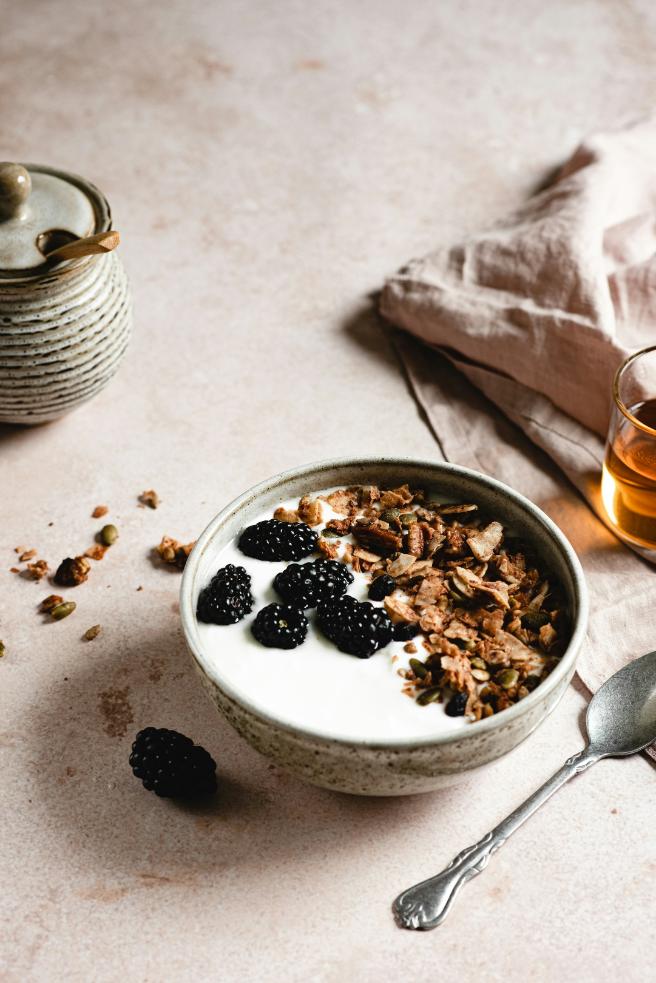
High-Protein Porridge with Raspberries and Almonds
The mistake most people make with protein porridge is adding the powder while it cooks, which turns it grainy and gluey. Cook the oats first, take the pan off the heat, then whisk the powder in with a splash of milk. It stays smooth and creamy.

Ingredients
- 50g porridge oats
- 200ml semi-skimmed milk, plus a splash to finish
- 50ml water
- 25g (1 scoop) vanilla or unflavoured protein powder (whey)
- 80g raspberries, fresh or frozen
- 15g flaked almonds, toasted
- 1 tsp honey (optional)
- A pinch of ground cinnamon and a pinch of salt
Method
- Put the oats, milk, water and a pinch of salt in a small pan over a medium heat.
- Bring to a gentle simmer and cook for 4 to 5 minutes, stirring often, until thick and creamy.
- Meanwhile, toast the almonds in a dry frying pan for 2 to 3 minutes, shaking the pan, until golden. Watch them; they burn quickly.
- Take the pan off the heat and let it stand for 30 seconds. Mix the protein powder with a splash of milk to a smooth paste, then stir it into the porridge. Adding it off the heat stops it going grainy.
- Add a little more milk if it is too thick. Pour into a bowl.
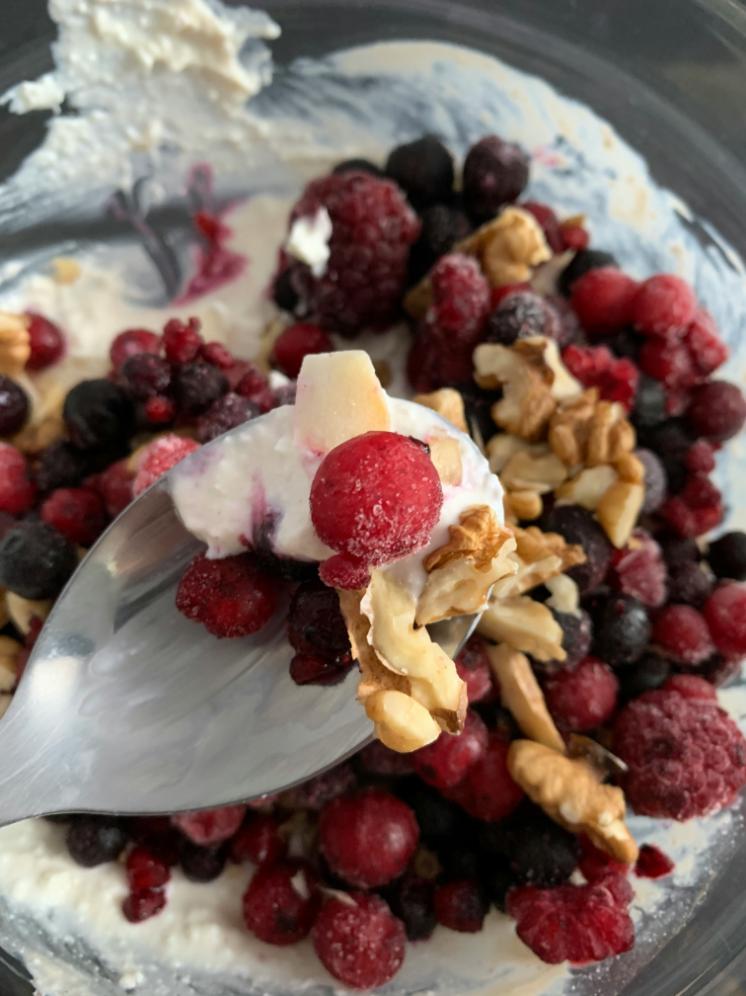
- Top with the raspberries, almonds, cinnamon and honey, if using. If using frozen raspberries, warm them for a minute in the pan first so they release their juice.
Why it works
A bowl has about 36g of protein, from the protein powder, milk, oats and almonds. Plain porridge made with milk has well under half that. It is a simple way to get a protein-rich breakfast when you would rather not cook eggs.
11g of fibre in one bowl. That is over a third of the 30g a day the NHS recommends. Raspberries are one of the highest-fibre fruits, and oats provide beta-glucan, a soluble fibre. Beta-glucans contribute to the maintenance of normal blood cholesterol levels; the beneficial effect is obtained with a daily intake of 3g of beta-glucan from oats or barley, and this bowl gives you a good share of that.
Why it is tagged for blood sugar. Protein and fibre together slow how quickly the carbohydrate in the oats is digested. Use porridge oats or jumbo oats rather than instant sachets, which are more processed and often sweetened.
The milk adds calcium, which matters for bone health, particularly after menopause: see protecting your bones.
The honest part is the calories. At about 530, this is a full breakfast that suits a training day. Use 40g of oats and skip the honey if you want it lighter.
No protein powder? Stir in 150g of 0% fat Greek yogurt at the end instead; the bowl will have about 32g of protein. Use oats labelled gluten-free if you need to. For a make-ahead version, try the overnight oats with ground flaxseed. To set your protein target, use our protein intake calculator.




.jpeg)
.jpeg)










.jpeg)


.jpeg)