Pork Tenderloin with Apples and Red Cabbage
Pork tenderloin is one of the leanest cuts of meat you can buy, so it goes dry if it is overcooked. Sear it hard, roast it briefly, then let it rest. Take it out as soon as it is cooked through, and the slices stay juicy.
Ingredients
- 400g pork tenderloin (pork fillet), trimmed of any silver skin
- 1 tbsp olive oil
- 1 tbsp wholegrain mustard
- A few sprigs of thyme, leaves picked
- 2 eating apples (about 300g), cored and cut into wedges
- Half a red cabbage (about 500g), finely shredded
- 1 red onion, sliced
- 2 tbsp cider vinegar
- 2 tsp honey
- A pinch of ground cinnamon or allspice
- To serve: 600g new potatoes
Method
- Heat the oven to 200C (180C fan). Put the potatoes on to boil for 15 to 18 minutes, until tender.
- Put the cabbage, onion, vinegar, honey, cinnamon, a pinch of salt and 100ml water in a large pan. Cover and simmer gently for 30 minutes, stirring now and then, until soft and glossy. The vinegar keeps it a bright purple; without it, red cabbage turns blue-grey.
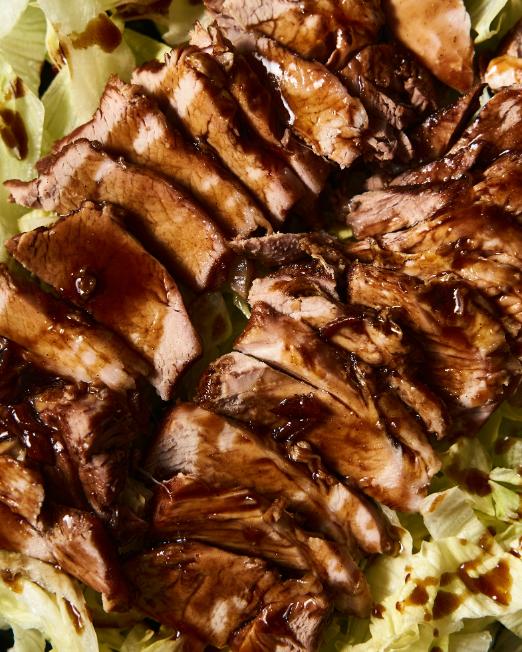
- Meanwhile, pat the pork dry and season. Heat the oil in an ovenproof frying pan over a high heat and sear the pork on all sides, about 4 minutes in total, until browned.
- Brush the pork with the mustard and sprinkle with thyme. Arrange the apple wedges around it in the pan.
- Roast for 12 to 15 minutes, until cooked through, with clear juices and no pink in the middle. A meat thermometer in the thickest part should read 70C, the core temperature UK food safety advice uses. Tenderloin is thin, so check early.
- Rest the pork for 5 minutes on a board, loosely covered with foil. This lets the juices settle, so they stay in the meat when you slice it.
- Slice the pork thickly and serve on the cabbage with the roasted apples, any pan juices and the potatoes.
Why it works
Pork tenderloin is one of the leanest meats there is, with only about 3 to 4g of fat per 100g raw, less than many cuts of chicken with the skin on. A serving here has about 27g of protein for around 360 calories, potatoes included.
It still counts as red meat. In UK guidance, pork is red meat alongside beef and lamb. The NHS advises anyone eating more than 90g of red and processed meat a day, cooked weight, to cut down to 70g. Here 400g of raw tenderloin shared between four comes to roughly 70g cooked each, so it sits within that advice.
Why it goes dry, and how to stop it. With so little fat, tenderloin has nothing to protect it once it is cooked. Searing first, a short roast and a 5-minute rest let you cook it through safely while keeping it moist. Check it a few minutes early rather than late.
Red cabbage brings fibre, vitamin C and the purple pigments called anthocyanins. Together with the apples and potatoes, a serving has about 6.5g of fibre. Pork is also a good source of thiamin (vitamin B1) and zinc.
For women around menopause, a dinner with lean protein and plenty of vegetables supports both muscle and heart health: see menopause and heart health. For another lean meat traybake, try the turkey, sweet potato and tart cherry traybake.

.jpeg)


.jpeg)