Kimchi Fried Rice with Eggs
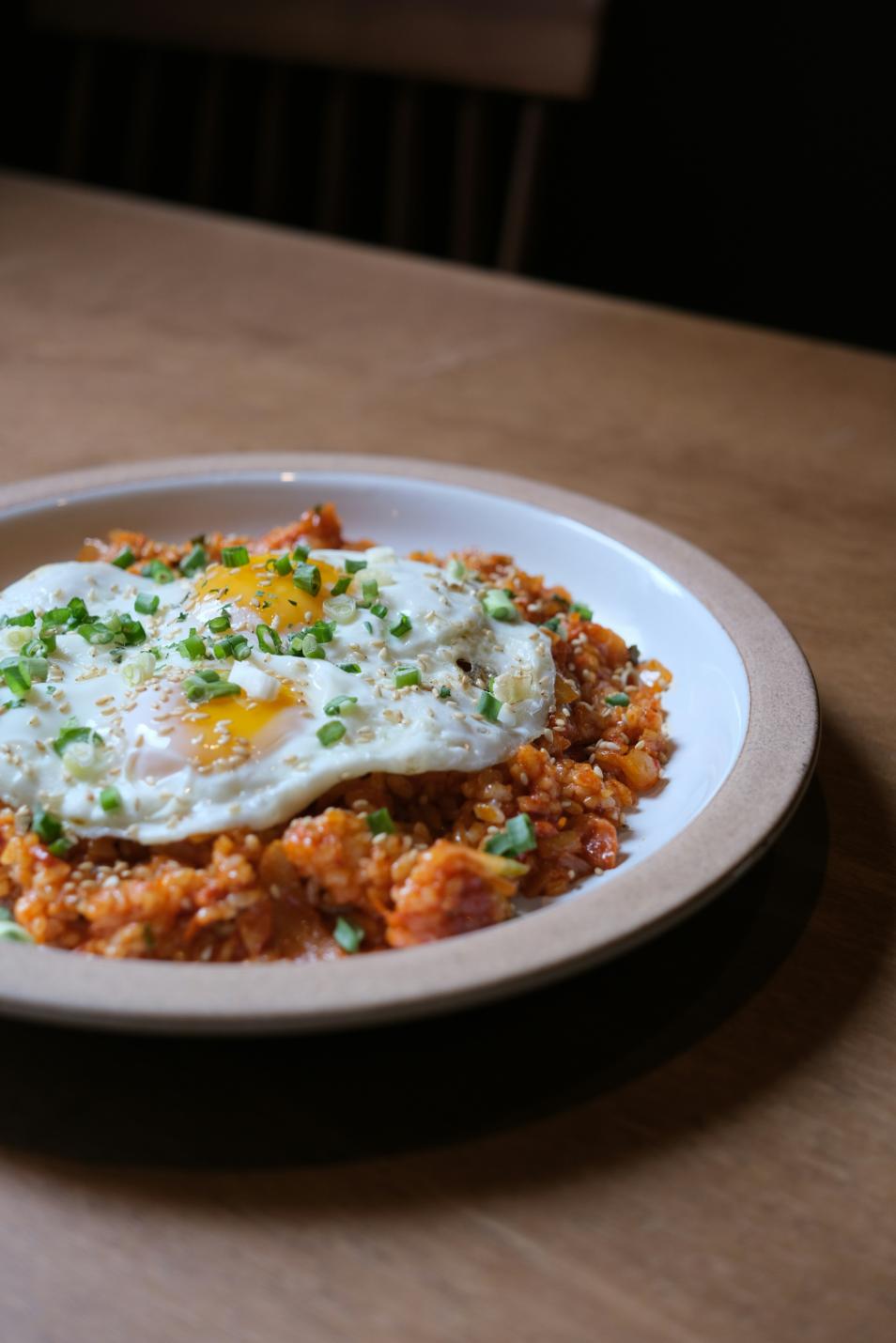
Fifteen minutes from yesterday's rice. Fermented cabbage, four eggs, and the one step almost everyone skips.
Ingredients
- 1 tbsp sesame oil, or extra-virgin olive oil
- 300g cooked brown rice, cold from the fridge
- 150g kimchi, drained and roughly chopped, plus 2 tbsp of its juice
- 3 spring onions, sliced, whites and greens kept separate
- 2 cloves garlic, crushed
- 1 tsp gochujang (optional)
- 1 tbsp tamari, the gluten-free soy sauce
- 4 large eggs
- 100g spinach
- 1 tsp toasted sesame seeds
- 1 tsp rice vinegar
Method
- Heat the oil in a wide frying pan or wok over medium-high heat. Add the spring onion whites and garlic and cook for 30 seconds.
- Add the kimchi and fry it for three minutes until the edges catch and it smells sweet rather than sharp. This is the step people skip, and it is the difference between fried rice and warm salad.
- Add the rice. Break up the clumps with the back of a spoon, press it flat, and leave it alone for a minute so the bottom crisps. Toss, press flat again, repeat twice.
- Beat two of the eggs and pour them over the rice. Stir quickly until just set.
- Add the kimchi juice, tamari and gochujang. Toss to coat.
- Add the spinach in handfuls and let it wilt, about a minute. Take the pan off the heat.
- In a second pan, fry the remaining two eggs so the whites are set and the yolks are still runny.
- Divide the rice between two bowls, top each with a fried egg, and finish with the spring onion greens, sesame seeds and rice vinegar.
The rice has to be cold. Warm rice steams and turns to mush. If you have no leftovers, spread freshly cooked rice on a tray and put it in the fridge for twenty minutes.
Why it works
Kimchi does two jobs at once, which is unusual. It is a fermented food carrying live lactic acid bacteria, and it is made from napa cabbage, which is a brassica. Most foods give you one or the other.
The fermentation side feeds the estrobolome, the gut bacteria that decide whether oestrogen leaves the body or gets unpacked and sent round again. The brassica side supplies the glucosinolates that support the liver pathways handling oestrogen in the first place. The gut and oestrogen sets out how the two connect.
Cooking kimchi kills some of the live cultures, which is a fair objection. The glucosinolates and the fibre survive, the flavour improves considerably, and the raw kimchi you eat straight from the jar on other days covers the rest. Frying it is a reasonable trade.
Cold brown rice is the other half of the recipe. Cooking rice and then chilling it converts some of its starch into resistant starch, which the small intestine cannot break down, so it behaves more like fibre than sugar. Reheating does not undo it. The effect on the glucose response is real and modest, which is the honest way to put it. It matters more after menopause, when insulin sensitivity falls independently of weight: menopause and diabetes risk covers why.
Four whole eggs between two people is deliberate. The yolk is not the part to discard. It carries the cholesterol that serves as the raw material for every steroid hormone the body makes, along with choline, vitamin D and most of the egg's micronutrients.
One caveat worth stating plainly. Kimchi is salty, and 150g contributes roughly a gram of sodium. If you are watching blood pressure, halve it and lean on the gochujang instead. Most shop-bought kimchi also contains fish sauce or shrimp paste, so check the jar if you are cooking for a vegetarian.