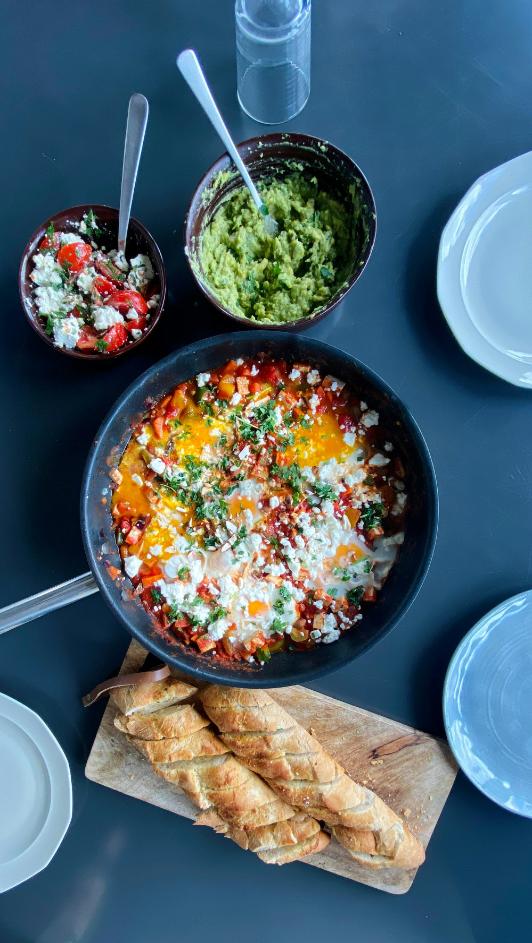
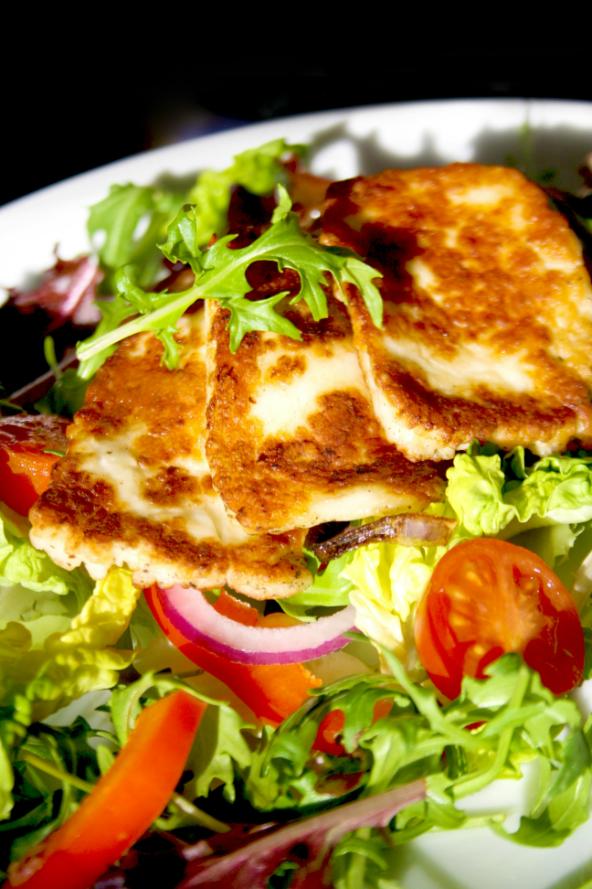
Halloumi, Lentil and Roasted Vegetable Salad
Halloumi is at its best straight from the pan, golden and squeaky, so cook it last. Everything else can be done ahead: roast the vegetables, warm the lentils, and the salad keeps for two days in the fridge. Add the halloumi just before you eat.
Ingredients
- For the salad
- 1 courgette, cut into chunks
- 1 red pepper and 1 yellow pepper, cut into chunks
- 1 small aubergine, cut into chunks
- 1 red onion, cut into wedges
- 200g cherry tomatoes
- 1 and a half tbsp olive oil
- 1 tsp ground cumin and black pepper
- 2 x 250g pouches cooked Puy or green lentils
- 225g block of halloumi, cut into 8 slices
- 80g rocket
- A small handful of mint leaves
- For the dressing
- 2 tbsp lemon juice
- 2 tsp olive oil
- 1 tsp Dijon mustard and 1 tsp honey
Method
- Heat the oven to 220C (200C fan). Toss the courgette, peppers, aubergine and onion with 1 tbsp of the oil, the cumin and black pepper. Spread out on a large tray in a single layer, using two trays if needed, so the vegetables roast rather than steam.
- Roast for 20 minutes, add the tomatoes, then roast for another 10 minutes, until the vegetables are soft and charred at the edges.
- Whisk the dressing ingredients together. Do not add salt; the halloumi brings plenty.
- Warm the lentils in a pan or the microwave, then stir in half the dressing so they soak it up.
- Pat the halloumi slices dry. Heat the remaining half tbsp of oil in a non-stick pan over a medium-high heat and fry the halloumi for 1 to 2 minutes a side, until deep golden.
- Fold the roasted vegetables and rocket through the lentils. Divide between plates, top with the halloumi and mint, and drizzle over the rest of the dressing. Eat while the halloumi is warm.
Why it works
A serving has about 27g of protein and 15g of fibre. The protein is split between the halloumi and the lentils. The fibre comes from the lentils and six different vegetables, which also make this at least three of your 5 a day.
Lentils do most of the work. They are high in protein and fibre and low in fat, which is why a salad with a block of cheese in it still comes in at under 500 calories. Their slow-release carbohydrate is why this is tagged for blood sugar.
Lentils also contain iron. The body absorbs iron from plants less well than iron from meat, but vitamin C helps. The peppers, tomatoes and lemon provide it. That matters for women with heavy periods: see iron deficiency and heavy periods.
The honest part is the salt. Halloumi is one of the saltiest cheeses, which is why there is no added salt anywhere in this recipe. The NHS advises adults to eat no more than 6g of salt a day. If you are watching your salt, use half the halloumi and add a tin of chickpeas instead.
Halloumi is traditionally made with animal rennet, so check the label if you need it to be vegetarian. For another warm grain salad, try the buckwheat bowl with roast beetroot. For eating around menopause, see the best diet for menopause.
.jpeg)
.jpeg)






.jpeg)


.jpeg)