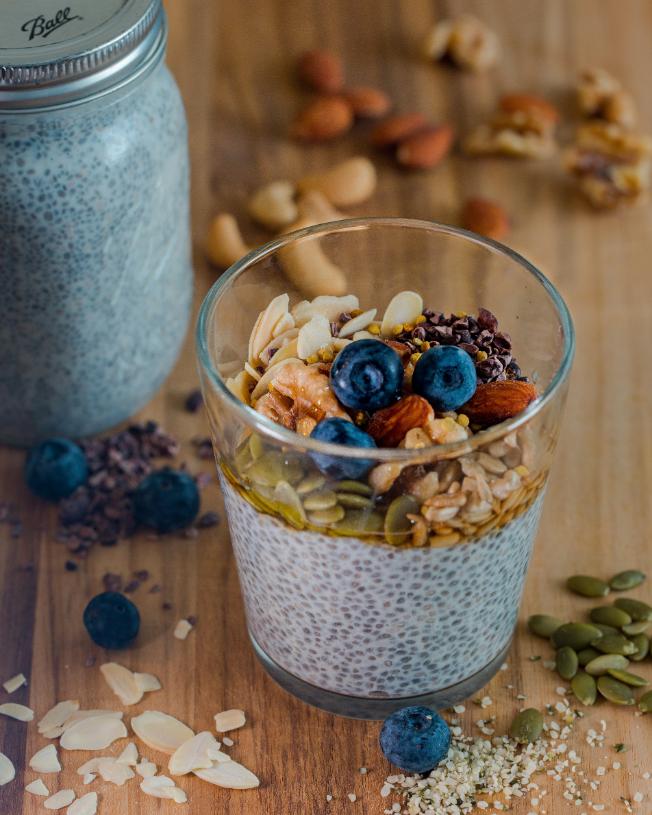
Chia Pudding with Mango, Lime and Pumpkin Seeds
Five minutes the night before, and breakfast is waiting in the fridge. Stir it twice: once when you mix it, and again ten minutes later, or it sets in clumps.
Ingredients
- 60g chia seeds
- 400ml unsweetened soy milk, calcium-fortified
- 1 tbsp maple syrup, optional
- Half a tsp vanilla extract
- 1 ripe mango, peeled and diced
- The zest and juice of 1 lime
- 20g pumpkin seeds, toasted
Method
- Whisk the chia seeds, soy milk, maple syrup and vanilla together in a bowl or two jars until no dry seeds float on top.
- Leave it for ten minutes, then stir it again. The seeds sink and clump as they start to swell; the second stir breaks the clumps up while they are still loose. Skip it and you get a solid layer at the bottom and thin milk on top.
- Cover and refrigerate for at least four hours, or overnight. It should be thick enough to hold a spoon upright. If it is too firm, loosen it with a splash more milk.
- Toss the mango with the lime juice and half the zest.
- Spoon the pudding into two bowls or leave it in the jars, top with the mango, the pumpkin seeds and the rest of the zest. It keeps for three days in the fridge without the toppings.
Why it works
Chia pudding is one of the few breakfasts that is genuinely better made the night before, and it holds its texture for three days, so one batch covers most of a working week.
Chia seeds absorb many times their own weight in liquid and turn it into a gel. That gel is mostly soluble fibre, and a portion here carries around 10g of fibre, a third of the 30g a day UK guidance recommends. Soluble fibre slows how quickly the sugar in the mango reaches the bloodstream, which is why the pudding keeps you full longer than fruit and cereal with a similar number of calories.
Chia is also, with flaxseed, the richest plant source of ALA, the plant form of omega-3. The honest limit: the body converts only a small share of ALA into the EPA and DHA found in oily fish, so chia adds to fish rather than replacing it.
The milk matters more than it looks. Unsweetened soy milk brings about 6g of protein a glass, and it is soy, so it carries isoflavones; what those can and cannot do after menopause is covered in how to increase oestrogen naturally. Check the label for calcium. Many organic plant milks are not fortified, because organic rules restrict added vitamins and minerals, and calcium is the reason to choose soy over plain water after menopause, when bone loss speeds up: protecting your bones.
Pumpkin seeds add magnesium and zinc and a crunch the pudding needs.
At 15g of protein this is a solid but not a high-protein breakfast. For more, stir 100g of Greek yogurt through each portion before topping it (not vegan, but it adds about 9g), or make the tofu scramble. For another make-ahead breakfast, see overnight oats with flaxseed.