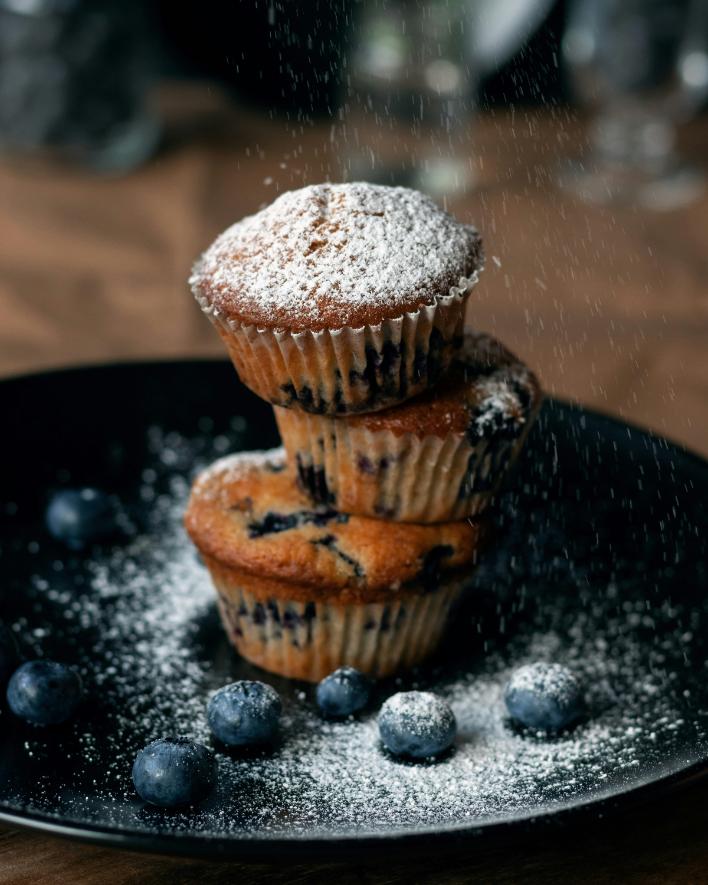
Blueberry Oat Protein Muffins
Blending the oats into a flour first is what makes these soft and light rather than dense and chewy. Ripe banana and a little maple syrup sweeten them, and a 12-hole tin keeps each one a sensible size. They freeze well, too.
Ingredients
- 180g rolled oats
- 60g vanilla or unflavoured protein powder (whey)
- 2 tsp baking powder, half a tsp bicarbonate of soda and a pinch of salt
- 1 tsp ground cinnamon
- 2 eggs
- 250g 0% fat Greek yogurt
- 1 large ripe banana (about 120g peeled), mashed
- 2 tbsp olive oil (30ml), or melted coconut oil
- 1 and a half tbsp maple syrup (30g)
- Finely grated zest of 1 lemon
- 150g blueberries, fresh or frozen
Method
- Heat the oven to 180C (160C fan). Line a 12-hole muffin tin with paper cases, or grease it well.
- Blend the oats in a food processor or blender until they look like fine flour. Tip into a bowl and mix with the protein powder, baking powder, bicarbonate of soda, salt and cinnamon.
- In another bowl, whisk the eggs, yogurt, banana, oil, maple syrup and lemon zest until smooth.
- Fold the wet ingredients into the dry ones until just combined. Protein powder makes the batter thicker than a normal muffin mix; that is expected. Gently fold in most of the blueberries. If using frozen berries, add them straight from the freezer.
- Divide between the cases and press the rest of the blueberries into the tops.
- Bake for 20 to 25 minutes, until risen and a skewer pushed into the middle comes out clean. Do not overbake; protein powder dries out quickly.
- Cool in the tin for 5 minutes, then on a rack. Keep in an airtight container in the fridge for up to 4 days, or freeze for up to 3 months.
Why it works
Each muffin has about 9g of protein and just under 150 calories. A quarter of its energy comes from protein, above the 20% that a food needs to be called "high protein" in the UK. Bakery muffins are usually much bigger and much higher in sugar.
The protein comes from four places: the protein powder, Greek yogurt, eggs and oats. Oats also provide beta-glucan, a soluble fibre. Eating 3g of oat beta-glucan a day, as part of a healthy diet, helps maintain normal blood cholesterol; each muffin gives you a small amount towards that.
Low in added sugar. Most of the sweetness comes from the ripe banana and the blueberries. The only added syrup is 30g of maple syrup across 12 muffins, which works out at under 2g of added sugar each. The NHS advises adults to have no more than 30g of free sugars a day.
No protein powder? Use 60g of ground almonds instead. Each muffin will have about 6g of protein and about 160 calories, so this version is no longer high in protein.
One or two make a sensible snack before or after training. Oats are naturally gluten-free but are often contaminated with wheat, so use oats labelled gluten-free if you need to. Contains eggs and milk. For a loaf version, try the healthy banana bread.


.jpeg)
.jpeg)












.jpeg)


.jpeg)