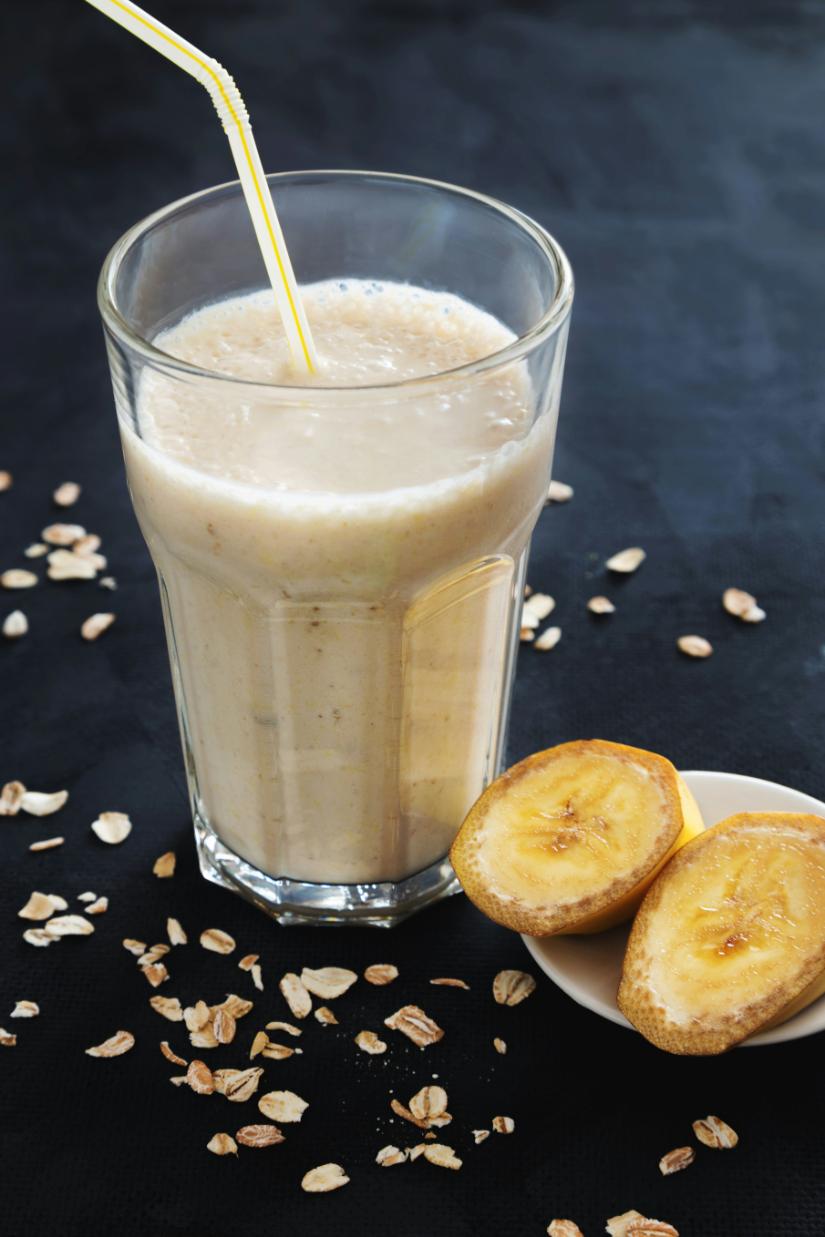
Banana, Oat and Peanut Butter Recovery Smoothie
You do not need protein powder to make a proper recovery shake. Milk and Greek yogurt give this 27g of protein, the banana and oats give the carbohydrate, and a frozen banana makes it as thick as a milkshake. It takes five minutes, including washing the blender.
Ingredients
- 1 ripe banana (about 120g), ideally sliced and frozen
- 25g rolled oats
- 1 tbsp smooth peanut butter (15g, 100% peanuts)
- 250ml semi-skimmed milk
- 100g 0% fat Greek yogurt
- A pinch of ground cinnamon
- Optional: a few ice cubes if your banana is not frozen
Method
- Put the oats in the blender first and blitz them on their own for 10 seconds, until they look like coarse flour. This stops the smoothie from being gritty.
- Add the banana, peanut butter, milk, yogurt and cinnamon.
- Blend for 45 to 60 seconds, until completely smooth and thick.
- Taste it. Add a splash more milk if it is too thick, or a few ice cubes if your banana was not frozen.
- Drink straight away. If you make it ahead, keep it in the fridge for up to 12 hours and shake it before drinking, as the oats keep thickening it.
Why it works
This has about 27g of protein from the milk, Greek yogurt, oats and peanut butter, with no protein powder. Milk proteins are digested at different speeds, which gives your muscles a steady supply after training.
Timing matters less than you might think. Research reviews suggest that how much protein you eat over the whole day matters much more for muscle than whether you have it within 30 minutes of training. A shake is simply an easy way to get a good dose when you are not hungry for a meal.
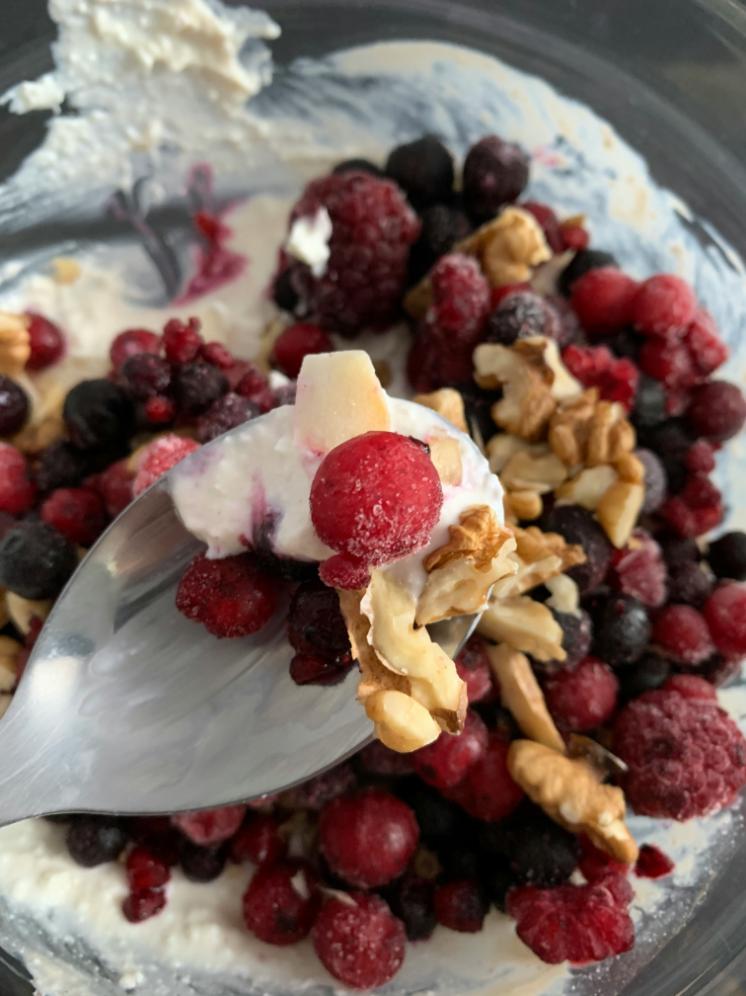
The carbohydrate matters too. The smoothie has about 57g of carbohydrate, mostly from the banana and oats. It refills the glycogen your muscles use for hard exercise. That matters most if you train again within a day. On a rest day, or if you are trying to lose fat, a lighter snack such as the cottage cheese with pomegranate and walnuts may suit you better.
The milk and yogurt also give about 400mg of calcium, over half the 700mg a day UK adults need. That matters for bone health, especially for women after menopause: see protecting your bones.
Allergy notes. Peanuts and milk are major allergens. Use almond butter and a soya milk and yogurt to make it without either; the protein will be lower. Use oats labelled gluten-free if you need to.
For a lighter smoothie, try the kefir smoothie with berries and Brazil nuts. For how protein and training affect testosterone, see does testosterone build muscle.





.jpeg)


.jpeg)