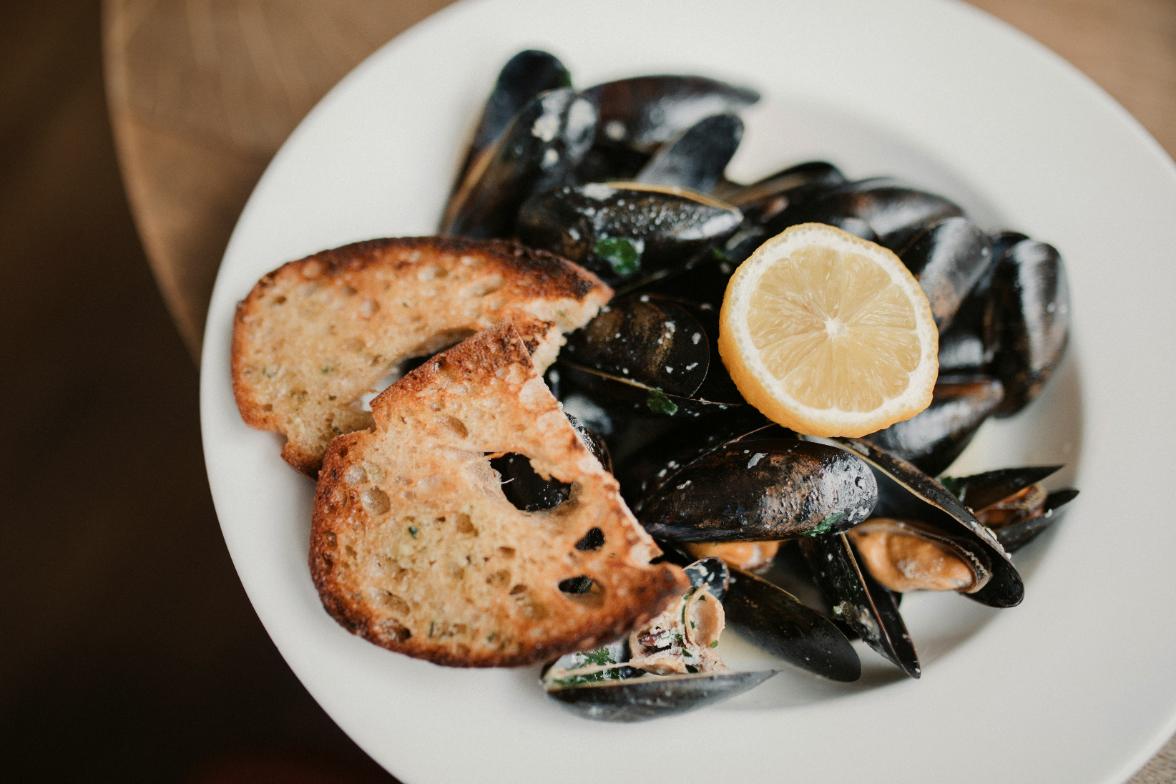
Mussels
The sustainable shellfish that quietly rivals the oyster — a powerhouse of vitamin B12, selenium, iron and omega-3 that feeds the blood, thyroid and hormone machinery, for a fraction of the price.
At a glance
Why it matters
If oysters own zinc and clams own B12 and iron, mussels are the all-rounder that ties the shellfish family together — and they were a genuine gap in this library. A single serving delivers several days' worth of vitamin B12, more than a full day of selenium, a serious hit of iron, and a real dose of omega-3, all in a food that is cheap, sustainable and beloved across the UK and Europe. None of those are 'testosterone nutrients' in the headline sense, but every one of them feeds the foundation your hormones actually run on: oxygen-carrying blood, a well-supplied thyroid, and the anti-inflammatory fats that keep hormone signalling clean. For the price of a side dish, mussels top up several of the exact nutrients most likely to be quietly low.
What's inside
The standout is vitamin B12 (around 20 µg per 100 g — several hundred per cent of a day's need), essential for red blood cells, nerves and energy. Selenium (well over a full day's requirement) is a key antioxidant for sperm formation and thyroid function, while iron (~5–6 mg of the well-absorbed haem form) drives oxygen delivery and energy. Mussels also carry a meaningful dose of omega-3 EPA and DHA, roughly 24 g of complete protein, plus zinc, iodine for the thyroid, manganese and taurine. Uniquely among nutrient-dense animal foods, they are also low in fat and calories and among the most sustainable seafood you can buy.
For men
For men, mussels work like clams and oysters combined but gentler: the selenium and zinc support sperm quality and hormone production, while the iron, B12 and omega-3 restore the energy, stamina and clear-headedness that make healthy testosterone actually feel like something. Men who train hard or eat little red meat can slide into low-normal iron and B12 without noticing, and a plate of mussels is one of the tastiest, cheapest ways to fix that. The omega-3 is a quiet bonus for lowering inflammation and supporting blood flow.
For women
For women, mussels are especially valuable. The monthly iron loss of menstruation makes iron deficiency one of the most common causes of fatigue and low mood in women of reproductive age, and few foods restore iron and B12 as efficiently as mussels. The selenium and iodine support thyroid function, which sits at the centre of women's hormonal balance, and the omega-3s are among the best-studied nutrients for easing period pain and steadying mood. As a light, lean, sustainable source of all this, mussels earn a firm place on the plate.
How to eat it
Mussels are quicker to cook than most people think. Steam fresh ones in a covered pan for a few minutes with garlic, white wine or a tomato base until the shells open — discard any that stay shut — and eat them with bread to mop up the liquor. Tinned or jarred mussels in brine are a cheap, long-life alternative that keep the minerals: toss them through pasta, rice or a chowder. One or two servings a week is plenty to keep B12, selenium and iron topped up.
Worth knowing
Buy from a reputable supplier and cook them properly — as filter feeders, freshness and sourcing matter, and pregnant or immunocompromised people should avoid raw or undercooked shellfish. Anyone with a shellfish allergy should steer clear entirely, and those with haemochromatosis (iron overload) should be mindful of the iron. They can be a little higher in sodium, especially tinned. For nearly everyone else, mussels are one of the most nutrient-dense, wallet-friendly and eco-friendly foods in the shop.
Bottom line
Mussels bundle B12, selenium, iron and omega-3 into a cheap, sustainable shellfish — restoring the blood, thyroid and cellular energy your hormones run on, and rounding out the oyster-and-clam trio beautifully.
Related reading: its shellfish cousin clams, and the omega-3 it provides.
Educational information, not medical advice. Foods affect people differently — if you have a medical condition, are pregnant or breastfeeding, or take medication, talk to your doctor before making big dietary changes. Some links are affiliate links — if you buy through them we may earn a small commission, at no extra cost to you.