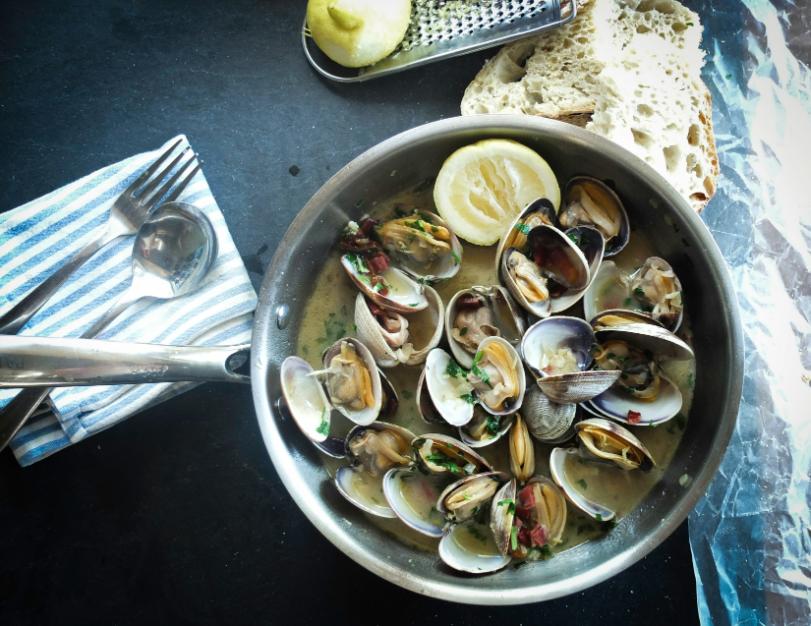
Clams
If oysters are the zinc champion, clams are the vitamin B12 and iron champion — gram for gram one of the most concentrated sources of the nutrients that keep your blood, energy and hormone machinery running.
At a glance
Why it matters
Clams rarely get the billing oysters do, but for a large slice of the population they may be the more useful shellfish. The reason is what they carry. A 100 g serving of cooked clams delivers roughly 99 micrograms of vitamin B12 — the highest of any food on earth, several thousand per cent of a day's requirement — alongside a remarkable ~28 mg of highly absorbable heme iron. Neither B12 nor iron is a "hormone nutrient" in the way zinc or vitamin D are, but that misses the point: hormones don't work in a vacuum. Testosterone and oestrogen are produced, transported and felt inside a body that runs on oxygen, red blood cells and cellular energy — and iron and B12 are the raw materials for exactly that. When either runs low, fatigue, low mood and flagging libido follow, and no amount of testosterone will feel like enough. Clams top up the foundation the whole system stands on, which is why they belong right alongside the oyster.
What's inside
The two headline nutrients are vitamin B12 (~99 µg per 100 g), essential for red blood cell formation, nerve function and energy metabolism, and heme iron (~28 mg), the form your body absorbs far more efficiently than the iron in plants. Around it sits a genuinely impressive supporting cast: selenium (~64 µg, over 100% of the daily need) protects reproductive tissue and supports thyroid function; zinc (~2.7 mg) contributes to testosterone synthesis, though clams are a modest zinc source next to oysters; and roughly 26 g of complete protein supplies the amino acids for muscle and repair. Clams also carry copper, manganese, iodine for the thyroid, a little omega-3, and even a surprising hit of vitamin C — a nutrient combination that reads more like a multivitamin than a plate of shellfish.
For men
For men, clams are best understood as an energy-and-foundation food rather than a direct testosterone lever. The selenium and zinc make a real contribution to sperm quality and hormone production, but the standout benefit is what iron and B12 do for the felt experience of healthy hormones: stamina, drive, exercise capacity and clear-headedness. Men who train hard, sleep poorly or eat little red meat can quietly drift into low-normal iron and B12 without realising it, and clams are one of the fastest dietary ways to correct that. Think of them as clearing the fog so your own testosterone can actually do its job.
For women
This is where clams genuinely earn their place. Women lose iron every month through menstruation, and iron deficiency — with or without full anaemia — is one of the most common and under-recognised causes of fatigue, low mood and poor concentration in women of reproductive age. A single serving of clams delivers more absorbable iron than almost any other food, alongside the B12 that so often runs low in women eating less red meat. The selenium supports thyroid function, which sits at the centre of women's hormonal balance, and the whole package supports steady energy across the cycle. For many women, clams (or their close cousins, cockles and mussels) are one of the most practical foods on this entire list.
How to eat it
You don't need to be a chef. Fresh clams steam open in minutes in a covered pan with a little garlic, white wine or stock — discard any that stay shut. But the real everyday hero is the tin: baby clams, cockles and mussels come tinned in water or brine, cost very little, keep for years, and carry the same core minerals. Toss them through pasta or rice, stir into a tomato sauce or chowder, or pile them onto toast. One to two servings a week is plenty to keep iron, B12 and selenium topped up.
Worth knowing
Clams are filter feeders, so freshness and sourcing matter — buy fresh from a supplier you trust, and cook them properly (skip raw shellfish in pregnancy or if you're immunocompromised). Avoid entirely with a shellfish allergy. The iron content, so valuable for most people, is worth flagging for the minority with haemochromatosis (iron overload), who should not seek out iron-rich foods. Tinned clams can be higher in sodium, so choose those packed in water where you can. For nearly everyone else, they are one of the most nutrient-dense, wallet-friendly foods in the shop.
Bottom line
Oysters own zinc, but clams own B12 and iron — and by restoring the blood, oxygen and cellular energy your hormones actually run on, they quietly do as much for how you feel as any single food on this page.
Related reading: the nutrients it's richest in — iron and vitamin B12.
Educational information, not medical advice. Foods affect people differently — if you have a medical condition, are pregnant or breastfeeding, or take medication, talk to your doctor before making big dietary changes. Some links are affiliate links — if you buy through them we may earn a small commission, at no extra cost to you.