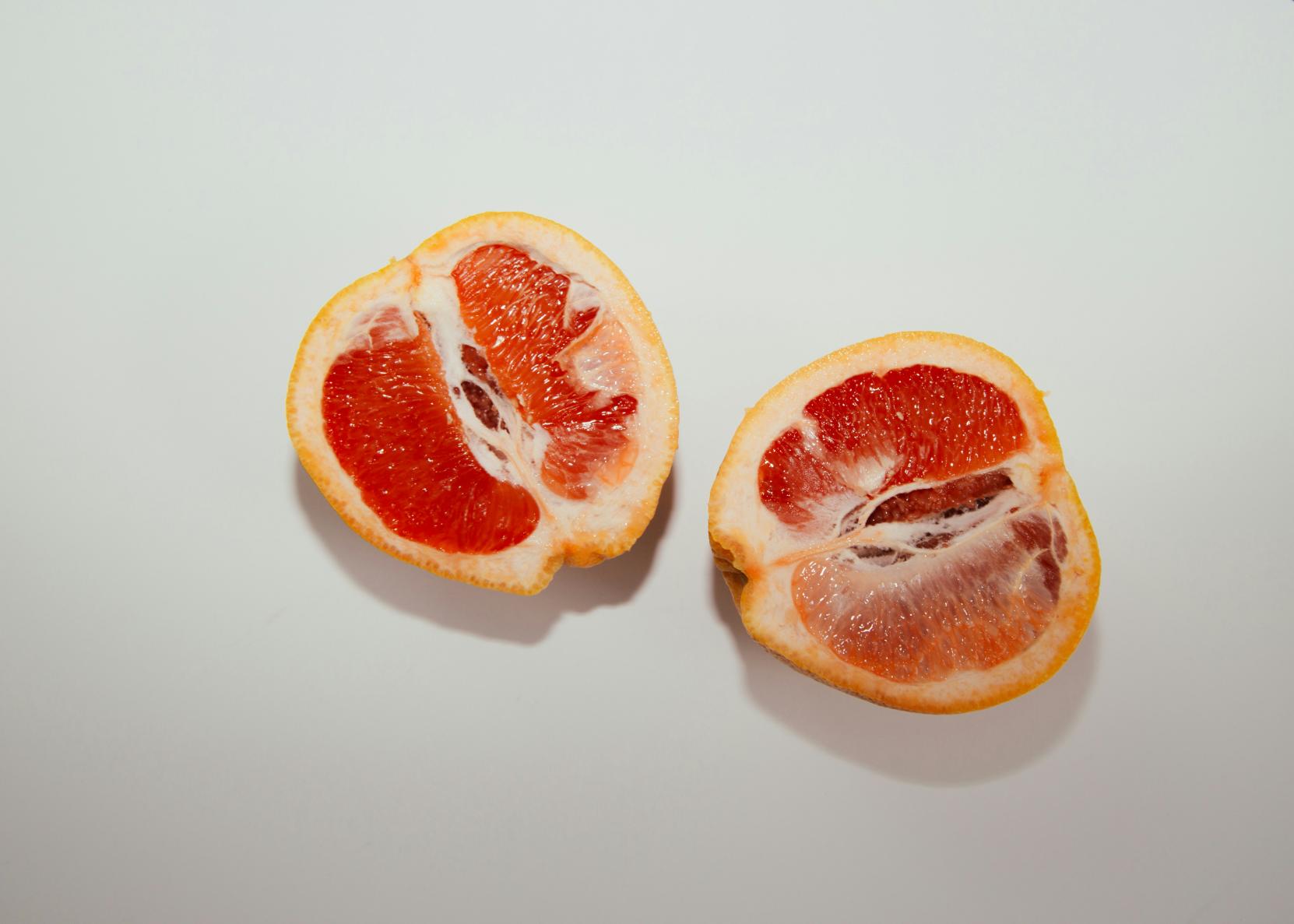
Grapefruit
A healthy fruit for most people — but it blocks a key liver enzyme that clears hormones and medicines, which can matter if you take certain drugs or hormone therapy.
At a glance
Why it matters
Grapefruit is, for most people, a genuinely healthy fruit — high in vitamin C, fibre and antioxidants. It appears in the "limit" section for one specific reason: it contains compounds called furanocoumarins that block an enzyme in the gut and liver, CYP3A4, which the body uses to break down a long list of medicines and, importantly, hormones. When that enzyme is inhibited, substances it would normally clear can build up to higher-than-expected levels. For anyone taking certain medications or hormone therapy, that interaction is a real and well-documented effect, which is why grapefruit deserves a note of caution rather than a place on the everyday list — not because the fruit is unhealthy, but because of what it does to hormone and drug clearance.
What's inside
The compounds behind the caution are furanocoumarins, which inhibit the CYP3A4 enzyme responsible for metabolising many drugs and steroid hormones, including forms of oestrogen. By slowing that breakdown, grapefruit can raise circulating levels of whatever the enzyme would normally clear. Set against that, grapefruit is nutritionally good: rich in vitamin C, fibre, potassium and antioxidants, with a low sugar load for a fruit. The tension between its genuine nutrition and its enzyme effect is exactly why it needs an informed, individual approach rather than a blanket rule.
For men
For men, the effect is nuanced. By slowing the clearance of oestrogen, grapefruit could in theory raise oestrogen levels, which is the opposite of what most men want for hormonal balance — though for a man on no relevant medication, moderate intake is unlikely to cause problems. The more important caution is for anyone taking prescription medicines, since grapefruit can amplify their effects. If that applies to you, it is worth checking which of your medicines interact.
For women
For women, the most relevant point is hormone therapy. Because grapefruit inhibits the enzyme that metabolises oestrogen, it can affect the levels of oral oestrogen in HRT or the contraceptive pill, potentially raising them. This is not necessarily harmful, but it is unpredictable, and unpredictability is not what you want with hormone dosing. Women on HRT or hormonal contraception are the group most worth having a quick conversation with a pharmacist about.
How to eat it
If you take no interacting medication and are not on hormone therapy, grapefruit is a healthy fruit you can enjoy in moderation. If you do take regular medicines or hormones, the safest approach is to check with your pharmacist or doctor which of them interact with grapefruit, since the effect varies widely by drug. Where there is an interaction, it often applies to the juice as strongly as the fruit, and separating them in time does not reliably avoid it.
Worth knowing
This is the unusual entry where the food itself is nutritious and the caution is entirely about interactions. The furanocoumarin effect is specific to grapefruit (and a few related citrus like Seville oranges and pomelos); ordinary oranges and most other citrus do not share it. So this is not a reason to avoid citrus generally — it is a targeted, personal caution that matters a great deal to some people and not at all to others.
Bottom line
Grapefruit is a healthy fruit that happens to block the CYP3A4 enzyme clearing hormones and many medicines — worth limiting or checking with a pharmacist if you take interacting drugs or hormone therapy, and otherwise fine in moderation.
Related reading: Foods that lower testosterone, how men can lower high oestrogen and the side effects of HRT. Browse the full food library.
Educational information, not medical advice. Foods affect people differently — if you have a medical condition, are pregnant or breastfeeding, or take medication, talk to your doctor before making big dietary changes. Some links are affiliate links — if you buy through them we may earn a small commission, at no extra cost to you.