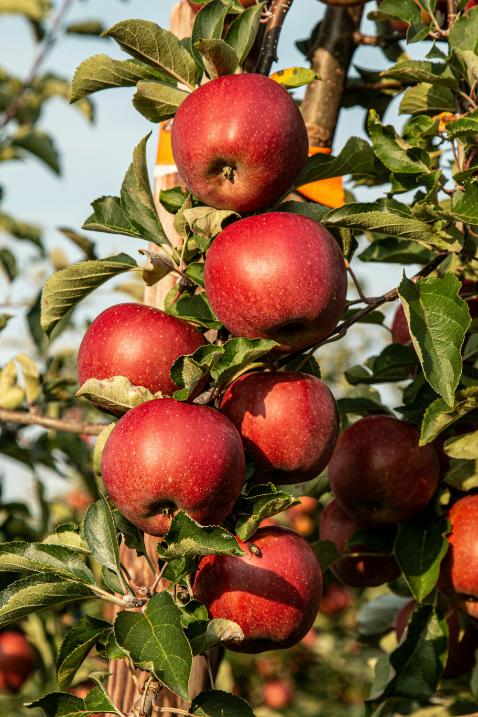
Apples
Cheap, portable and filling, with pectin fibre and polyphenols concentrated in the skin.
At a glance
Why it matters
An apple a day will not keep every doctor away, but apples are one of the easiest fruits to eat daily: cheap, portable, grown in Britain and available from British stores for much of the year, and they keep well. They are also more filling than their calories suggest, because of their fibre and water.
That makes them a practical swap for a biscuit or a bag of crisps, which is where most of their real value lies.
What's inside
A medium apple provides around 3 to 4g of fibre, much of it pectin, a soluble fibre. Apples are also rich in polyphenols, including quercetin, with smaller amounts of vitamin C and potassium.
Keep the skin on. A large share of the fibre is in the skin, which is also far richer in polyphenols than the flesh and holds almost all of the quercetin.
For men
Apples do not raise testosterone. Their value is indirect: a filling, low-calorie snack helps you manage weight, and carrying excess fat is one of the most common reasons for low testosterone in middle age. See low testosterone and weight gain.
Observational studies link higher intakes of fruit, apples included, with lower rates of heart disease. Good blood vessel health supports erectile function too.
For women
Pectin is fermented by gut bacteria, which produce short-chain fatty acids that support a healthy gut lining. A healthy gut is part of how the body handles many things, including oestrogen.
After menopause, cholesterol tends to rise. Soluble fibre such as pectin can help a little as part of an overall diet, and replacing sugary snacks with whole fruit helps keep blood sugar steadier. See menopause and heart health.
How to eat it
Whole and unpeeled, sliced with a spoonful of nut butter or a piece of cheese for a snack with protein and fat, which keeps you fuller still.
Grate apple into porridge or overnight oats, bake it, or cook it with pork and red cabbage. Try the baked oats with apple and cinnamon or the pork tenderloin with apples and red cabbage.
One medium apple counts as one of your 5 a day.
Worth knowing
Juice is not the same. Juicing removes most of the fibre and releases the sugars, so they count as free sugars. The NHS advises limiting fruit juice, vegetable juice and smoothies to 150ml a day combined, which counts as one portion of your 5 a day however much you drink.
Apples are acidic and sugary, so eating them with a meal rather than grazing on them all day is kinder to your teeth.
Apple pips contain a compound that releases cyanide when crushed, but the amount in the odd swallowed pip is harmless. There is no need to worry about it.
Bottom line
Apples are a cheap, filling, everyday fruit with useful fibre and polyphenols; eat them whole, with the skin, rather than as juice.
Related reading: Can low testosterone cause weight gain?, why you gain weight in menopause and how to balance your hormones naturally. Browse the full food library.
Educational information, not medical advice. Foods affect people differently — if you have a medical condition, are pregnant or breastfeeding, or take medication, talk to your doctor before making big dietary changes. Some links are affiliate links — if you buy through them we may earn a small commission, at no extra cost to you.