Spinach, Feta and Pumpkin Seed Omelette
Eight minutes, three eggs, and the pan temperature almost everyone gets wrong. A breakfast with real protein in it, which most British breakfasts are not.

Ingredients
- 3 eggs
- 60g spinach, washed
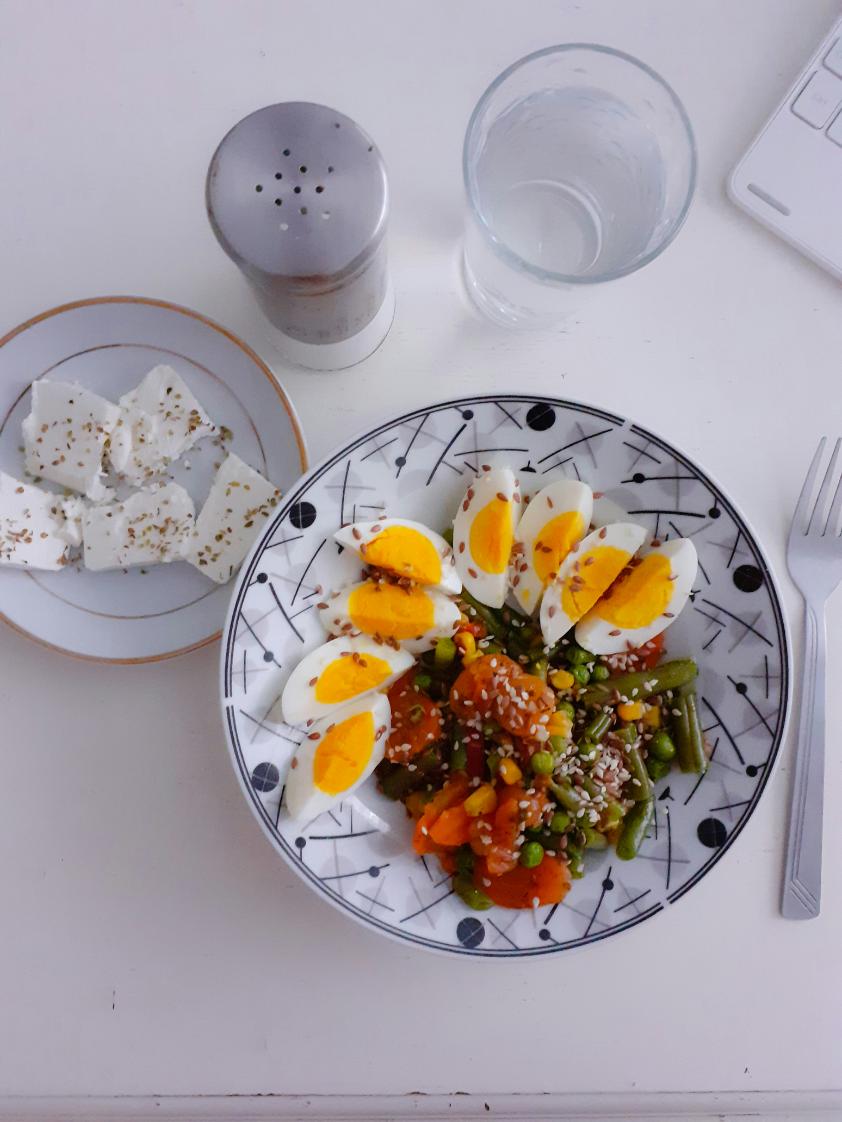
- 30g feta, crumbled
- 1 tbsp pumpkin seeds
- 1 tbsp extra-virgin olive oil
- A few cherry tomatoes, halved
- Black pepper, and a little salt — the feta brings its own
- Chives or parsley, if you have them
Method
- Toast the pumpkin seeds first, in the dry pan, for 2 minutes until they start to pop. Tip them out. They go on at the end, and untoasted they taste of nothing.
- Add half the oil and wilt the spinach for about a minute. Tip it out with the seeds and squeeze out any water — wet spinach makes a wet omelette.
- Beat the eggs with pepper. Not to a foam; twenty seconds with a fork is enough.
- Wipe the pan, add the rest of the oil and put it on a medium-low heat. This is the step that goes wrong: a hot pan browns the outside before the inside sets, and you end up cooking it dry to fix that.
- Pour in the eggs. Draw the setting edges into the middle with a spatula and tilt the raw egg into the gaps, for about two minutes.
- When the top is still glossy but no longer liquid, scatter the spinach, feta and tomatoes over one half. Fold, slide onto a plate, and finish with the seeds.
Why it works
The point of this breakfast is that it contains protein, which the usual British alternatives do not.
Toast and cereal deliver carbohydrate with almost no protein, so appetite returns within two hours. Three eggs and feta bring about 27g, which is in the range most people need per meal to hold appetite steady through the morning.
Eggs also supply cholesterol and saturated fat, and both are substrates for steroid hormone synthesis. That does not mean eating more eggs raises testosterone — the body regulates production tightly, and the relationship is not a dial. It means that very low-fat diets have been associated with lower testosterone in men, and that a breakfast containing fat is not the problem it was once assumed to be.
Pumpkin seeds are here for zinc, the one mineral with an authorised claim attached to the maintenance of normal testosterone levels in the blood. One tablespoon is not a large dose, but it is a daily habit rather than a supplement, which is usually the better bet.
Spinach adds magnesium and dietary nitrate, and it cooks down to almost nothing, so 60g is less than it sounds.
More on why the first meal matters: breakfast mistakes that work against testosterone.