Salmon Traybake with New Potatoes, Broccoli and Dill Yogurt
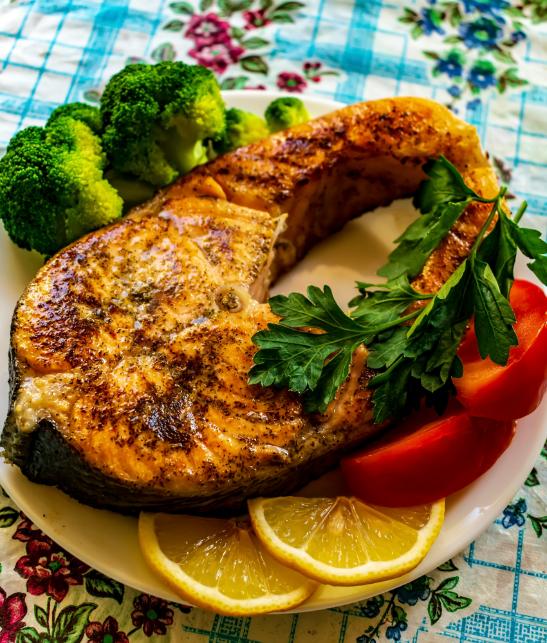
One tray, thirty minutes, five of them hands-on. Take the salmon out while the centre is still slightly translucent; it finishes cooking on the plate.

Ingredients
- 2 salmon fillets, skin on (about 130g each)
- 400g new potatoes, halved
- 200g tenderstem broccoli, or asparagus in spring
- 1 tbsp extra-virgin olive oil
- 1 lemon
- A small bunch of dill
- 80g Greek yogurt
- Salt and pepper
Method
- Heat the oven to 220C (200C fan). Toss the potatoes with half the oil and a pinch of salt in a roasting tin and roast for 15 minutes on their own.
- Push the potatoes to the sides. Add the broccoli, tossed in the rest of the oil, and lay the salmon skin side down in the middle. Season, and lay a couple of thin lemon slices on each fillet.
- Roast for 10 to 12 minutes. The salmon is ready when it flakes at the thickest point but the very centre is still just translucent. It keeps cooking for a few minutes out of the oven; wait until it is opaque all the way through in the tin and it will be dry on the plate.
- Meanwhile, stir the chopped dill, the zest of half the lemon, a squeeze of juice and a pinch of salt into the yogurt.
- Serve the salmon on the potatoes and broccoli with the dill yogurt spooned over.
Why it works
This is the easiest way to get the one portion of oily fish a week the NHS recommends: one tray, no pans, and nothing that needs watching.
Salmon is here for two nutrients that are hard to get elsewhere. The first is the long-chain omega-3 fats, EPA and DHA, which plant foods cannot supply directly. The second is vitamin D, one of the few foods that contains it at all. Farmed salmon, which is most of what UK supermarkets sell, contains less vitamin D than wild, and levels vary widely, so it does not replace the daily 10 microgram supplement the NHS advises from October to March: vitamin D.
The sleep tag rests on one trial, and it is worth being clear about how much. In a study of 95 men in a secure hospital in Norway, those given Atlantic salmon three times a week through autumn and winter fell asleep faster and functioned better during the day than men given chicken, pork or beef. It is a single trial in an unusual group, so treat it as a reason to eat oily fish in the evening, not as a sleep treatment. More on the other side of that link: does sleep affect testosterone and menopause, sleep and hormones.
For women after menopause, the combination of omega-3, vitamin D and the calcium in the yogurt supports bone and heart, the two things that change most once oestrogen falls. Broccoli adds fibre, folate and vitamin C.
Like the Greek chicken traybake, this is not tagged for blood sugar because of the potatoes. Swap half of them for a tin of white beans, added with the salmon, if that is your priority. For a quicker, lighter salmon dish, see salmon with broccoli sprouts.