Low-Sugar Granola with Nuts and Seeds
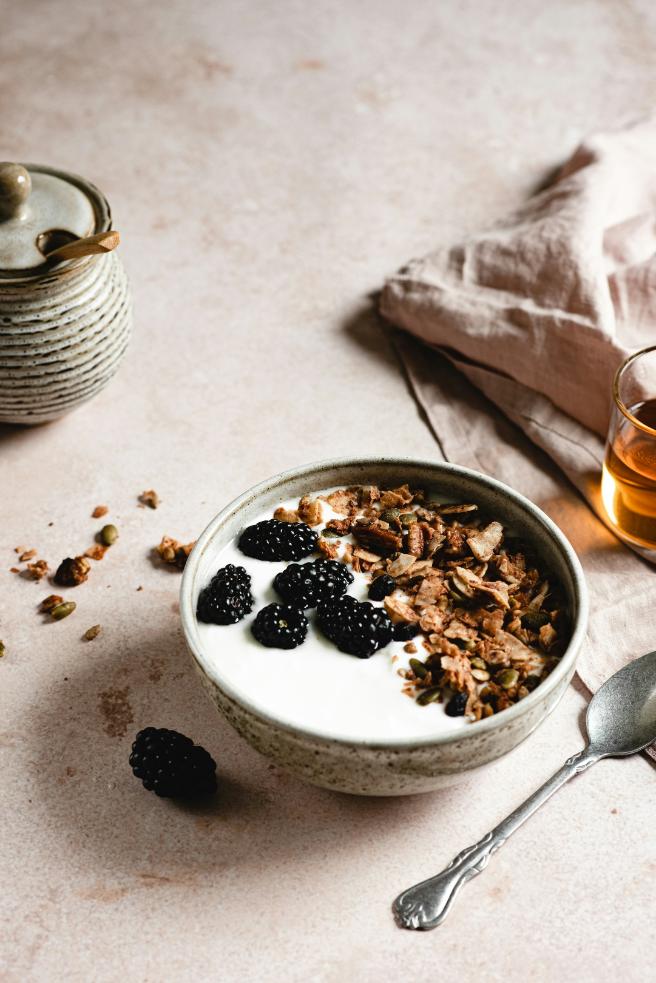
Most granola gets its clusters from sugar. This one gets them from a whisked egg white, so it needs only a few spoonfuls of maple syrup. Leave it untouched on the tray until it is completely cold, or the clusters break up.
Ingredients
- 300g jumbo oats
- 100g almonds, roughly chopped
- 50g walnuts, roughly chopped
- 50g pumpkin seeds
- 50g sunflower seeds
- 30g whole flaxseed
- 2 tsp ground cinnamon and a pinch of salt
- 4 tbsp maple syrup (60g)
- 3 tbsp light olive oil or rapeseed oil
- 1 tsp vanilla extract
- 1 egg white
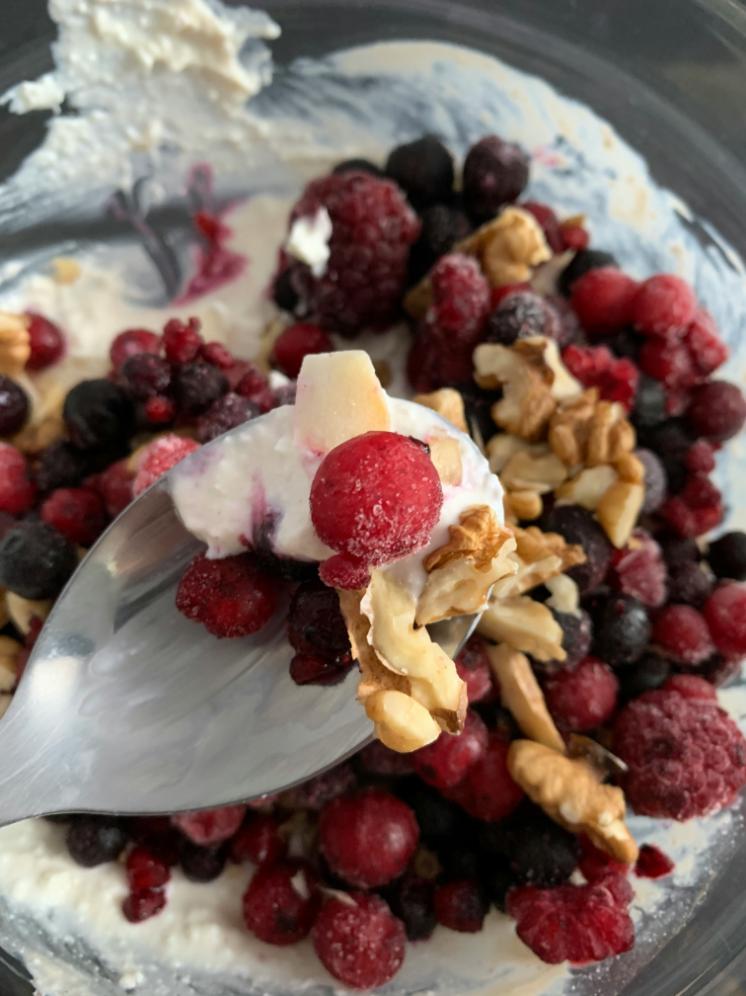
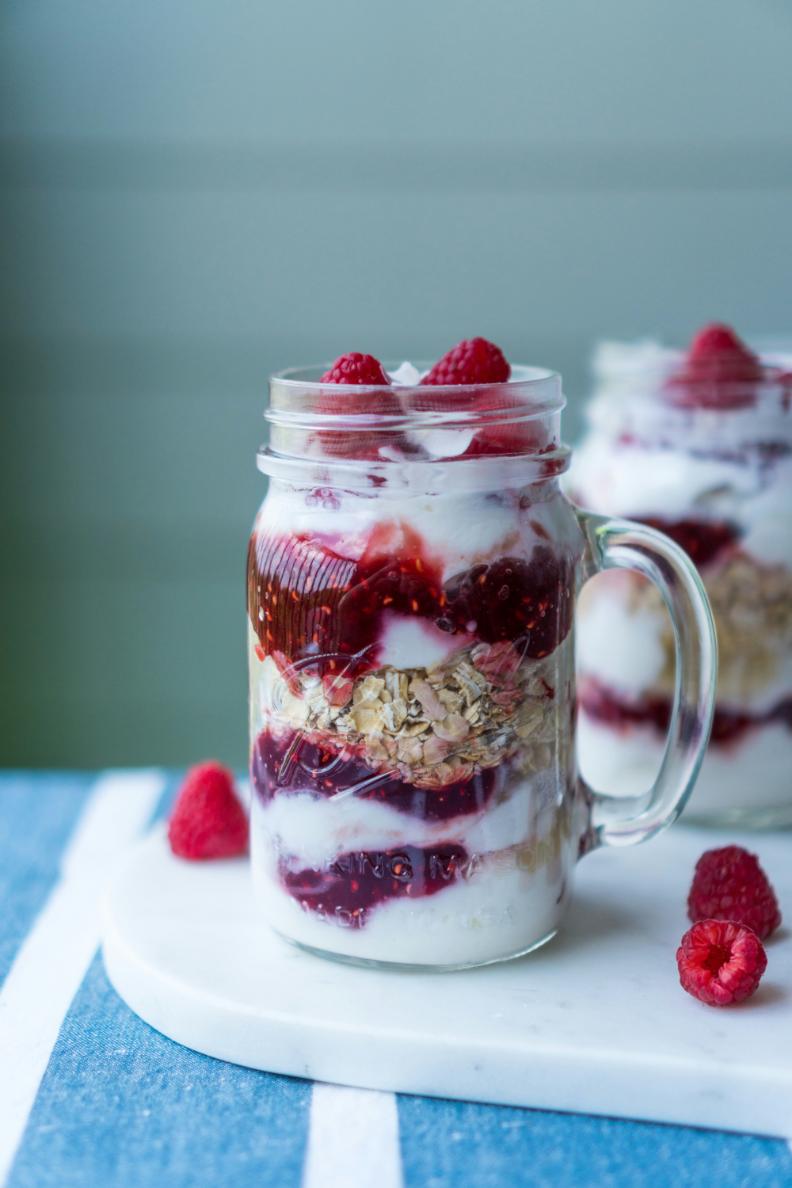
- To serve: Greek yogurt or milk, and fresh berries
Method
- Heat the oven to 160C (140C fan) and line a large baking tray with baking paper.
- Mix the oats, nuts, seeds, flaxseed, cinnamon and salt in a large bowl.
- Warm the maple syrup, oil and vanilla together for 30 seconds, pour them over the oats and stir until everything is lightly coated.
- Whisk the egg white until frothy, about 30 seconds with a fork, then stir it through. It coats the oats in a thin layer of protein that sets in the oven and glues them into clusters, which is the job sugar usually does.
- Spread the mixture over the tray and press it down firmly with the back of a spoon into an even, compact layer.
- Bake for 25 to 30 minutes, turning the tray once, until golden. Do not stir it.
- Leave it to cool completely on the tray, at least 30 minutes. It crisps as it cools. Then break it into clusters and store in an airtight jar for up to three weeks.
Why it works
Granola is often more sugary than the cereal it replaced. Under the UK traffic-light labels, anything over 22.5g of sugar per 100g counts as high, and plenty of shop granolas sit close to that line or over it. This one has about 7g per 100g, most of it from the maple syrup, which is spread across sixteen servings.
The egg white is what makes that possible. Without enough syrup, homemade granola usually bakes into loose, dusty oats; the egg white binds them into clusters instead. For a vegan version, use 3 tablespoons of the liquid from a tin of chickpeas, whisked the same way.
Oats carry beta-glucan, a soluble fibre that lowers LDL cholesterol when you eat about 3g a day, one of the few food health claims approved in the UK. A serving of this granola provides part of that; a bowl of porridge provides more. Almonds, walnuts and pumpkin seeds add protein, magnesium and the kind of fat that slows the carbohydrate down, which is why this is tagged for blood sugar and a bowl of flakes is not.
The honest part is the portion. Nuts and seeds make granola filling and also calorie-dense: a 45g serving is about 215 calories before the yogurt or milk, and it is easy to pour twice that. Weigh it the first time so you know what a serving looks like in your bowl.
With 150g of Greek yogurt, a serving comes to around 21g of protein, which makes it a proper breakfast rather than a snack. For women around menopause, that combination of protein and fibre is a good start to the day: the best diet for menopause. For a no-bake alternative, see overnight oats with flaxseed.

.jpeg)