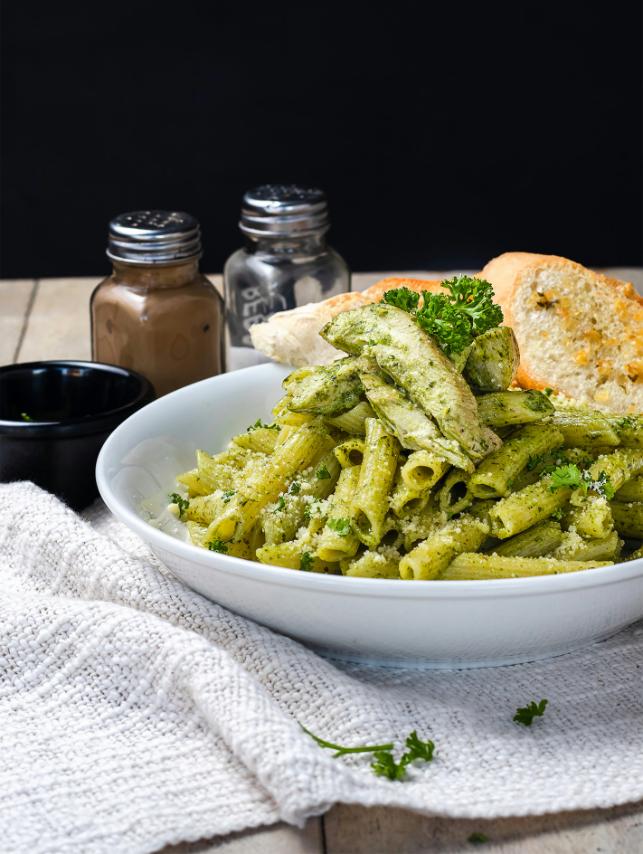
Wholewheat Pasta with Kale and Walnut Pesto
Kale makes a pesto that is greener and more robust than basil, but raw it can taste bitter. Blanch it for one minute in the pasta water first; it turns bright, soft and sweet, and it costs you no extra pan.
Ingredients
- 160g wholewheat spaghetti or other wholewheat pasta
- 120g kale, tough stems removed
- 30g walnuts, toasted
- 1 small clove garlic
- 20g Parmesan, or a vegetarian hard cheese, finely grated, plus extra to serve
- 1.5 tbsp extra-virgin olive oil
- The juice of half a lemon
- 150g cherry tomatoes, halved
- A pinch of chilli flakes
Method
- Bring a large pan of salted water to the boil. Drop in the kale for one minute, lift it out with tongs into a sieve, and run it under the cold tap. Squeeze out as much water as you can. Keep the water boiling for the pasta.
- Cook the pasta according to the packet, usually 10 to 12 minutes for wholewheat.
- Meanwhile, blitz the kale, walnuts, garlic, cheese, lemon juice and olive oil in a small food processor until you have a thick, slightly rough paste. Add 2 to 3 tablespoons of the pasta water to loosen it.
- Warm the tomatoes in a dry frying pan over a high heat for 3 minutes, until they start to blister and soften.
- Before draining the pasta, save a mugful of the cooking water. Drain, return the pasta to the pan off the heat, add the pesto and a splash of the saved water and toss until every strand is coated and glossy. The starch in the water turns the pesto into a sauce.
- Serve with the tomatoes, a pinch of chilli flakes and a little more cheese. The pesto keeps for three days in the fridge with a thin layer of oil on top.
Why it works
Swapping white pasta for wholewheat is one of the simplest upgrades there is. Wholewheat pasta has roughly two to three times the fibre of white, and together with the kale, a bowl of this carries about 10g, a third of the day's 30g. Cooked until just al dente, it releases its sugar slowly, which is why it is tagged for blood sugar.
The pesto is where the rest of the goodness is. Walnuts are the richest nut source of ALA, the plant omega-3, and trials of eating walnuts every day have found small falls in LDL cholesterol. Extra-virgin olive oil is the backbone of the Mediterranean diet, the eating pattern with the strongest evidence for heart health, which becomes the priority for women after menopause: menopause and heart health.
Kale brings calcium, vitamin K and vitamin C. The quick blanch is not only about taste: it also shrinks a whole bag of raw leaves into a pesto you can actually eat in one sitting.
Vegetarians should check the cheese. Parmesan is made with animal rennet, so it is not vegetarian by definition; a vegetarian hard cheese works just as well here.
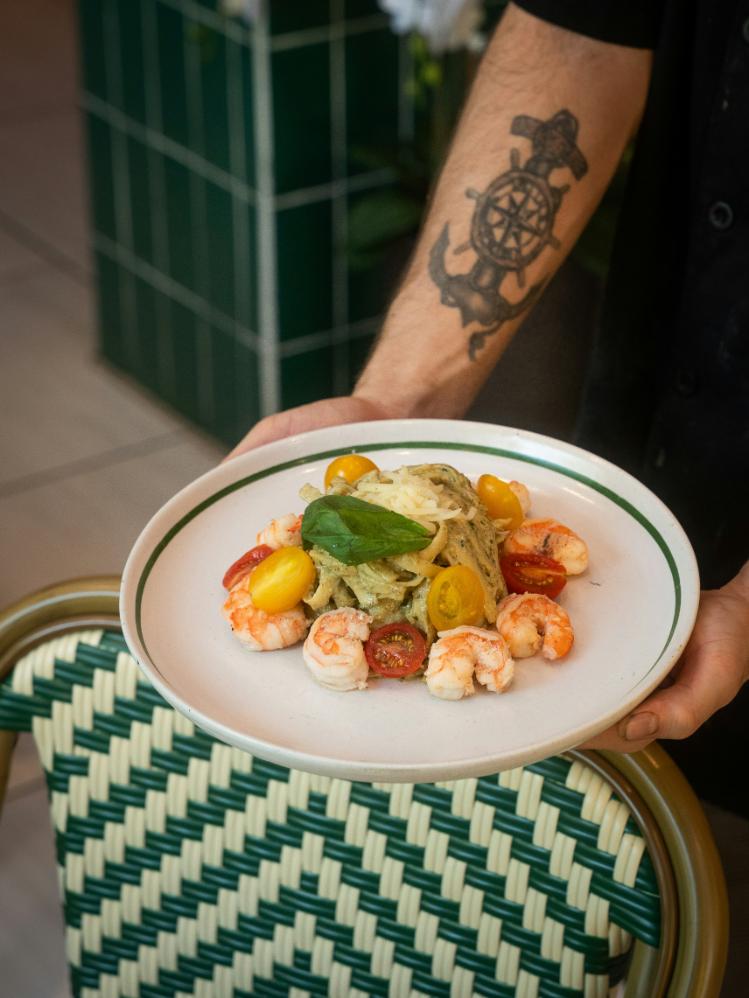
The honest note: this is a generous bowl at about 560 calories, and at 19g it is modest on protein. For more, stir in a tin of drained white beans with the pesto, or top it with grilled chicken or prawns. For a quicker, higher-protein dinner, see the garlic prawn and spinach stir-fry.

.jpeg)