Biology
Testosterone and Hair Loss: What's Actually Behind It
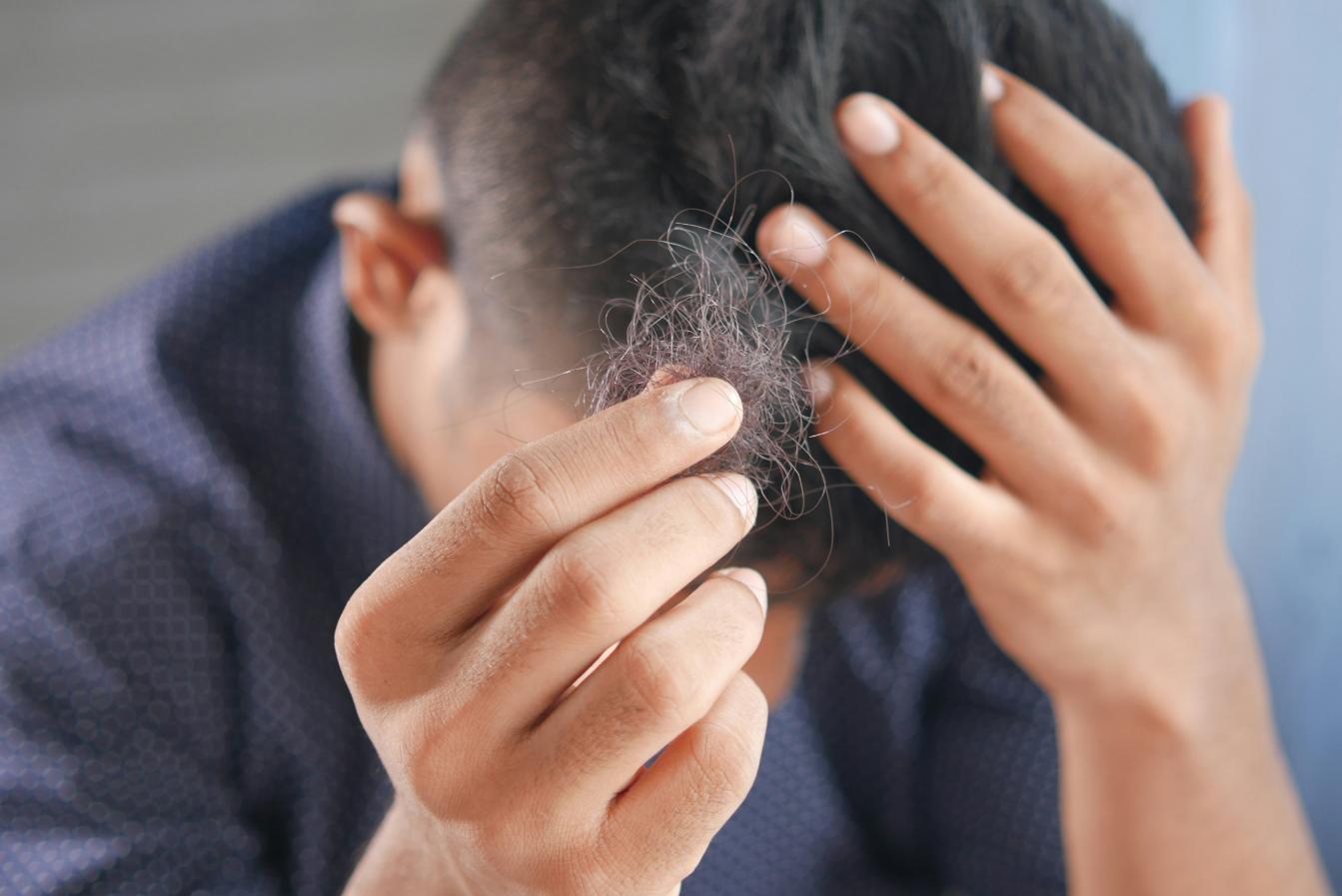
A man notices the light catching his scalp differently in a photograph. Within a week he has read that testosterone causes baldness, that high testosterone means it will happen faster, and that TRT will accelerate it. He has also read, on a different site, that low testosterone causes hair loss and that raising it will help.
Both cannot be right, and in fact neither is. The relationship between testosterone and hair is real but indirect, and the thing doing most of the work is not testosterone at all.
The short version
Male pattern hair loss requires two things: a genetic sensitivity in the hair follicles on the top of your head, and the presence of dihydrotestosterone, a hormone made from testosterone.
If you have the sensitivity, ordinary levels of DHT are enough. If you do not have it, no amount of testosterone or DHT will make you bald in that pattern.
That is why the answer to "does testosterone cause hair loss" is genuinely no, and why the answer to "will TRT affect my hair" is genuinely maybe. The first asks about a cause. The second asks about an accelerant in a man who may already have the mechanism running.
What DHT actually does
An enzyme called 5-alpha reductase converts a portion of your testosterone into DHT, which binds to androgen receptors far more strongly than testosterone does.
In a genetically susceptible follicle, DHT triggers a process called miniaturisation. Each growth cycle the follicle produces a slightly finer, shorter, less pigmented hair, and spends longer resting between cycles. Over years, a terminal hair becomes a vellus hair, the sort of fine colourless down that covers most of your body. The follicle is still alive for a long time in this process, which matters enormously for treatment, because a miniaturised follicle can sometimes be brought back and a dead one cannot.
The pattern follows the map of receptor sensitivity, which is why it takes the same shape in most men: temples first, then the crown, with the band around the back and sides staying put. Those follicles are not sensitive to DHT, which is the entire principle behind hair transplants.
Why blood testosterone tells you almost nothing
Studies comparing men with and without male pattern baldness have not found the balding men to have higher circulating testosterone. What differs is local: the activity of 5-alpha reductase in the scalp, the density of androgen receptors, and how those follicles respond.
Two men with identical blood results can have completely different hair outcomes. One of them inherited sensitive follicles and the other did not.
This has a practical consequence. Testing your testosterone to work out why you are losing hair is almost always a wasted test for that purpose. If you have other symptoms it is worth testing for those reasons, but your hair will not be explained by the number. Testosterone levels by age covers what the number does tell you.
The myths, dealt with plainly
"High testosterone makes you bald." No. Sensitivity does. The stereotype exists because balding and visible muscularity often appear together in the same men, which is a shared genetic story rather than a causal one.
"Low testosterone causes hair loss." Not male pattern hair loss. Genuinely low testosterone can cause thinning of body and facial hair, which is a different observation. If your scalp is receding at the temples, low testosterone is not the explanation.
"It comes from your mother's father." Partly true and widely overstated. The androgen receptor gene sits on the X chromosome, which you get from your mother, so her father is a meaningful clue. But dozens of other genes are involved and inheritance comes from both sides. Your own father's hairline is informative too.
"Wearing hats, washing too often, or hair falling out in the shower." Hats do not cause it. Normal shedding is around fifty to a hundred hairs a day and is not a sign of anything. Washing does not accelerate it.
"Masturbation causes hair loss." An old one that persists. It does not, and it does not lower your testosterone either. The evidence on that is clearer than most people expect.
Where TRT genuinely fits
Starting testosterone therapy raises the substrate available for conversion to DHT. In a man with sensitive follicles, that can accelerate a process already underway. In a man without the sensitivity, it does not initiate one.
Two things follow.
If you have a family history and your hair matters to you, raise it before you start rather than after. It is a routine conversation and there are options, including starting a hair treatment alongside.
And if hair loss appears within months of starting TRT, that is usually acceleration of an existing tendency rather than a new problem, which is worth knowing because it changes what you do about it. TRT side effects covers the wider picture, and what actually changes on TRT covers the realistic timeline.
Anabolic steroid use is a different scale of the same effect, since doses many times physiological produce correspondingly more DHT. The real side effects of anabolic steroids covers where that leads.
What actually works, and what it costs you
Two treatments have solid evidence, and both share the same rule: they maintain rather than restore, and stopping reverses the benefit within months.
Finasteride is a 5-alpha reductase inhibitor, so it reduces DHT rather than testosterone. Trials show most men maintain or improve over five years. The debated part is sexual side effects, reported by a small percentage in trials, usually reversible on stopping, and the subject of genuine ongoing argument about whether a minority experience persistent effects. It is a prescription decision, and an honest one includes that uncertainty rather than dismissing it.
Minoxidil, topical or low-dose oral, works through a different mechanism, prolonging the growth phase and improving follicular blood supply. It pairs well with finasteride because the mechanisms are unrelated.
Beyond those, low-level laser devices have modest supporting evidence, and microneedling has some promising but smaller studies, usually alongside minoxidil. Ketoconazole shampoo has a weak signal.
The single most important variable is not which one you choose. It is how early you start, because these treatments defend follicles that are still alive and cannot resurrect ones that are gone.
When it is not male pattern hair loss at all
Some hair loss has nothing to do with androgens, and mistaking it costs time.
Diffuse thinning across the whole scalp rather than a receding pattern points elsewhere. Iron deficiency, thyroid problems, low vitamin D, rapid weight loss and severe under-eating all produce it.
Sudden heavy shedding two to three months after a stressful event, an illness, an operation or a crash diet is usually telogen effluvium. It looks alarming, it is temporary, and it recovers.
Distinct round bald patches with smooth skin suggest alopecia areata, an autoimmune condition, and it is treated completely differently.
Redness, scaling, itching or pain is a dermatological problem, not a hormonal one.
If your hair loss does not follow the temple-and-crown pattern, get iron, ferritin, thyroid function and vitamin D checked before assuming androgens. Doctor said normal but I still feel tired covers why those markers get missed, and how to read your blood test results covers reading them.
If you decide to treat it, the order that makes sense
Most men approach this backwards, trying shampoos and supplements for two years, then a device, then finally seeing someone about the treatments with actual evidence, by which point a meaningful number of follicles have gone.
A more sensible order looks like this.
First, confirm what you are dealing with. If the pattern is not temples and crown, get bloods before you get treatment.
Second, photograph it properly. Same light, same angle, crown and hairline, every three months. Hair changes too slowly for memory to judge, and men routinely abandon treatments that were working because they could not see it happening.
Third, start the evidence-based options early if you are going to. Talk to a GP or a dermatologist rather than a website. The conversation includes the side effect uncertainty honestly, and the decision is yours to make with real numbers rather than forum anecdotes.
Fourth, give it twelve months before judging. Hair cycles are slow. Six months is the earliest anything is visible and a year is a fair assessment point.
Surgical options exist and work, by moving follicles from the DHT-insensitive band at the back. They are usually best considered once loss has stabilised, and usually alongside medical treatment rather than instead of it, since a transplant does not protect the hair you still have.
The lifestyle question, answered honestly
Sleep, training, diet and stress are genuinely important for testosterone, and this site says so repeatedly. For male pattern hair loss specifically, they are not the lever.
Nothing you eat changes follicular DHT sensitivity. No supplement has been shown to reverse androgenetic alopecia. Saw palmetto is the most commonly sold option and has weak evidence, well below finasteride.
What lifestyle does do is prevent the other causes: adequate iron and protein, enough calories, and avoiding crash diets that trigger shedding. That is worth doing on its own merits. It is not a treatment for the genetic version. The supplements most men waste money on covers the pattern of buying hope.
Common questions
Does high testosterone cause baldness?
No. Male pattern hair loss requires inherited follicle sensitivity to DHT. Men with and without baldness have similar circulating testosterone; what differs is local sensitivity in the scalp.
Will TRT make me lose my hair?
Only if you were already predisposed, in which case it can accelerate the process by increasing the testosterone available for conversion to DHT. It does not cause baldness in men without the genetic sensitivity.
Can low testosterone cause hair loss?
Not the pattern kind. Genuinely low testosterone can thin body and facial hair, which is a different thing from a receding hairline or crown.
Does hair grow back if you stop TRT?
Hair lost to male pattern baldness does not return simply by stopping, because the process was underway regardless. Miniaturised follicles can sometimes recover with treatment; fully lost ones do not.
Sources: Kaufman KD et al., Finasteride in the treatment of men with androgenetic alopecia, J Am Acad Dermatol 1998;39(4):578-89 · Randall VA, Androgens and hair growth, Dermatol Ther 2008;21(5):314-28 · Ellis JA et al., Polymorphism of the androgen receptor gene is associated with male pattern baldness, J Invest Dermatol 2001;116(3):452-5 · Suchonwanit P et al., Minoxidil and its use in hair disorders, Drug Des Devel Ther 2019;13:2777-86 · Educational only, not medical advice.
Keep reading: TRT side effects · High testosterone symptoms in men · Anabolic steroid side effects · Testosterone levels by age · How to read your blood test results · Free 2-minute testosterone test
Want the full protocol?
The Testosterone Blueprint covers the complete system — sleep, training, nutrition, supplements and bloodwork, with a step-by-step plan you can start this week.
Get the book →