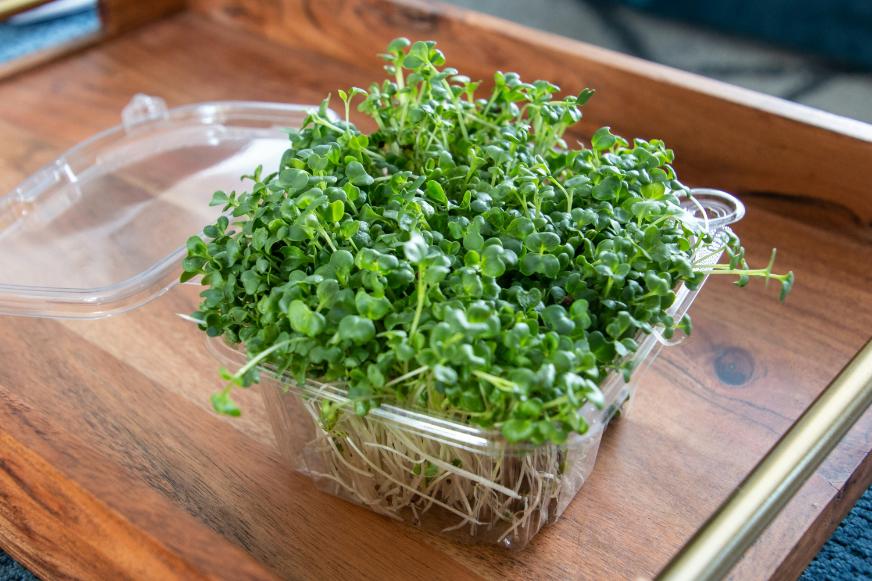
Watercress
The only food to score a perfect 100 for nutrient density, and both cruciferous and nitrate-rich.
At a glance
Why it matters
When American researchers ranked 47 fruits and vegetables by nutrient density, scoring each for seventeen nutrients per calorie, watercress came first with a perfect score of 100. It was the only food to achieve it.
That is a headline worth treating carefully, because nutrient density per calorie flatters anything with very few calories. But watercress earns its place here for a different reason, and it is a more interesting one.
It is a cruciferous vegetable that also happens to be high in nitrates, which puts it in two useful categories at once.
What's inside
Per 100 g, watercress delivers substantial vitamin K, vitamin C, vitamin A as beta-carotene, calcium and folate, for almost no calories.
Two compound groups matter more than the vitamins.
Glucosinolates, particularly gluconasturtiin, which converts to phenethyl isothiocyanate when the leaves are chewed. This is the same family of compounds found in broccoli and broccoli sprouts.
Dietary nitrate, which your body converts through nitrite to nitric oxide. Watercress is among the higher-nitrate vegetables alongside beetroot and rocket.
For men
The nitrate pathway is the relevant one, and it is worth understanding properly because it is often oversold.
Dietary nitrate is converted to nitric oxide, which relaxes the smooth muscle in blood vessel walls and widens them. This is the same final pathway that erectile dysfunction medication acts on, though those drugs work further downstream and far more powerfully.
Nitrate-rich vegetables have reasonable evidence for modest reductions in blood pressure and improvements in exercise performance. Whether they meaningfully improve erectile function is plausible rather than demonstrated, and anyone claiming otherwise is going beyond the data.
What is fair to say: erections depend on blood flow, blood flow depends partly on nitric oxide, and vascular health is the foundation under both. Low testosterone and erectile dysfunction covers why the vascular side matters more than the hormonal one for most men.
The glucosinolate side adds a second mechanism, supporting the liver pathway that clears oestrogen.
For women
The cruciferous angle is the stronger one here. Compounds in this family influence how the liver processes oestrogen, shifting metabolism towards the pathway generally considered more favourable.
Watercress is also notably high in calcium for a vegetable, and in a reasonably absorbable form, which matters after menopause when bone loss accelerates.
The folate content is relevant for anyone planning a pregnancy, though supplementation is still recommended rather than relying on food.
And the vitamin K content supports bone alongside calcium, though it is worth flagging for anyone on warfarin.
How to eat it
Raw. Heat destroys the enzyme needed to convert glucosinolates into their active form, and it also degrades vitamin C and folate.
Watercress soup is a British classic and nutritionally a compromise. Worth eating, but not for these compounds.
A handful in a salad, on a sandwich, or as a bed under fish or eggs. It has a peppery bite that works well against fat.
Wash it properly. Traditionally watercress was grown in natural streams and carried a parasite risk; commercially grown watercress in Britain is produced in controlled conditions and is safe, but washing is still sensible.
It wilts quickly. Buy it fresh, keep it cold, use it within a few days.
Worth knowing
Warfarin. The vitamin K content is high enough to matter if you take warfarin. Consistency is what matters rather than avoidance, but mention it.
Thyroid. Very large amounts of raw cruciferous vegetables can interfere with iodine uptake. A handful of watercress is nowhere near that quantity, but worth knowing if you have thyroid disease and eat large amounts daily.
Do not over-read the ranking. Scoring highest for nutrient density per calorie is genuinely impressive and does not make watercress a treatment for anything. It is an unusually good vegetable, not a medicine.
Pregnancy. Wild watercress should be avoided; commercially grown is fine washed.
Bottom line
The only food to score a perfect 100 for nutrient density, and one of the few vegetables that is both cruciferous and high in nitrate — provided you eat it raw.
Related reading: How can men lower high estrogen? and what foods increase testosterone?
Educational information, not medical advice. Foods affect people differently — if you have a medical condition, are pregnant or breastfeeding, or take medication, talk to your doctor before making big dietary changes. Some links are affiliate links — if you buy through them we may earn a small commission, at no extra cost to you.