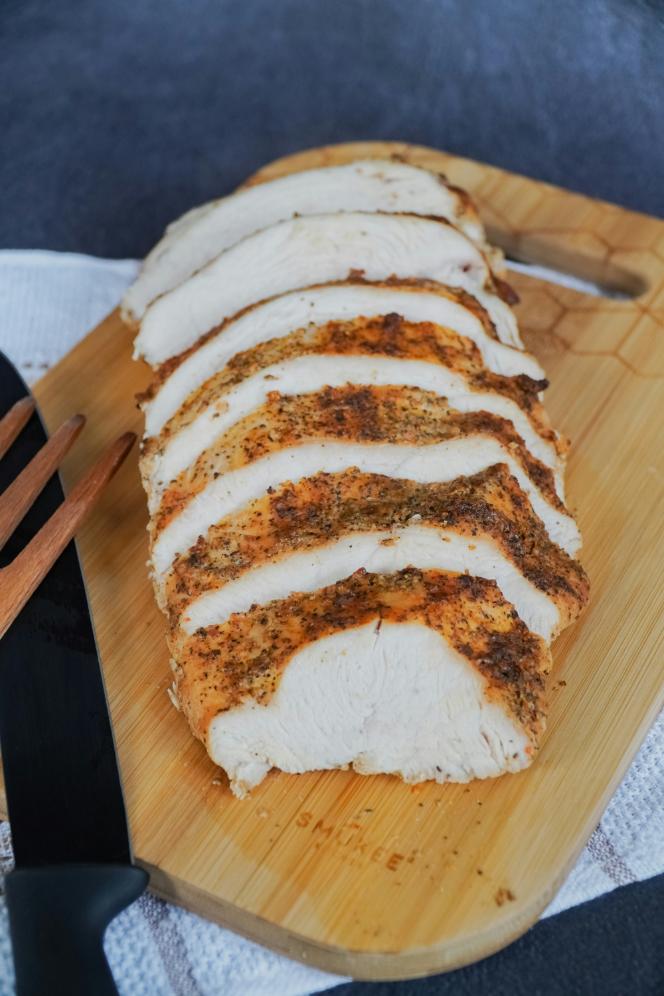
Turkey
One of the leanest high-protein meats you can buy, with selenium, B vitamins and, in the darker meat, zinc.
At a glance
Why it matters
Most people know turkey as the Christmas bird and little else. That is a shame, because skinless turkey breast is one of the leanest sources of complete protein in the supermarket, with roughly 24g of protein and around 2g of fat or less per 100g raw.
Protein is the nutrient most people under-eat when they try to lose weight or build strength, and it becomes more important with age, not less. Turkey makes a high-protein day easy without the saturated fat that comes with fattier cuts of red meat.
What's inside
Alongside protein containing all nine essential amino acids, turkey provides selenium, zinc, vitamin B6, niacin (vitamin B3) and vitamin B12.
The dark meat from the thigh and leg carries more zinc and iron than the breast, along with a little more fat. Breast is the leanest part, which is why it suits a calorie deficit.
For men
Protein does not raise testosterone directly, but muscle is where much of the benefit of healthy testosterone shows up, and you cannot build or keep muscle without enough protein. A lean, cheap protein source makes the training you do count for more. See does lifting increase testosterone?
Selenium contributes to normal sperm formation, and zinc contributes to the maintenance of normal testosterone levels in the blood; thigh and leg meat is the better choice for zinc. Neither helps beyond correcting a shortfall. Losing excess body fat is one of the most reliable ways to improve low testosterone in overweight men, and a lean protein that keeps you full is a practical tool for that.
For women
From perimenopause onwards, falling oestrogen speeds up the loss of muscle, and muscle matters for strength, blood sugar control and bone. Most guidance for older adults suggests spreading a good portion of protein across each meal, and turkey makes that simple. See strength training in midlife.
Selenium supports normal thyroid function, which is relevant because thyroid problems are far more common in women and often surface in midlife.
How to eat it
Lean turkey mince is the most versatile form: meatballs, chilli, burgers and stuffed peppers. Try the turkey and quinoa stuffed peppers or the turkey meatballs with courgetti.
Breast steaks cook in minutes on a griddle but dry out quickly, so pull them off the heat as soon as they are cooked through. A roast crown or thigh joint gives leftovers for several days of lunches.
Always cook turkey thoroughly, until it is steaming hot with no pink meat and the juices run clear, and defrost a frozen bird fully in the fridge.
Worth knowing
The tryptophan myth. Turkey does contain tryptophan, an amino acid used to make serotonin and melatonin, but no more than chicken or other meats. Feeling sleepy after Christmas dinner has far more to do with a very large meal and alcohol.
Processed turkey is a different food. Wafer-thin slices, turkey ham and turkey bacon are processed meat, often high in salt, and the NHS advises keeping processed meat low whatever animal it comes from.
Fresh turkey is poultry, not red meat, so it does not count towards the NHS limit of 70g a day of red and processed meat; processed turkey products do.
Bottom line
Skinless turkey is one of the cheapest, leanest ways to eat more complete protein, with selenium and zinc on the side; just keep it fresh rather than processed.
Related reading: What foods increase testosterone?, does zinc actually raise testosterone? and why you gain weight in menopause. Browse the full food library.
Educational information, not medical advice. Foods affect people differently — if you have a medical condition, are pregnant or breastfeeding, or take medication, talk to your doctor before making big dietary changes. Some links are affiliate links — if you buy through them we may earn a small commission, at no extra cost to you.