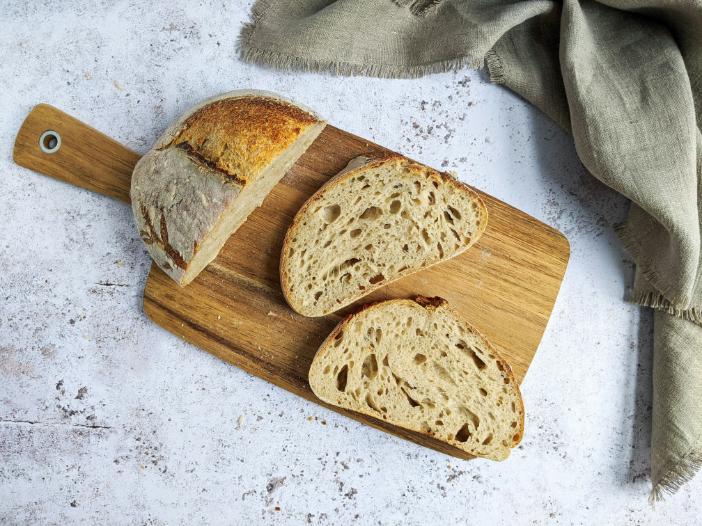
Sourdough bread
Fermentation unlocks the zinc and magnesium that ordinary bread locks away — if it's a genuine loaf, not a supermarket imitation.
At a glance
Why it matters
Bread rarely appears in hormone advice except as something to avoid, and refined white bread deserves that. Real sourdough is a different food. The slow fermentation does two useful things: it breaks down much of the phytic acid that otherwise binds zinc, magnesium and iron and carries them out unabsorbed, and it lowers the blood sugar response compared with ordinary bread. Since zinc and magnesium are the two minerals most consistently linked to testosterone, a bread that lets you absorb more of them is worth choosing over one that doesn't.
What's inside
What matters here is not what sourdough contains but what it makes available. Fermentation reduces phytic acid substantially, improving absorption of the zinc, magnesium and iron already in the grain. You also get B vitamins, fibre if it is wholegrain, resistant starch, and the organic acids produced by fermentation, which are part of why the glycaemic response is lower.
For men
Zinc and magnesium are the two mineral pillars of testosterone, and wholegrains contain both — the problem has always been phytic acid blocking absorption. Sourdough fermentation largely solves that. The steadier blood sugar response matters too: repeated glucose spikes drive insulin resistance, and insulin resistance is one of the most reliable ways to suppress testosterone over time. Swapping white bread for real sourdough is a small change that works in the right direction on both counts.
For women
Improved iron absorption is the standout, given how common low iron is in women with heavy periods. Magnesium supports sleep, mood and period pain, and the same absorption improvement applies. The gentler blood sugar curve helps with the energy crashes and cravings that often worsen in perimenopause, when insulin sensitivity falls. Some people who find ordinary bread bloating tolerate long-fermented sourdough better, though this is not the same as it being suitable for coeliac disease.
How to eat it
Use it as your default bread rather than as a health food — toast, sandwiches, alongside eggs or soup. Wholegrain or rye sourdough beats white sourdough for both fibre and minerals. Pair it with protein and fat rather than eating it alone, which flattens the blood sugar response further. It also stales more slowly than commercial bread and freezes well in slices.
Worth knowing
The critical caveat: most supermarket "sourdough" is not sourdough. Industrial versions use commercial yeast with added flavouring or a token starter and a fermentation measured in hours rather than a day, which gives you none of the benefits described here. Look for a short ingredient list — flour, water, salt, starter — and nothing else. And sourdough still contains gluten, so it is unsuitable for anyone with coeliac disease regardless of fermentation.
Bottom line
Real long-fermented sourdough unlocks the zinc, magnesium and iron that phytic acid normally blocks, with a gentler blood sugar curve — provided it is genuinely fermented and not a supermarket imitation.
Related reading: Does sugar lower testosterone? and what foods increase testosterone?
Educational information, not medical advice. Foods affect people differently — if you have a medical condition, are pregnant or breastfeeding, or take medication, talk to your doctor before making big dietary changes. Some links are affiliate links — if you buy through them we may earn a small commission, at no extra cost to you.