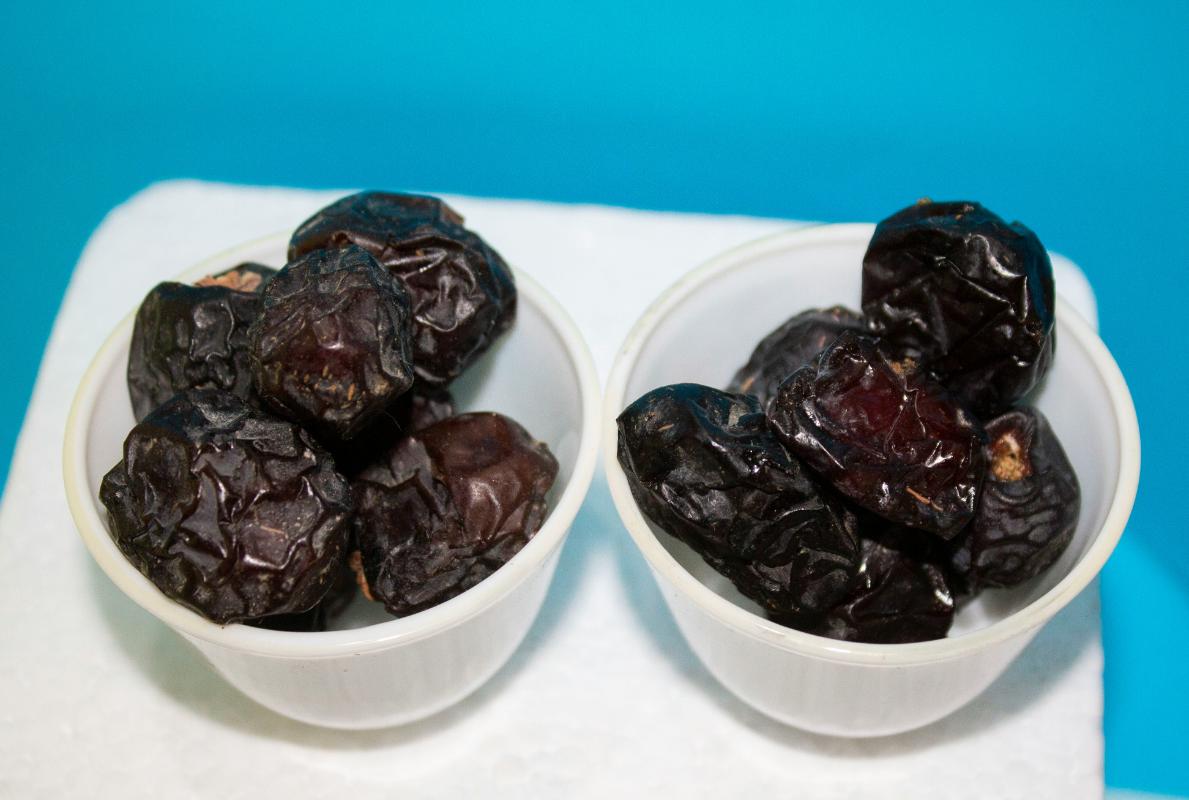
Prunes
A humble dried fruit that is both one of the densest food sources of boron — a mineral linked to higher free testosterone — and the single best-evidenced food for protecting bone density as oestrogen falls.
At a glance
Why it matters
Prunes are easy to dismiss as a digestive remedy, but on a hormone-and-bone page they quietly out-punch flashier foods. Two things set them apart. First, they are one of the more concentrated food sources of boron, a trace mineral that small human studies link to higher levels of free (usable) testosterone and lower levels of the protein, SHBG, that locks testosterone away. Second — and far more firmly established — prunes are the single best-studied food for bone health: several good clinical trials in postmenopausal women have found that a daily portion helps preserve bone mineral density, the very thing that falls fastest as oestrogen declines. One food that offers a modest nudge to men's free testosterone and a well-evidenced defence of women's bones is exactly the kind of dual-audience entry this library is built around.
What's inside
The trace star is boron (~1–2 mg per 100 g), which appears to influence how the body handles testosterone, oestrogen and vitamin D, and to reduce inflammation. Potassium (~730 mg) supports blood pressure and fluid balance; vitamin K (~60 µg) works with the boron and polyphenols to direct calcium into bone. Prunes are also rich in polyphenols — particularly neochlorogenic and chlorogenic acids — antioxidants thought to blunt the bone-breakdown process, and in fibre and sorbitol, which explain their famous effect on digestion. Copper and manganese, both bone-supporting minerals, round out the profile.
For men
For men, prunes are a genuine but modest boron source rather than a testosterone lever to lean on. The small studies behind boron are encouraging — a measurable rise in free testosterone and drop in SHBG in some trials — but they are small, and the honest framing is "a helpful trace-mineral top-up," not "a natural booster." The potassium, polyphenols and fibre bring real cardiovascular and gut benefits alongside. A small daily handful is a sensible, low-effort way to keep boron in the picture.
For women
This is where prunes truly earn their place, and it's backed by some of the best food-based evidence on the whole page. As oestrogen falls through menopause, bone loss accelerates, and clinical trials have shown that eating a modest daily portion of prunes helps protect bone mineral density and markers of bone health in postmenopausal women — a rare instance of a single, cheap, everyday food with proper trial support for a serious midlife concern. Add the potassium for blood pressure and the fibre for gut and metabolic health, and prunes become one of the most quietly valuable foods a woman can keep in the cupboard through and after the transition.
How to eat it
The dose that mattered in the bone research was roughly a small daily handful — around five or six prunes (about 50 g) — so this is an easy habit rather than a chore. Eat them as they are, chop them into porridge or yoghurt, blend them into smoothies, or use prune purée in baking. Build up gradually if you're not used to the fibre, to let your gut adjust. Choose plain, unsweetened dried prunes rather than sugar-coated "candy" versions.
Worth knowing
Prunes are sugar-dense, like all dried fruit, so the aim is a small daily portion, not an open bag — five or six is plenty, and more mainly adds sugar and a very effective laxative effect. That laxative quality, from the fibre and sorbitol, is a feature for most people but worth easing into. Anyone counting carbohydrates closely should factor them in. For nearly everyone, though, a modest daily handful is one of the simplest, best-evidenced things you can eat for long-term bone strength.
Bottom line
Prunes pair a modest, real boron nudge to free testosterone with the best food-based evidence going for protecting bone density — making a small daily handful one of the most quietly valuable foods on this page, especially for women in midlife.
Related reading: Does boron raise testosterone? and the concentrated form, boron.
Educational information, not medical advice. Foods affect people differently — if you have a medical condition, are pregnant or breastfeeding, or take medication, talk to your doctor before making big dietary changes. Some links are affiliate links — if you buy through them we may earn a small commission, at no extra cost to you.