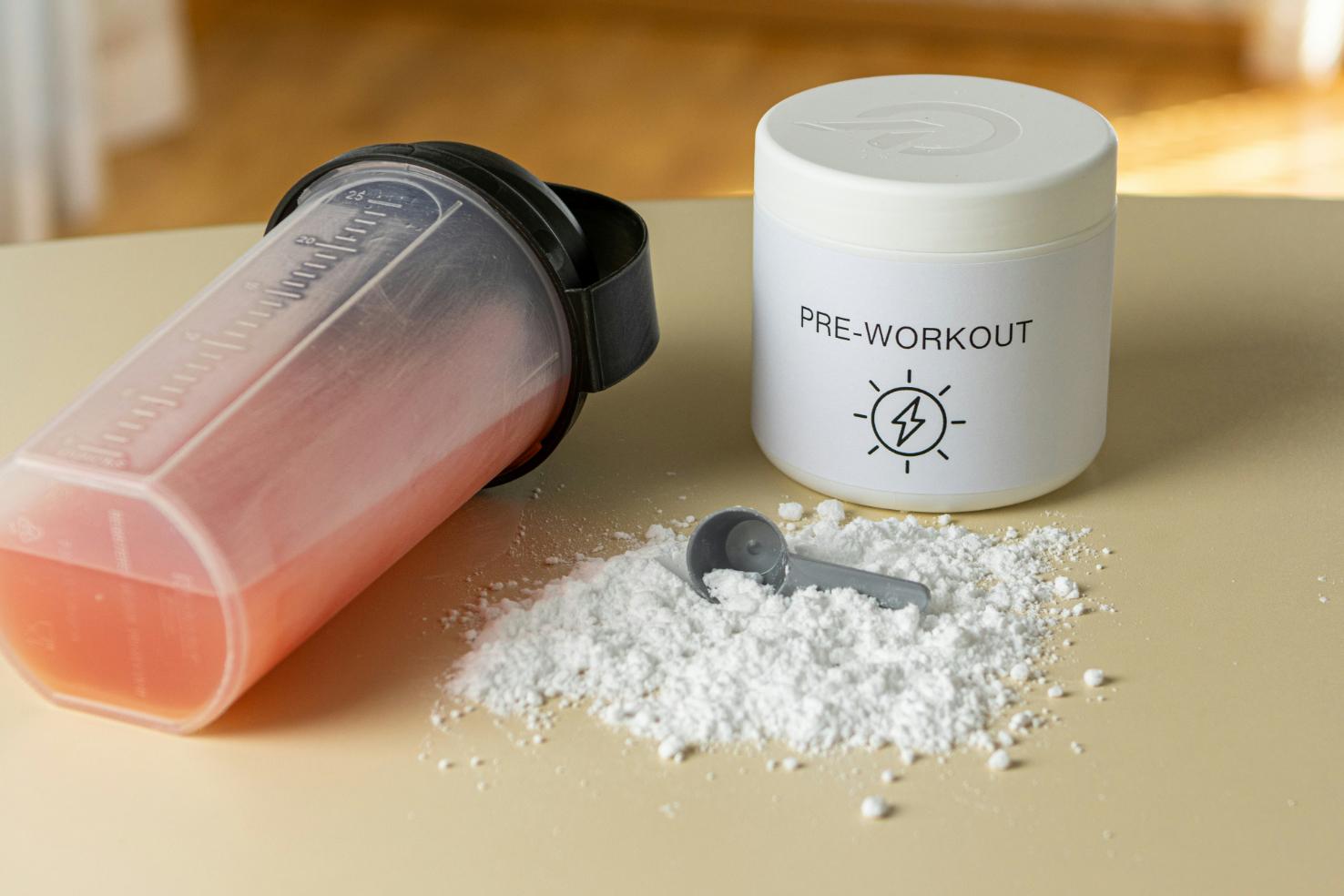
Pre-workout stimulants
Big doses of caffeine and stimulants can spike cortisol and wreck the sleep that testosterone depends on — especially when taken late or stacked on top of coffee.
At a glance
Why it matters
A modest amount of caffeine before training is fine, and coffee earns its place elsewhere in this library. The concern here is different: the high-dose stimulant pre-workouts that pack 150 to 350 milligrams of caffeine or more per scoop, often stacked with other stimulants and taken in the late afternoon or evening. At those doses, and at that timing, two things happen that work against hormones. First, caffeine drives up cortisol, the stress hormone that, when chronically elevated, opposes testosterone. Second, and more importantly, the long half-life of that much caffeine sabotages sleep — and deep sleep is when the body does most of its testosterone production. It is the dose and the timing, not the idea of pre-workout, that put these in the limit section.
What's inside
The active ingredient is usually high-dose caffeine, frequently well above what a cup of coffee provides, sometimes alongside a blend of other stimulants. Many products hide exact amounts inside a "proprietary blend", so you cannot always tell how much you are taking. Beyond the stimulants, there is little of nutritional value relevant to hormones. The problem is not a nutrient but a physiological effect: a large, late stimulant load raises cortisol and, because caffeine lingers for many hours, eats into the sleep that hormones depend on.
For men
For men, the sleep effect is the one that matters most. Testosterone is produced heavily during deep sleep, and studies show that cutting sleep short measurably lowers it — so a pre-workout taken before an evening session, keeping you wired past midnight, quietly undermines the very hormone many men are training to support. The cortisol spike adds to that. Used early in the day and at a sensible dose, caffeine is not the enemy; the strong, late, stacked versions are.
For women
For women, high stimulant doses can worsen anxiety, disrupt sleep and amplify the stress response, all of which feed into hormonal imbalance and cycle symptoms. Elevated cortisol is particularly unhelpful during perimenopause, when the stress-hormone system is already more reactive. As with men, the issue is dose and timing rather than caffeine itself — a strong evening pre-workout is far more disruptive than a morning coffee.
How to eat it
If you use a pre-workout, keep the caffeine dose modest and take it early — ideally before a morning or midday session, and not within eight to ten hours of bed. Check the label for the actual caffeine content and be wary of proprietary blends that hide it. Better still, get your pre-training lift from a cup of coffee, where you know the dose, and reserve the strong stimulant products for the rare occasion rather than every session.
Worth knowing
Total daily caffeine adds up: a strong pre-workout on top of several coffees can push you well past a sensible intake, magnifying the cortisol and sleep effects. Stimulant tolerance also creeps up, tempting ever-larger doses. The simple principle is that caffeine is a tool best used in small, early doses — the moment it starts eating your sleep, it is working against the hormones you care about, whatever the tub promises.
Bottom line
High-dose pre-workout stimulants spike cortisol and, taken late, wreck the deep sleep that drives testosterone — worth limiting in favour of modest, early caffeine like a plain coffee.
Related reading: Does stress lower testosterone?, does poor sleep lower testosterone? and foods that lower testosterone. Browse the full food library.
Educational information, not medical advice. Foods affect people differently — if you have a medical condition, are pregnant or breastfeeding, or take medication, talk to your doctor before making big dietary changes. Some links are affiliate links — if you buy through them we may earn a small commission, at no extra cost to you.