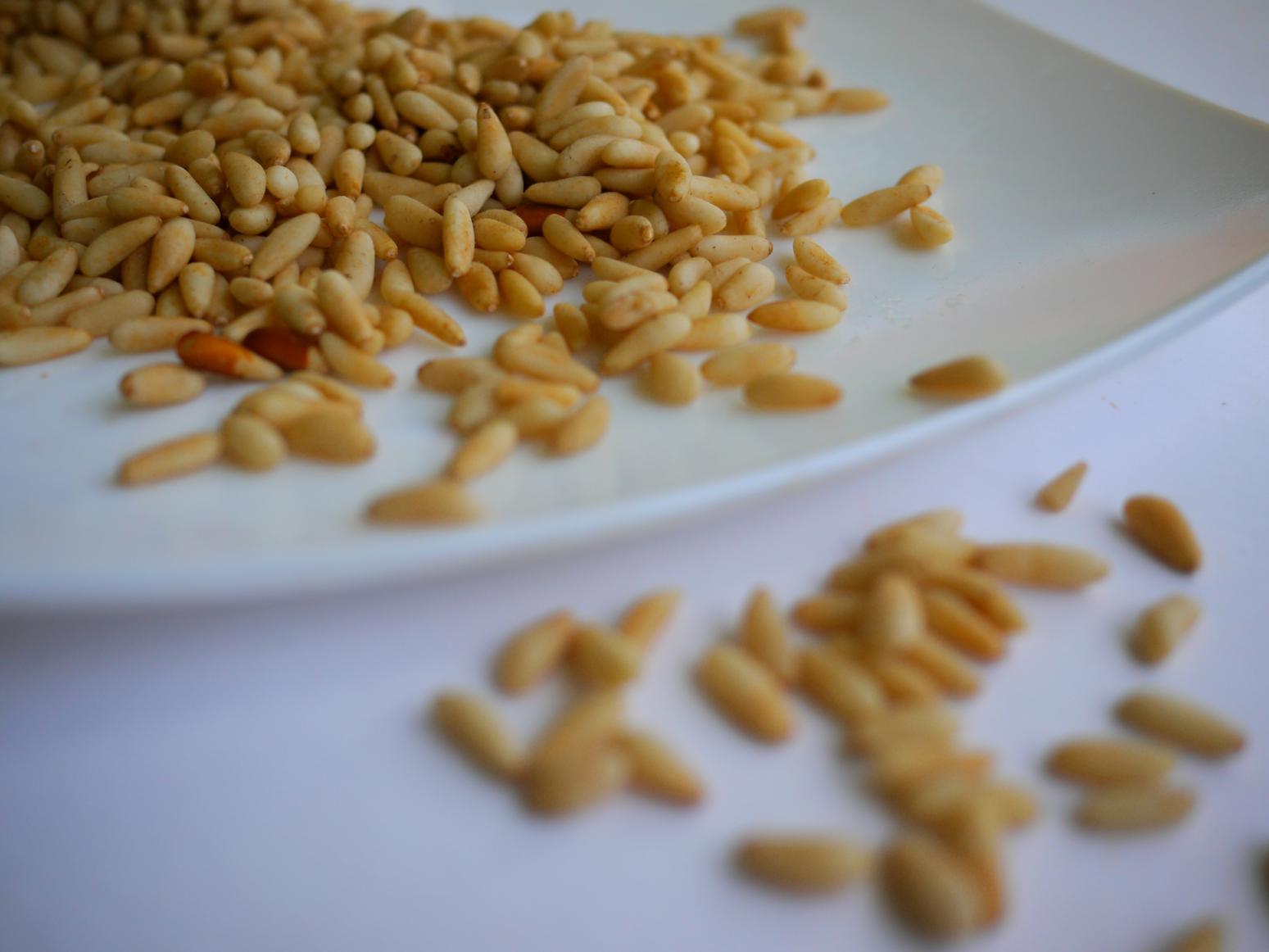
Pine nuts
A small seed with an outsized mineral load — one of the richest nut sources of zinc and magnesium, plus vitamin E, vitamin K and the appetite-calming pinolenic acid.
At a glance
Why it matters
Pine nuts are easy to overlook as a garnish, but nutritionally they are one of the densest small foods you can eat. Gram for gram they rival cashews for zinc and beat most nuts for magnesium — the two minerals most closely tied to testosterone and sleep — while adding a strong dose of vitamin E, vitamin K and manganese. They also contain pinolenic acid, an unusual fatty acid being studied for its effect on appetite hormones. For a seed you sprinkle by the spoonful, that is a remarkable amount of hormone-relevant nutrition, which is why they deserve a place beyond the top of a salad.
What's inside
Pine nuts deliver around 6.4 mg of zinc per 100 g (close to 60% of the daily target) and roughly 251 mg of magnesium (about 60% too) — an exceptional pairing for a plant food. Zinc feeds testosterone synthesis directly; magnesium supports free testosterone and deep sleep. They are also very high in manganese, rich in vitamin E (a fat-soluble antioxidant that protects reproductive cells) and vitamin K, and they supply pinolenic acid, a fatty acid linked to the release of appetite-suppressing gut hormones. Most of their fat is unsaturated.
For men
For men, pine nuts concentrate the two most useful dietary minerals for testosterone into a very small serving. The zinc supports the production pathway while the magnesium supports the deep sleep that drives it, and the vitamin E adds antioxidant protection for the testes. Scattered over meals through the week, they are an easy way to lift intake of both minerals without changing much about how you eat.
For women
For women, the magnesium supports sleep, mood and PMS symptoms, while the vitamin E and healthy fats benefit skin and help the body regulate hormones. The pinolenic acid is of particular interest for appetite and weight management, an area closely tied to insulin and hormonal balance. Vitamin K works alongside vitamin D and calcium for bone health, which becomes more important as oestrogen falls.
How to eat it
Toast them lightly in a dry pan for a minute to bring out their buttery flavour, watching closely as they burn fast. Scatter over salads, roasted vegetables, pasta and grain bowls, or blend them into pesto — the classic use, which happily pairs them with olive oil, garlic and greens, all foods on this list. A tablespoon or two is plenty; they are rich, and priced accordingly.
Worth knowing
Pine nuts are among the more expensive nuts, so treat them as a concentrated topping rather than a snack by the handful. Rarely, some people notice a temporary metallic or bitter taste in the days after eating certain pine nuts, known as "pine mouth" — it is harmless and passes on its own. Store them in the fridge or freezer, as their high unsaturated-fat content means they can turn rancid faster than harder nuts.
Bottom line
Pine nuts pack more zinc and magnesium into a spoonful than almost any other nut, plus vitamin E and pinolenic acid — a small but genuinely potent addition to a hormone-supporting diet.
Related reading: Does zinc actually raise testosterone?, does magnesium help you sleep? and foods that increase testosterone. Browse the full food library.
Educational information, not medical advice. Foods affect people differently — if you have a medical condition, are pregnant or breastfeeding, or take medication, talk to your doctor before making big dietary changes. Some links are affiliate links — if you buy through them we may earn a small commission, at no extra cost to you.