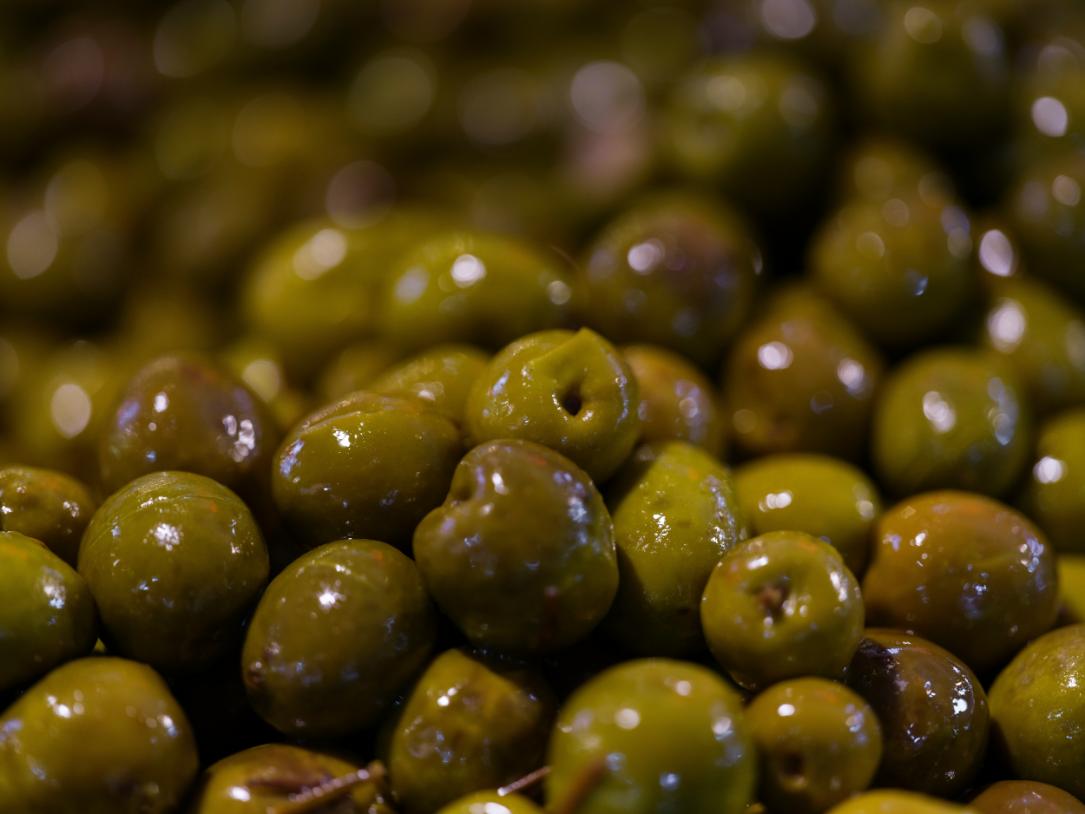
Olives
The fibre and polyphenols that pressing leaves behind — worth eating alongside the oil, not instead of it.
At a glance
Why it matters
Extra-virgin olive oil is already on this list, so the question is what whole olives add. Two things the oil largely loses.
Fibre, which is removed entirely in pressing. And a higher concentration of certain polyphenols, particularly hydroxytyrosol and oleuropein, which are water-soluble and partition away during oil production. Some remains in good extra-virgin oil; considerably more stays in the fruit.
The result is a food that pairs fat with fibre and polyphenols, which is an unusual combination in something you can eat by the handful.
What's inside
The fat is predominantly oleic acid, a monounsaturated fat associated with better cardiovascular and metabolic markers. Alongside it you get hydroxytyrosol and oleuropein, two of the more studied plant polyphenols, plus vitamin E, iron and fibre.
Hydroxytyrosol carries the only health claim the European Food Safety Authority has approved for an olive polyphenol, relating to protecting blood lipids from oxidative damage.
For men
Adequate fat intake matters for testosterone. Testosterone is synthesised from cholesterol, and very low fat diets have been shown to reduce it — one of the few dietary effects with consistent evidence behind it.
Monounsaturated fat specifically features in studies of Mediterranean dietary patterns and hormonal markers, though the evidence is about the whole pattern rather than any single food.
The polyphenols work on a different mechanism. Chronic low-grade inflammation suppresses the signal from brain to testes, and oleuropein and hydroxytyrosol are among the better-studied dietary anti-inflammatories.
For women
The cardiovascular angle becomes more relevant after menopause, when the protection oestrogen provided falls away and risk rises to meet men's. Monounsaturated fat and olive polyphenols are central to the Mediterranean pattern that has the most evidence in this area.
There is early interest in oleuropein and bone, with animal work suggesting effects on bone density. Human evidence is not there yet, and it would be overstating things to present olives as a bone food.
The practical benefit is simpler: fat and fibre together slow gastric emptying, which blunts the glucose rise from a meal and keeps you full longer.
How to eat it
A small handful, five to ten olives, is a sensible portion. They are calorie-dense and salty, which limits how many you want anyway.
Rinse them if salt is a concern. This removes a meaningful proportion of the surface sodium without touching the fat or polyphenols.
Olives packed in brine or oil retain more polyphenols than those cured in lye, which is how most cheap black olives are processed. Kalamata, Nyons and traditionally cured varieties are better bets than the uniform black ones sold in tins.
They work as a snack, on a salad, chopped into a sauce, or alongside cheese instead of crackers.
Worth knowing
The main caution is salt. Olives are cured in brine, and a generous portion contributes a significant amount of sodium. If you have high blood pressure, rinse them and keep portions modest.
They are also energy-dense, which is fine in a handful and less fine in a bowl in front of the television.
And check the label on cheap tinned black olives. Many are green olives darkened with ferrous gluconate rather than ripened naturally, and the processing strips much of what makes them worth eating.
Bottom line
Whole olives give you the fibre and the water-soluble polyphenols that pressing leaves behind — the same reason the fruit is worth eating alongside the oil, not instead of it.
Related reading: What foods increase testosterone? and how can you balance your hormones naturally?
Educational information, not medical advice. Foods affect people differently — if you have a medical condition, are pregnant or breastfeeding, or take medication, talk to your doctor before making big dietary changes. Some links are affiliate links — if you buy through them we may earn a small commission, at no extra cost to you.