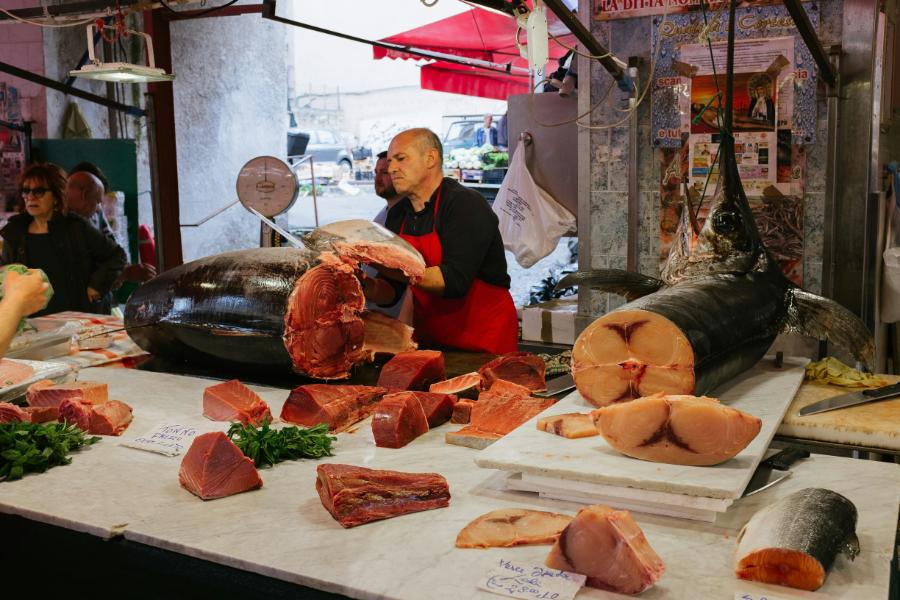
High-mercury predatory fish
The exact opposite of the small oily fish this library champions: large, long-lived predators concentrate mercury, a heavy metal that harms sperm and reproductive tissue — so enjoy the little fish, limit the big ones.
At a glance
Why it matters
There's a neat symmetry to this entry. Everything good this library says about oily fish — the omega-3s, the vitamin D, the selenium — comes from small species low on the food chain. The problem arrives at the top of that chain. Large, long-lived predatory fish like swordfish, shark, king mackerel, marlin and bigeye tuna accumulate methylmercury from everything they eat, concentrating it to levels far higher than the small fish they prey on. Mercury is a heavy metal with well-established toxicity: it's a neurotoxin, it crosses the placenta, and — most relevant here — it accumulates in reproductive tissue, including the testes, and is linked to poorer sperm quality. So the same category of food splits cleanly in two: small oily fish are among the best things you can eat, while their giant predators are the ones to limit.
What's inside
The single compound of concern is methylmercury, the organic form of mercury that living tissue absorbs and stores efficiently. Because it accumulates up the food chain (a process called biomagnification), a predator that lives for years and eats thousands of smaller fish carries far more of it than any individual prey fish. In the body, mercury builds up over time rather than clearing quickly, which is why frequency of eating high-mercury species matters more than any single meal. It offers no nutritional upside that you can't get more safely from small fish — you're taking on the toxin without needing to.
For men
For men, the relevant evidence is fertility: mercury accumulates in the testes, and higher mercury exposure has been associated in human studies with reduced sperm count, motility and quality. For a man working on his reproductive health, regularly eating swordfish or big tuna is a small, avoidable headwind. The fix costs nothing: get exactly the omega-3 and vitamin D benefits you're after from sardines, mackerel, salmon and herring, which deliver the upside without the mercury load. Big predatory fish become an occasional treat rather than a staple.
For women
For women, this is one of the clearest and most important "limit" entries on the whole page, especially around pregnancy. Methylmercury crosses the placenta and can harm a developing baby's nervous system, which is why health authorities advise women who are pregnant, breastfeeding or trying to conceive to avoid swordfish, shark and marlin entirely and to strictly limit tuna. Outside of pregnancy the caution is gentler but still real, given mercury's slow accumulation. As with men, the answer is not "eat less fish" — it's "eat the right fish," leaning on small oily species for all the hormonal benefits.
How to handle it
The practical rules are simple. Treat swordfish, shark, king mackerel, marlin and bigeye tuna as occasional at most — no more than once a week for most adults, and avoid them altogether if you're pregnant, breastfeeding or trying to conceive. Limit tinned and steak tuna too, since even skipjack carries some mercury and bigeye carries a lot. Then get your two portions of oily fish a week from the small, low-mercury species — sardines, mackerel, salmon, herring, trout — which is exactly where the omega-3, vitamin D and selenium benefits live.
Worth knowing
This is a "which fish," not a "whether fish," message — the wrong lesson to take is to eat less seafood overall, when small oily fish are among the most hormone-supportive foods there are. Mercury accumulates slowly and clears slowly, so it's your habitual pattern over months that matters, not one restaurant swordfish. Children and those trying to conceive warrant the most caution. Get this one right and you keep every benefit of fish while sidestepping the single real downside at the top of the food chain.
Bottom line
Large predatory fish concentrate mercury that harms sperm and, in pregnancy, a developing baby — so limit swordfish, shark and big tuna, and take your omega-3s from the small oily fish this whole library is built on.
Related reading: Foods that lower testosterone and the safe oily-fish alternative, sardines.
Educational information, not medical advice. Foods affect people differently — if you have a medical condition, are pregnant or breastfeeding, or take medication, talk to your doctor before making big dietary changes. Some links are affiliate links — if you buy through them we may earn a small commission, at no extra cost to you.