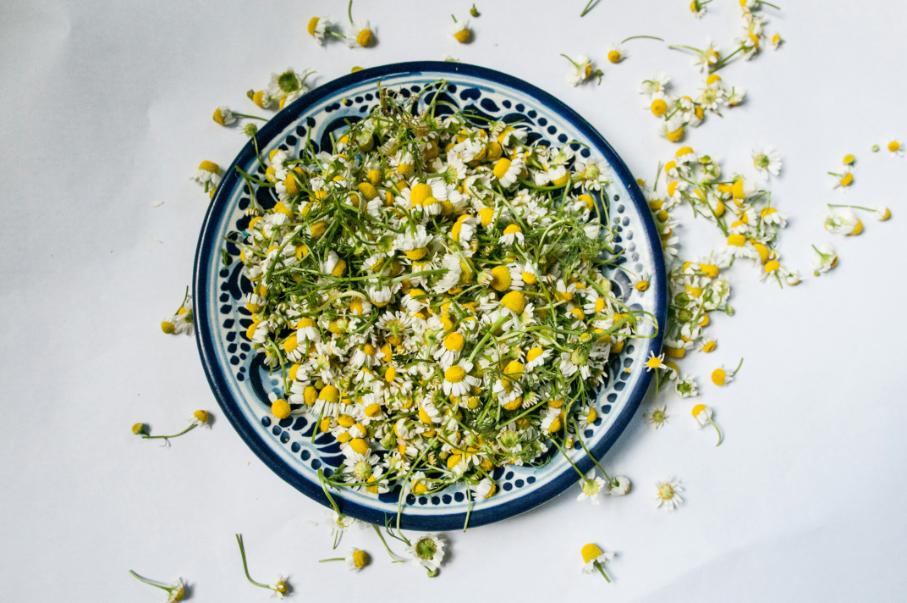
Chamomile tea
The one herbal tea with real sleep evidence — and sleep is where most of your hormones are made.
At a glance
Why it matters
Most of your daily testosterone is produced while you sleep, and the majority of that during deep sleep in the first half of the night. Disrupted sleep raises cortisol, worsens insulin sensitivity and increases appetite. So anything that genuinely improves sleep is a hormonal intervention, not a lifestyle nicety.
Chamomile is the herbal tea with the best evidence for that. A 2026 review in Nutrition Reviews examined thirteen commonly used sleep aids and placed apigenin-containing chamomile among the small group that objectively improved sleep parameters, alongside melatonin, magnesium and omega-3, while several better-known herbal remedies did not survive scrutiny.
What's inside
The active compound is apigenin, a flavonoid that binds to benzodiazepine sites on the GABA-A receptor. That is the same receptor family targeted by prescription sleep medication, though chamomile's effect is far milder and does not produce dependence.
You also get bisabolol and chamazulene, both anti-inflammatory, and small amounts of flavonoids with antioxidant activity. There is no caffeine.
For men
The route to testosterone here is entirely through sleep. Restrict healthy young men to five hours a night for one week and daytime testosterone falls 10 to 15 per cent. That is one week of moderate restriction.
If your problem is falling asleep with a busy mind rather than staying asleep, chamomile is worth trying before anything stronger. If you wake at three or four every night, the more likely culprits are alcohol and sleep apnoea, and no tea will fix either.
Some men use it as a replacement for the evening drink, which is where the real benefit often comes from. Alcohol reliably wrecks the second half of the night.
For women
Sleep disruption is among the most wearing symptoms of perimenopause, and it is often the one that makes everything else harder to manage.
Chamomile has additional evidence in this group. Small trials have examined it for anxiety and for premenstrual symptoms, with modest positive findings. It has also been studied for period pain, where its anti-inflammatory action may play a part.
The honest caveat: if night sweats are what wakes you, treating those matters more than what you drink beforehand. Chamomile helps you fall asleep; it does not prevent a hot flush at 3am.
How to eat it
Steep covered, for five to ten minutes. This is the detail almost everyone gets wrong. The volatile compounds evaporate with the steam, so an uncovered mug loses much of what you are steeping for. A saucer on top is enough.
Timing: about an hour before bed. Too close and you will be woken by your bladder instead.
Loose flowers generally give a stronger infusion than standard teabags, though quality varies more than price suggests.
Effects are modest and cumulative rather than dramatic. Judge it over a couple of weeks, not one night.
Worth knowing
Three cautions worth stating.
Allergy. Chamomile belongs to the same family as ragweed, daisies and chrysanthemums. If you react to those, approach carefully.
Blood thinners. Chamomile contains coumarin derivatives and may interact with warfarin and similar medication. Mention it if you take one.
Pregnancy. Advice is inconsistent, and large amounts are generally not recommended.
And keep expectations proportionate. This is a mild, useful addition to a wind-down routine, not a treatment for insomnia. If you have not slept properly for months, that warrants a proper look at sleep apnoea, thyroid function and iron.
Bottom line
The one herbal tea with real evidence behind it for sleep — modest, cumulative, and worth more than it looks, because sleep is where your hormones are made.
Related reading: Does magnesium help you sleep? and how can you balance your hormones naturally?
Educational information, not medical advice. Foods affect people differently — if you have a medical condition, are pregnant or breastfeeding, or take medication, talk to your doctor before making big dietary changes. Some links are affiliate links — if you buy through them we may earn a small commission, at no extra cost to you.