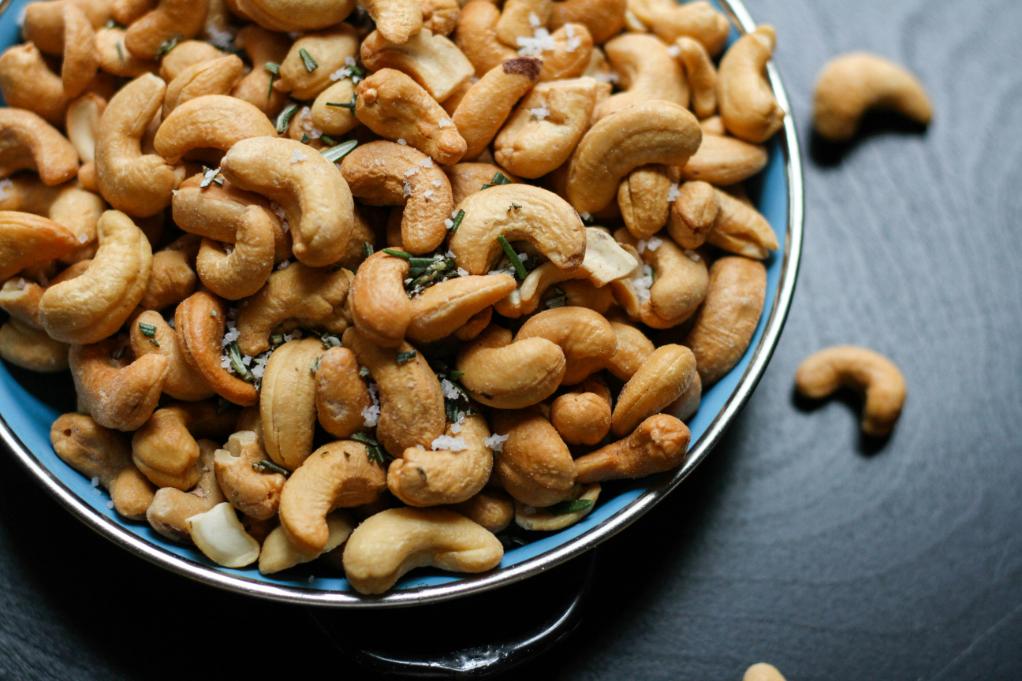
Cashews
One of the highest-zinc nuts there is, paired with generous magnesium and copper — a creamy, everyday way to feed the minerals testosterone and sleep depend on.
At a glance
Why it matters
Among nuts, cashews earn their place through minerals rather than fashion. They are one of the two richest nut sources of zinc — the single mineral most directly tied to testosterone production — and they carry an unusually generous load of magnesium alongside it. Both minerals are commonly under-supplied, and both sit at the centre of hormone health: zinc as a direct input to testosterone synthesis, magnesium as a regulator of sleep, stress and free testosterone. A small daily handful of cashews is a genuinely useful, low-effort way to keep both topped up, wrapped in creamy monounsaturated fat that supports hormone production in its own right.
What's inside
The two nutrients that matter most here are zinc, at around 5.6 mg per 100 g (among the highest of any nut), and magnesium, at roughly 260 mg per 100 g — a large share of the daily requirement. Zinc is used at several steps in making testosterone, and even mild deficiency lowers it; magnesium helps free testosterone from the protein that binds it, and governs the deep sleep during which most testosterone is produced. Cashews also supply copper, which works in balance with zinc, plus heart-healthy monounsaturated fat and useful protein.
For men
For men, cashews are a convenient mineral top-up for the two nutrients that matter most to testosterone after vitamin D: zinc and magnesium. Diets low in red meat and shellfish are the ones most likely to run short on zinc, and cashews help close that gap without a supplement. The magnesium supports the deep sleep that drives overnight testosterone production, so a handful in the evening does quiet double duty.
For women
For women, the magnesium is the star. It eases the sleep problems, tension and PMS-related symptoms that so many women experience, and supports a calmer stress response — all of which feed into hormonal balance. The zinc supports skin, immunity and cycle health, and the healthy fats help the body make and regulate hormones. Cashews are also a satisfying, blood-sugar-friendly snack that helps avoid the sugar swings that unsettle hormones.
How to eat it
Keep it to a small handful, around 30 g, most days — nuts are nutrient-dense but calorie-dense too. Choose raw or dry-roasted and unsalted where you can, since heavily salted and oil-roasted versions add sodium and poor fats. Cashews blend into a silky base for dairy-free sauces and dressings, work stirred through stir-fries and curries, and make a creamy nut butter. Soaking raw cashews softens them for blending.
Worth knowing
Cashews are slightly higher in carbohydrate than most nuts, but still a low-glycaemic, blood-sugar-friendly food in normal portions. "Raw" cashews sold in shops are always at least lightly steamed, since the true raw nut carries an irritant in its shell — this is standard and nothing to worry about. As with all nuts, the calories add up quickly, so a handful is the serving, not the bag.
Bottom line
Cashews are one of the best nut sources of zinc and magnesium — the mineral pair behind testosterone production and quality sleep — making a small daily handful a simple, effective hormone habit.
Related reading: Does zinc actually raise testosterone?, does magnesium help you sleep? and foods that increase testosterone. Browse the full food library.
Educational information, not medical advice. Foods affect people differently — if you have a medical condition, are pregnant or breastfeeding, or take medication, talk to your doctor before making big dietary changes. Some links are affiliate links — if you buy through them we may earn a small commission, at no extra cost to you.