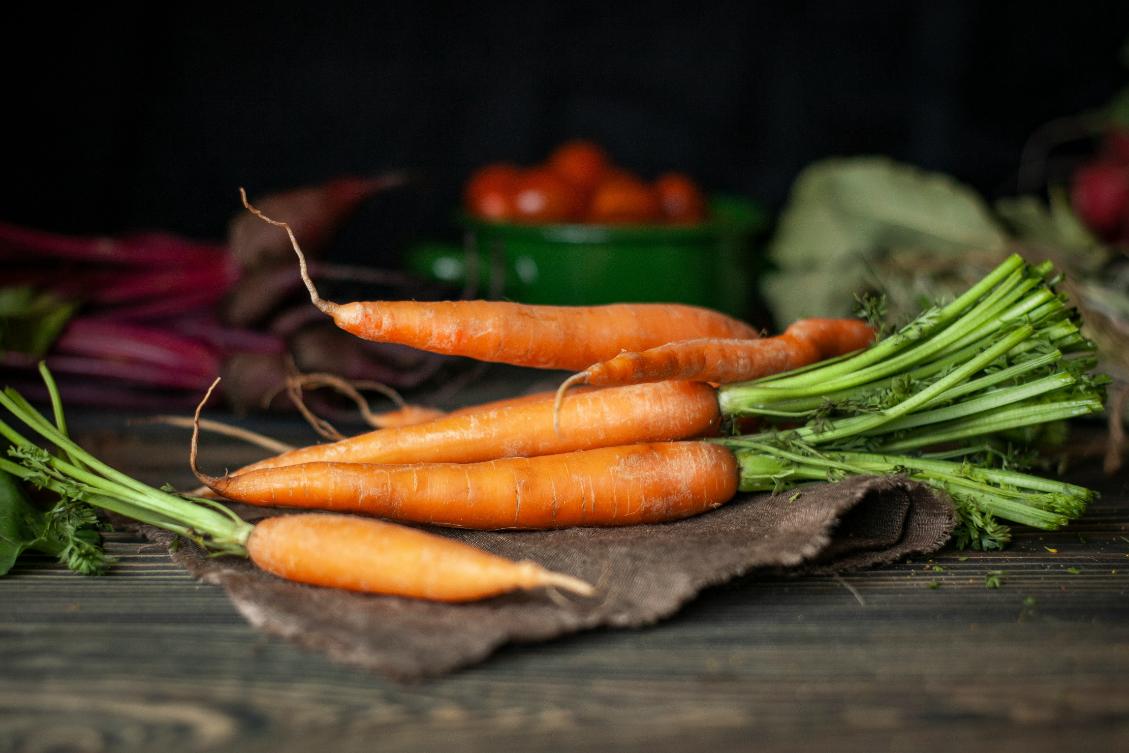
Carrots
A high-fibre source of beta-carotene worth eating often — though the raw carrot oestrogen claim is weaker than the internet suggests.
At a glance
Why it matters
Carrots have become a hormone-food talking point because of the raw carrot salad, a daily grated carrot said to pull excess oestrogen out of the body. The mechanism behind that claim is real, but the evidence for the carrot specifically is thinner than the internet suggests. What isn't in doubt is that carrots are cheap, filling, exceptionally rich in beta-carotene, and a genuinely good source of the kind of fibre your gut and your hormones both benefit from. They earn a place here on their own merits rather than on the strength of a trend.
What's inside
The standout is beta-carotene — carrots are one of the richest sources there is, and your body converts it to vitamin A, which is needed for testosterone production in the testes and for thyroid function. You also get around 2.8 g of fibre per 100 g, much of it the insoluble kind that adds bulk and keeps things moving, plus potassium, vitamin K1 and a useful dose of antioxidants including lutein.
For men
Vitamin A is a genuine requirement for testosterone synthesis, and beta-carotene from carrots is a safe way to top it up — unlike high-dose retinol supplements, your body only converts what it needs, so you can't overdo it from food. The fibre also supports the gut, and gut health influences how efficiently you clear oestrogen. For men trying to keep oestrogen in proportion, the everyday basics — fibre, regular bowel movements, less visceral fat — matter far more than any single vegetable.
For women
This is where the raw carrot claim comes from, so it deserves a straight answer. Oestrogen is processed by the liver, sent into the gut in bile, and can be reabsorbed there by certain gut bacteria. Fibre binds some of it and carries it out instead. That pathway is well established. What hasn't been shown is that one carrot a day moves the needle: the human studies showing lower oestrogen used whole high-fibre diets, not single foods, and a controlled trial feeding women large amounts of carrot found no change in bile acid excretion. Carrots help as part of a high-fibre diet. They are not an oestrogen treatment.
How to eat it
Raw and grated gives you the most intact fibre and is the version the trend is built around — a medium carrot with a little vinegar, salt and olive oil takes two minutes. Lightly cooked carrots actually release more beta-carotene, and adding fat improves absorption of it substantially, so a knob of butter or a splash of olive oil is worth it either way. Both forms are useful; you don't have to choose.
Worth knowing
Very large daily intakes over months can turn your palms and soles slightly orange — harmless, reversible, and a sign you have gone well past useful. Carrot juice strips out most of the fibre, which is the part that matters here, so whole carrots beat juice. And if you are eating raw carrots specifically to lower oestrogen, keep expectations modest: the fibre in your whole diet is doing the work, not the carrot alone.
Bottom line
Carrots are a cheap, high-fibre source of beta-carotene worth eating most days — just don't expect a single daily carrot to lower your oestrogen the way the internet claims.
Related reading: How can men lower high estrogen? and what are the symptoms of estrogen dominance?
Educational information, not medical advice. Foods affect people differently — if you have a medical condition, are pregnant or breastfeeding, or take medication, talk to your doctor before making big dietary changes. Some links are affiliate links — if you buy through them we may earn a small commission, at no extra cost to you.