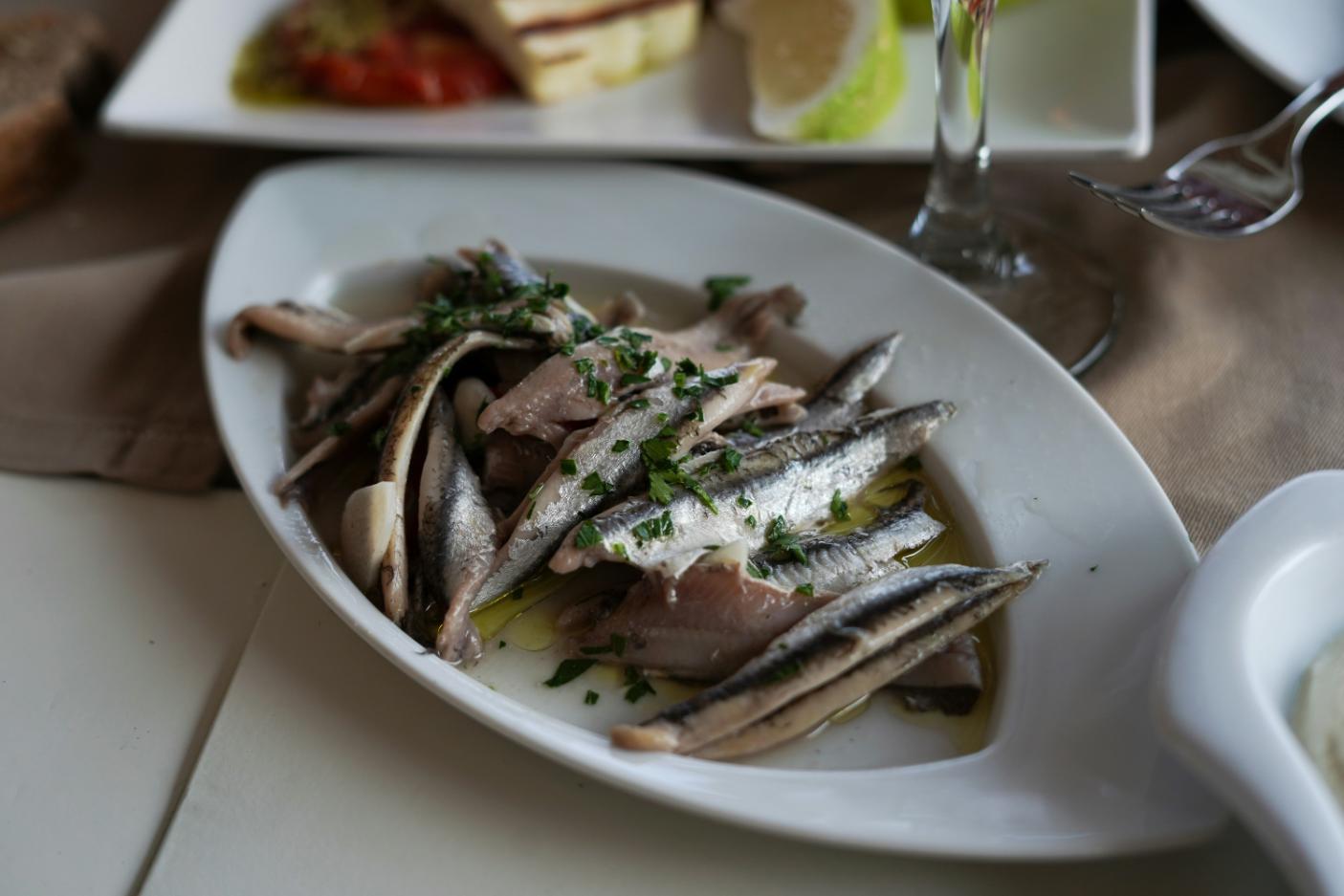
Anchovies
A tiny, oily fish packed with omega-3s, vitamin D and selenium — the same hormone-supporting profile as salmon, but low in mercury and easy to keep in the cupboard.
At a glance
Why it matters
Anchovies are proof that the best hormone foods are not always the expensive ones. These small, oily fish carry the same nutrients that make salmon and sardines so valuable — long-chain omega-3 fats, vitamin D and selenium — but they sit right at the bottom of the food chain, which means very low mercury and a low price. Oily fish is one of the most consistently useful categories for hormone health because it tackles inflammation, supplies the vitamin D that testosterone synthesis depends on, and supports the cardiovascular system that keeps the whole hormonal picture stable. Anchovies deliver all of that in a form you can keep in a tin and add to almost anything.
What's inside
The headline nutrients are the omega-3 fatty acids EPA and DHA, the anti-inflammatory fats that most people fall short on. Chronic, low-grade inflammation quietly suppresses testosterone, so lowering it is directly useful. Anchovies also provide vitamin D, one of the few foods that do, and vitamin D behaves like a hormone in its own right and is required for healthy testosterone production. Add selenium for antioxidant and thyroid support, calcium from the soft edible bones, and a solid dose of protein, and this tiny fish punches far above its weight.
For men
For men, anchovies hit two of the most reliable dietary levers for testosterone at once: omega-3s, which support the Leydig cells that produce testosterone and reduce the inflammation that suppresses it, and vitamin D, whose status correlates with testosterone levels in study after study. Because they are so low in mercury, they can be eaten regularly without the caution larger fish require, making them an easy way to raise oily-fish intake across the week.
For women
For women, the same omega-3s support mood, skin and cycle comfort, and are associated with easier periods and better hormonal balance. Vitamin D is widely under-supplied in women and matters for bone health, mood and immune function, all of which intersect with hormonal wellbeing through perimenopause and beyond. The calcium from the soft bones is a quiet bonus for bone density, a real concern for women as oestrogen declines.
How to eat it
Anchovies are a flavour tool as much as a food. Melt a couple into a pan of garlic and olive oil and they dissolve into a savoury base for greens, pasta or dressings, adding depth without tasting fishy. Drape whole fillets over toast, salads or roasted vegetables, or use the fresh, vinegar-marinated boquerones as a tapa. If you find tinned ones too salty, a quick rinse helps. Choose those packed in olive oil rather than poor-quality vegetable oils.
Worth knowing
Being small and short-lived, anchovies accumulate very little mercury, which sets them apart from the large predatory fish covered elsewhere in this library. The main thing to watch is salt: cured anchovies can be high in sodium, so rinse them or use them sparingly as a seasoning rather than a main portion. Fresh or oil-packed versions give you the nutrition with more control over salt.
Bottom line
Anchovies deliver the omega-3, vitamin D and selenium of premium oily fish at a fraction of the cost and with very low mercury — one of the easiest, cheapest ways to support hormones through diet.
Related reading: Foods that increase testosterone, does vitamin D raise testosterone? and how to increase testosterone naturally. Browse the full food library.
Educational information, not medical advice. Foods affect people differently — if you have a medical condition, are pregnant or breastfeeding, or take medication, talk to your doctor before making big dietary changes. Some links are affiliate links — if you buy through them we may earn a small commission, at no extra cost to you.